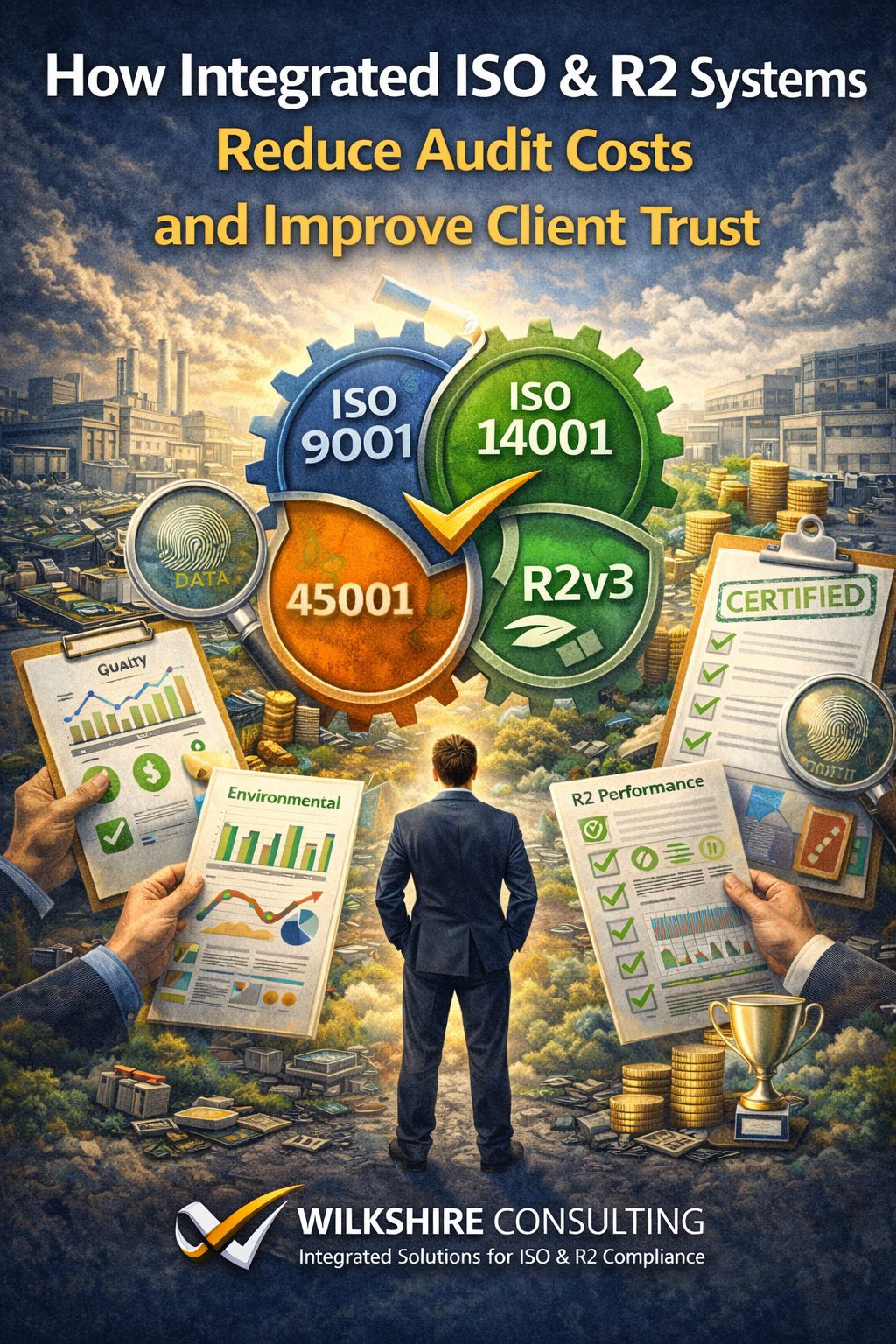
By the time an organization holds multiple certifications — ISO 9001, ISO 14001, ISO 45001, and R2v3 — one thing becomes clear:
Compliance is no longer a project. It’s infrastructure.
Yet many organizations manage these certifications as separate systems. Separate manuals. Separate audits. Separate corrective actions. Separate management reviews.
The result? Higher costs, duplicated effort, audit fatigue, and inconsistent messaging to customers.
Organizations that integrate their management systems experience something very different: lower audit costs, stronger performance oversight, and increased client confidence.
The Real Cost of Multiple Systems
Every additional standalone management system adds:
- More documentation to maintain
- More internal audit hours
- More management review meetings
- More corrective action tracking
- More employee training
On paper, each standard appears distinct. In practice, they share major structural requirements:
- Risk-based thinking
- Leadership accountability
- Competence and training
- Operational control
- Corrective action
- Continuous improvement
When these are managed separately, the organization pays for the same structure multiple times.
Audit Fatigue Is a Hidden Risk
When employees are subjected to multiple audit cycles that ask similar questions in slightly different language, engagement declines.
Common signs of audit fatigue include:
- Delayed corrective actions
- Incomplete records
- “Audit mode” preparation rather than daily discipline
- Frustration from operational staff
Over time, compliance becomes reactive instead of proactive.
An integrated system reduces repetition and aligns expectations across standards, making audits smoother and less disruptive.
ISO 14001 Isn’t Just Environmental Compliance — It’s Risk Management
Shared Processes Reduce Complexity
An effective integrated management system consolidates overlapping requirements into shared processes.
For example:
One Corrective Action Process
Instead of separate corrective action logs for quality, environmental, safety, and R2 issues, a unified system tracks all nonconformities and improvement opportunities.
One Internal Audit Program
Rather than auditing each standard independently, integrated audits evaluate processes against multiple requirements simultaneously.
One Management Review Framework
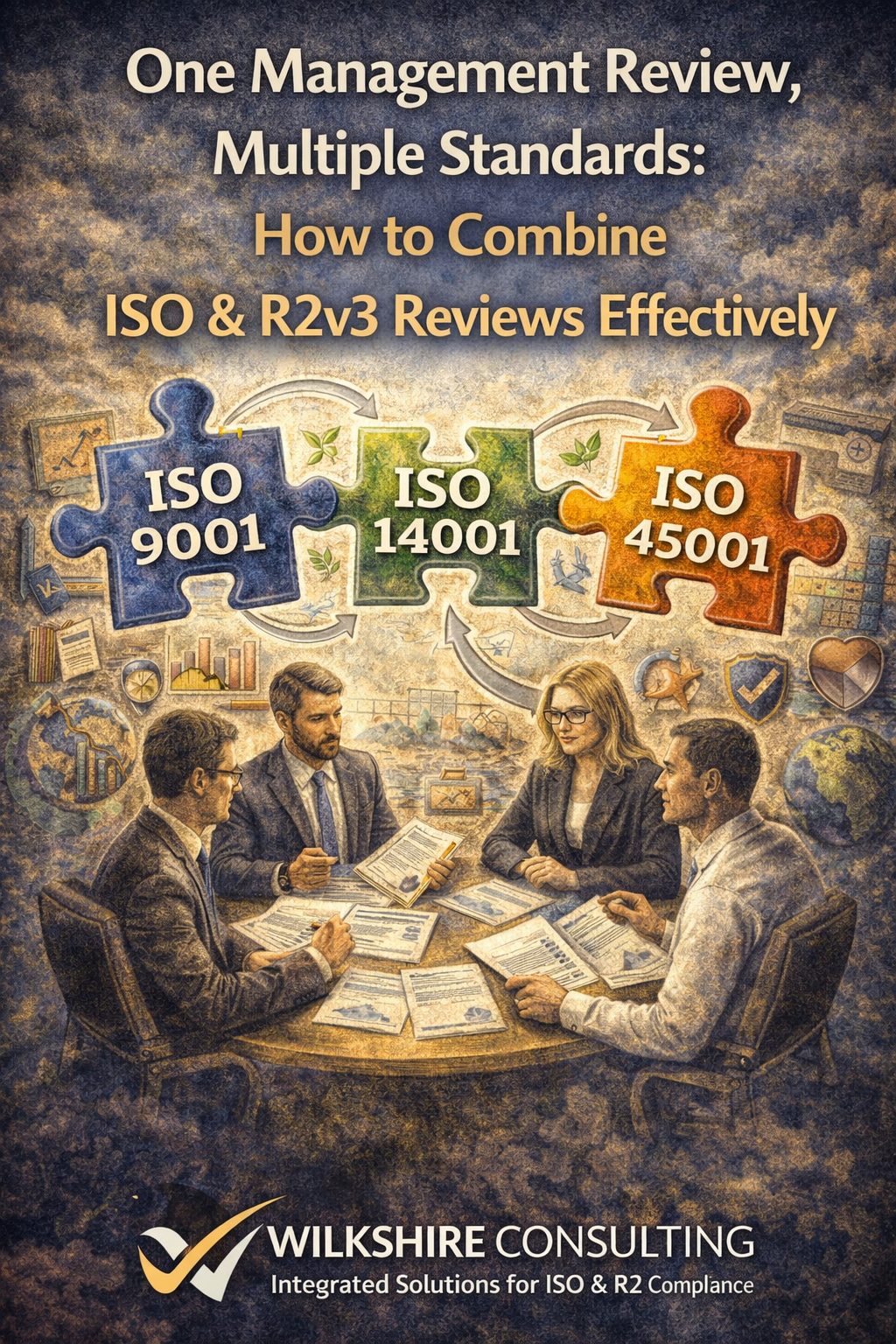
Leadership reviews performance across quality, environmental, safety, and R2 objectives in a single structured discussion.
This approach reduces administrative burden while increasing oversight clarity.
Risk Visibility Improves Decision-Making
ISO and R2 standards all emphasize risk management — but risk does not respect departmental boundaries.
A quality failure can trigger:
- Environmental waste
- Safety hazards
- Customer complaints
- Reputational damage
An integrated management system allows leadership to see how risks interact across functions. Instead of isolated reports, decision-makers gain a comprehensive risk profile.
This visibility supports better investment decisions, stronger preventive action, and long-term operational stability.
Clients Notice System Maturity
Enterprise customers increasingly evaluate not just certification status, but system maturity.
They look for:
- Clear accountability
- Consistent reporting
- Demonstrated improvement trends
- Strong downstream oversight (for R2v3)
- Evidence of leadership involvement
Organizations with integrated systems are better prepared for customer audits because their processes are aligned and defensible.
Instead of scrambling to assemble fragmented documentation, they present a cohesive story.
ISO 9001:2026 Is Coming – What Businesses Need to Know Now
Integration Supports Scalability
As organizations grow — adding locations, services, or certifications — system complexity increases.
Without integration, growth often leads to:
- Inconsistent practices across sites
- Duplicated documentation
- Increased audit findings
- Communication breakdowns
Integrated management systems scale more effectively. Core processes remain consistent while allowing flexibility for operational differences.
This is especially valuable for organizations operating multiple facilities under R2v3 and ISO certifications.
Integration Does Not Mean Oversimplification
A common misconception is that integration weakens individual standards.
In reality, well-designed integration strengthens compliance by:
- Eliminating contradictions between procedures
- Clarifying roles and responsibilities
- Improving corrective action effectiveness
- Reducing gaps between standards
The goal is not to merge everything into a single document. The goal is to align systems, so they reinforce each other.
Leadership Benefits from a Unified View
Perhaps the most significant benefit of integration is improved leadership oversight.
Instead of reviewing a quality report, a separate environmental report, a separate safety dashboard, and a separate R2 performance summary, leadership reviews a single performance framework aligned with business objectives.
This allows executives to:
- Allocate resources strategically
- Address systemic risks
- Identify improvement priorities
- Align compliance with profitability
Integrated systems transform compliance from an obligation into a management tool.
How Wilkshire Consulting Designs Integrated Systems
At Wilkshire Consulting, we specialize in designing integrated management systems that support:
- ISO 9001 (Quality Management)
- ISO 14001 (Environmental Management)
- ISO 45001 (Occupational Health & Safety)
- R2v3 Responsible Recycling
Our approach focuses on:
- Eliminating redundant processes
- Strengthening corrective action systems
- Aligning objectives with business performance
- Reducing audit fatigue
- Preparing organizations for growth
We don’t build systems to pass audits. We build systems that support operational stability, risk reduction, and client confidence.
Final Thought
Certifications are valuable — but systems are transformative.
Organizations that move beyond siloed compliance toward integrated management frameworks consistently outperform those that manage standards independently.
If your organization is juggling multiple certifications and feeling the strain, integration may be the next strategic step.