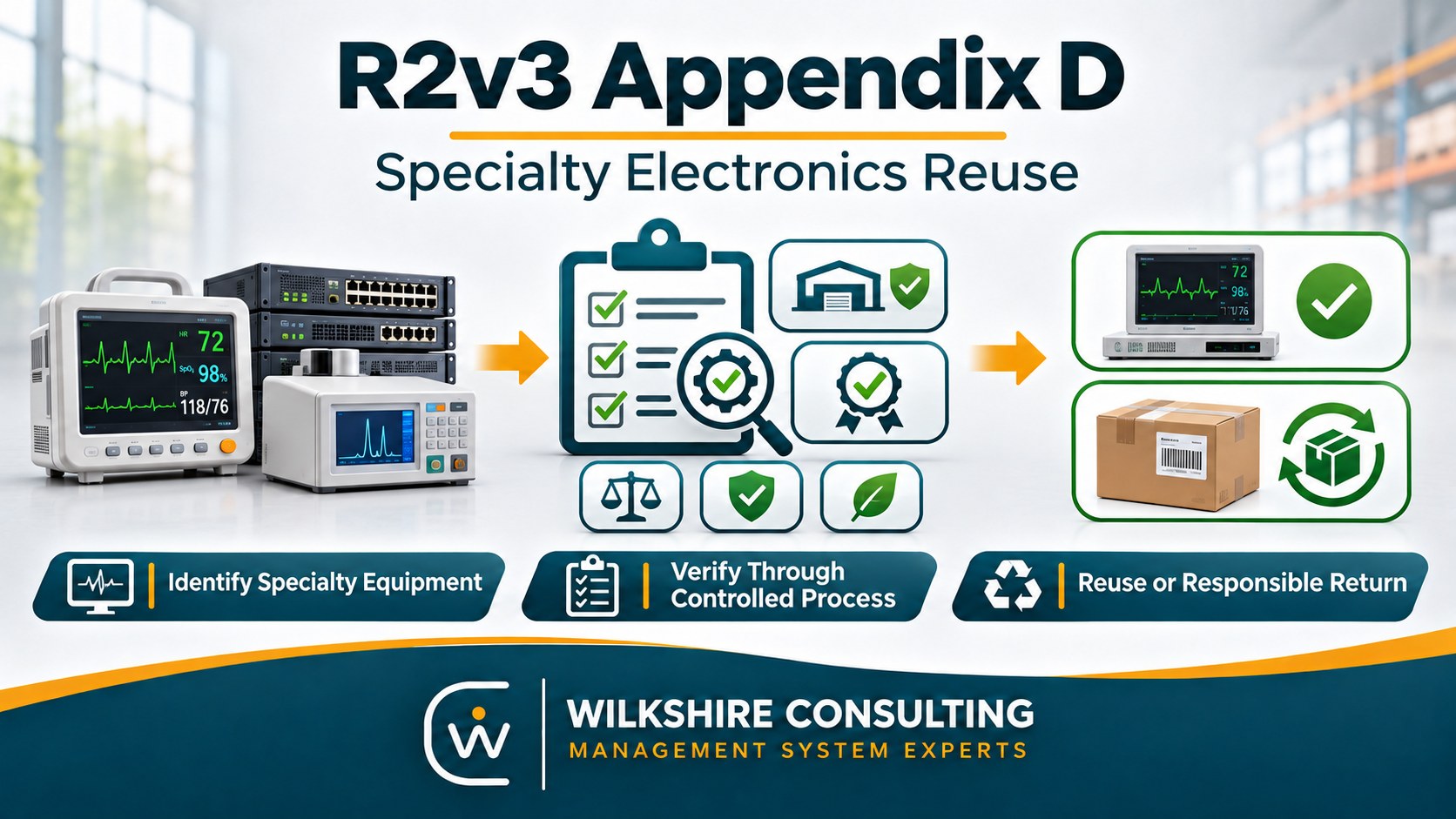
R2v3 – Appendix D: Specialty Electronics Reuse
R2v3 Appendix D covers reuse of specialty electronics that can’t be fully tested. Here’s what it requires and why it needs Appendix C.
R2v3 appendices
Blog
Clause-by-clause guides, the findings we see every year in real audit reports, and the practical side of R2v3 and ISO. Written by people who have sat on the other side of the audit table.
Some topics run across several posts that build on each other. Open one to read it in order, or click to filter the archive below.
Or open a series in reading order:The ISO 9001 clause guide · The seven quality management principles · The 2026 ISO transitions · R2v3 appendices · Certification audit stages · Documentation templates
R2v3 Appendix D covers reuse of specialty electronics that can’t be fully tested. Here’s what it requires and why it needs Appendix C.
R2v3 appendices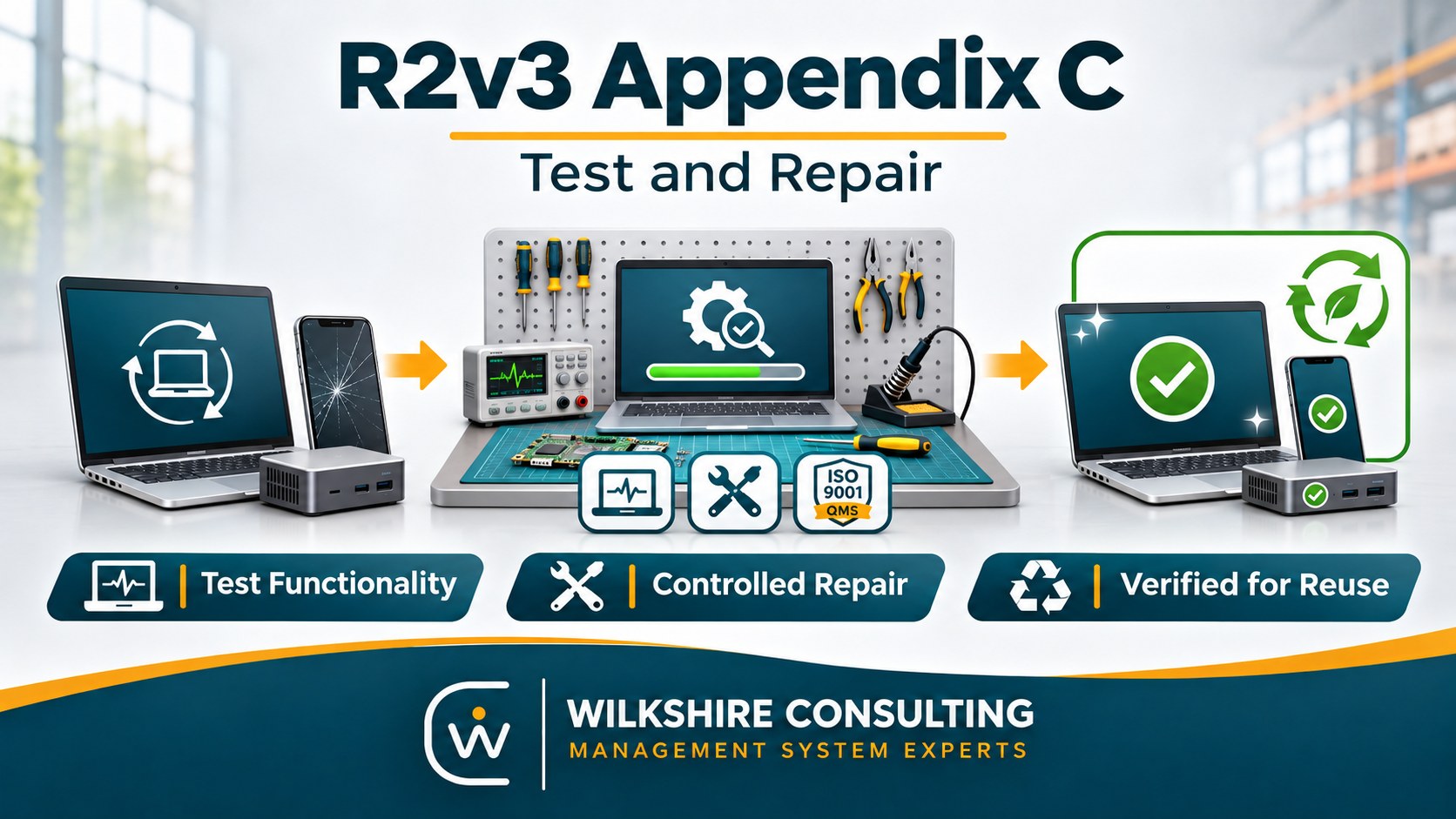
R2v3 Appendix C covers testing, repair and refurbishment of electronics for reuse. Here’s what it requires and which facilities need it.
R2v3 appendices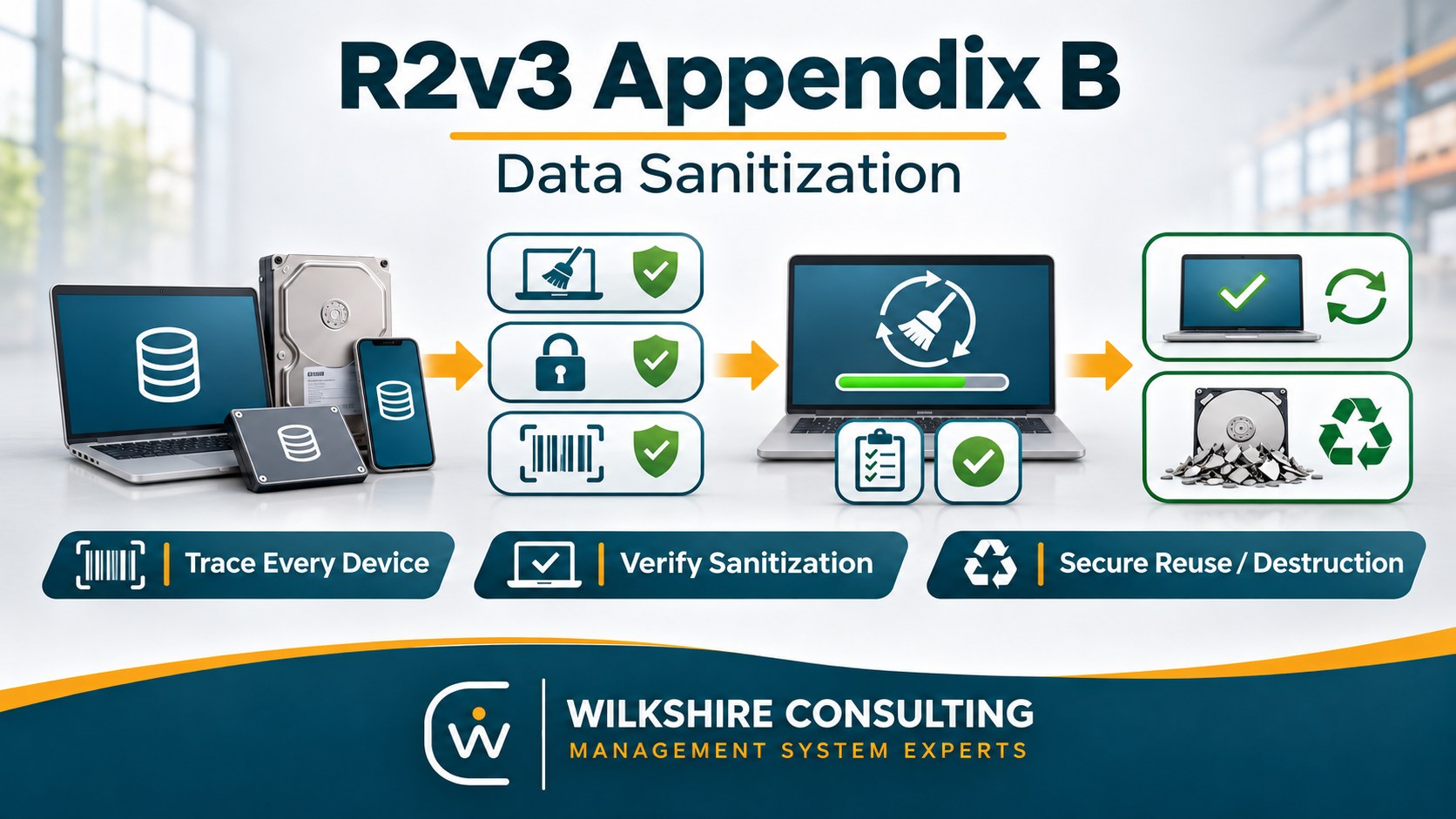
R2v3 Appendix B governs data sanitization — what logical wiping requires, who needs it, and how to prove every device was sanitized.
R2v3 appendices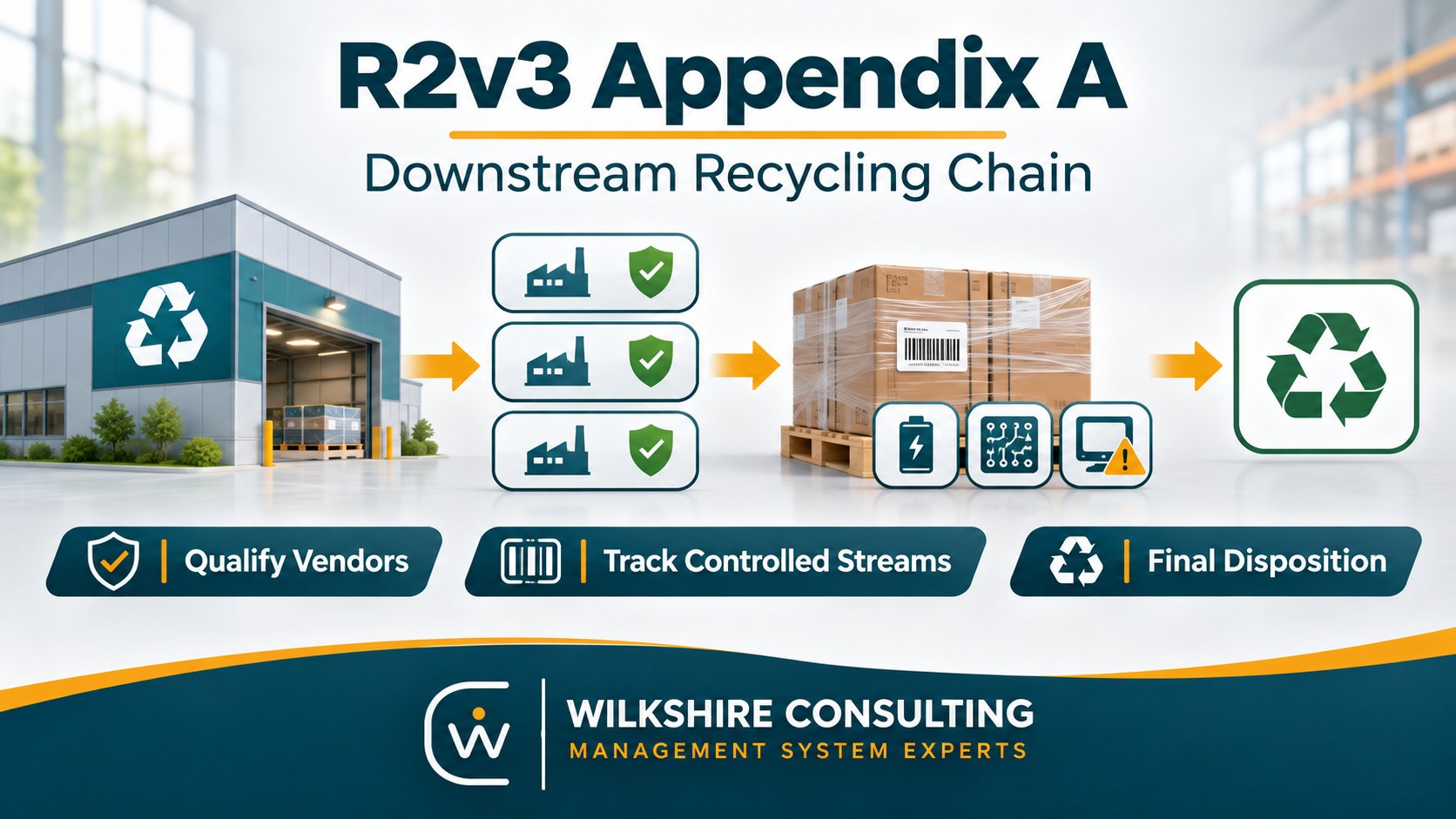
R2v3 Appendix A governs the downstream recycling chain — tracking and controlling materials after they leave your facility. Here’s what it requires.
R2v3 appendices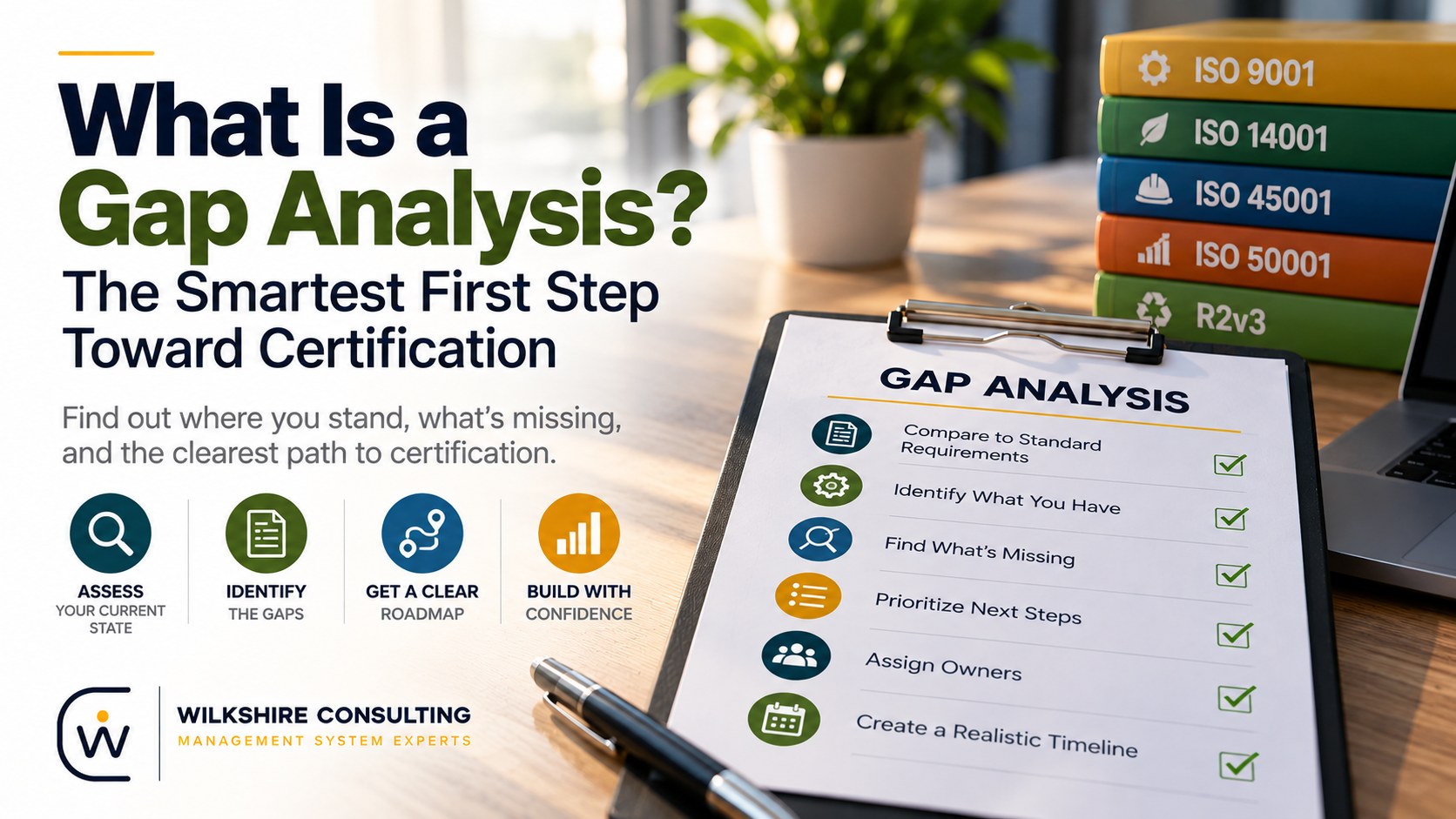
A gap analysis is the first step toward ISO or R2v3 certification — here’s what it is, what it includes, and why it saves you time and rework.
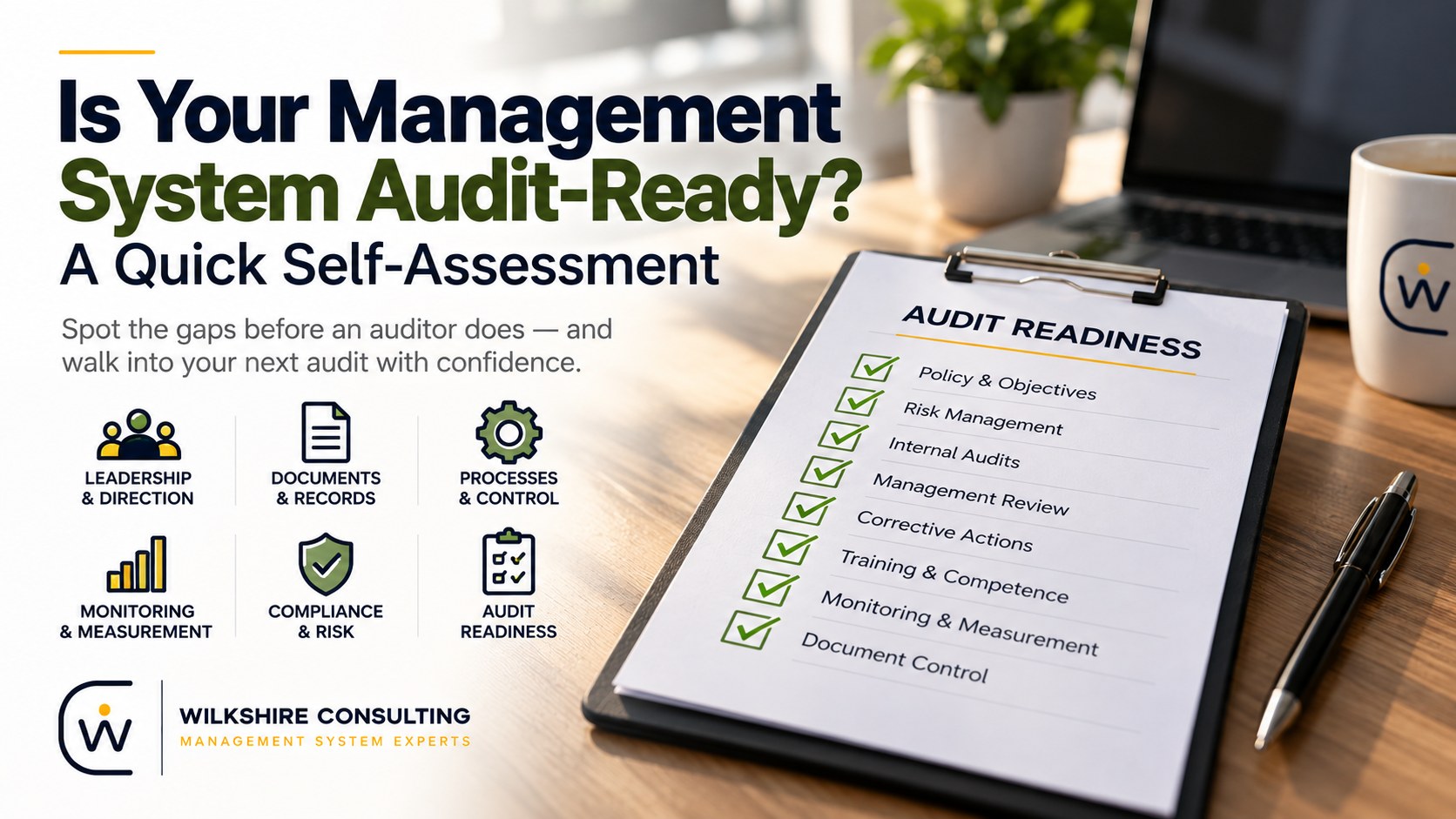
Not sure if your management system would hold up under an audit? Run through this quick self-assessment to spot the gaps before an auditor does.
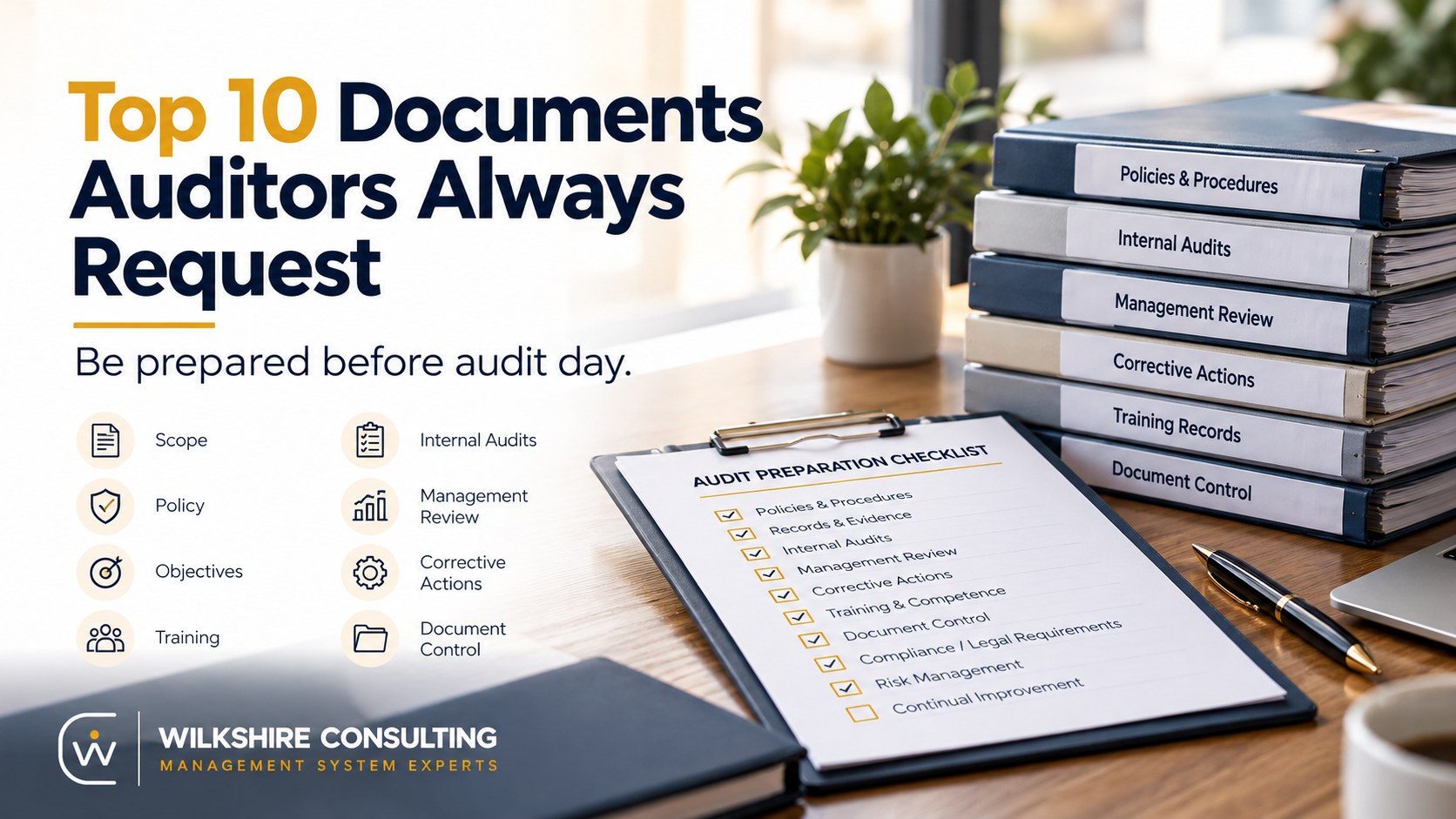
Auditors ask for the same core documents at nearly every ISO audit. Here are the 10 they’ll almost certainly want and what they’re checking when they ask.
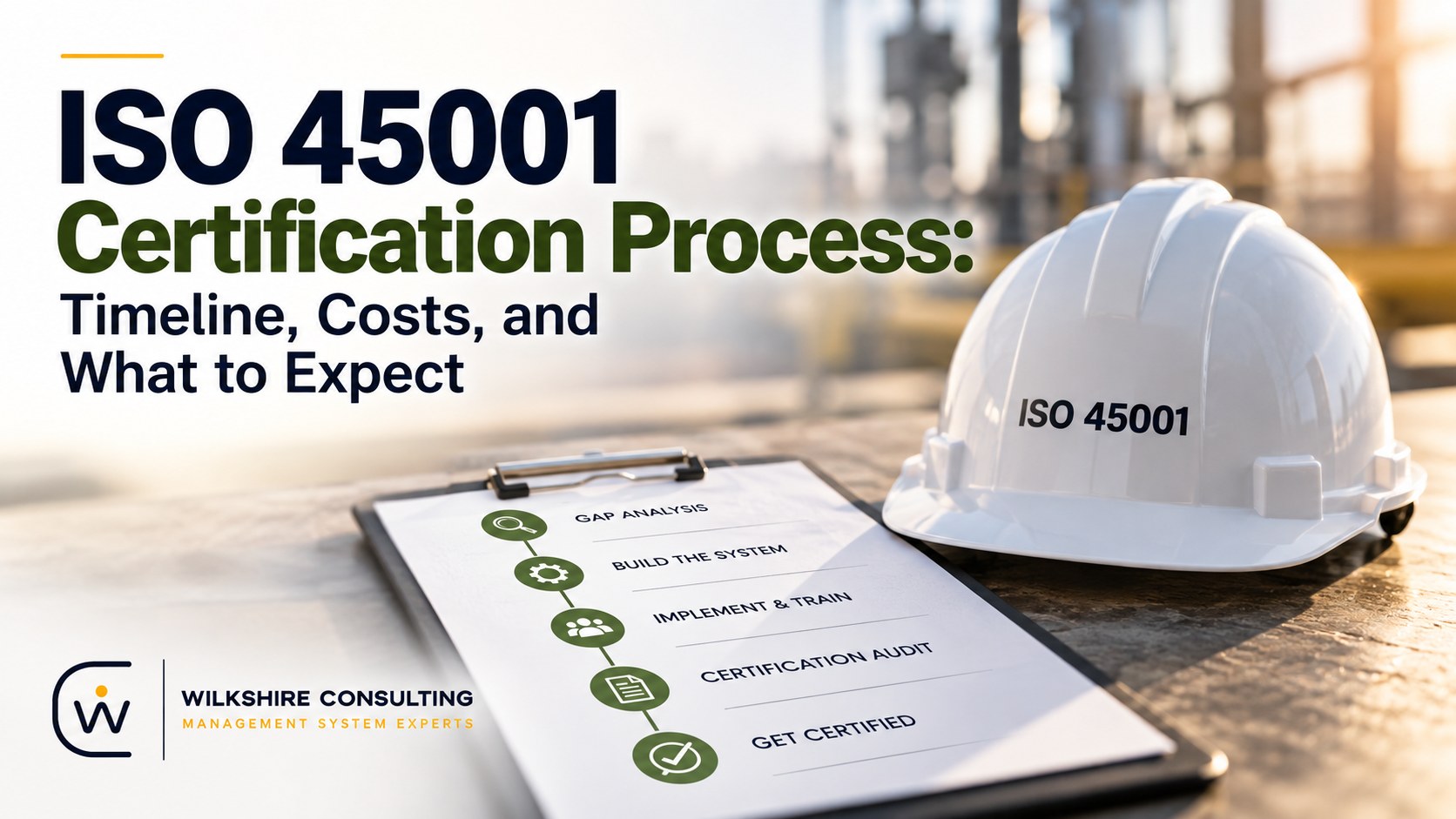
A phase-by-phase guide to getting ISO 45001 certified — the real timeline, what drives the cost, and what actually happens at each stage of the audit.
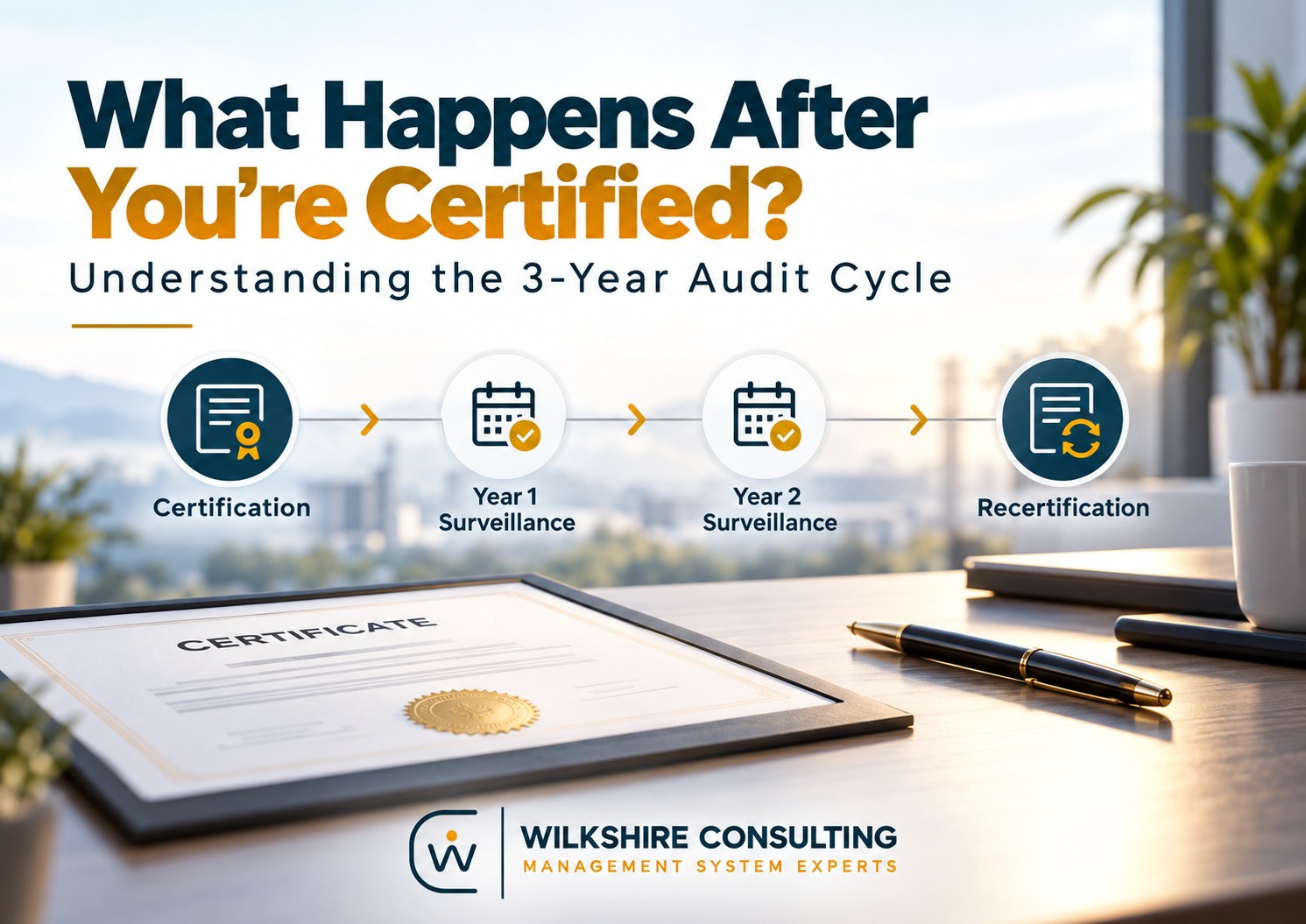
Certification is the start of a three-year cycle of surveillance and recertification audits. Here’s what happens next and how to keep your system from drifting.
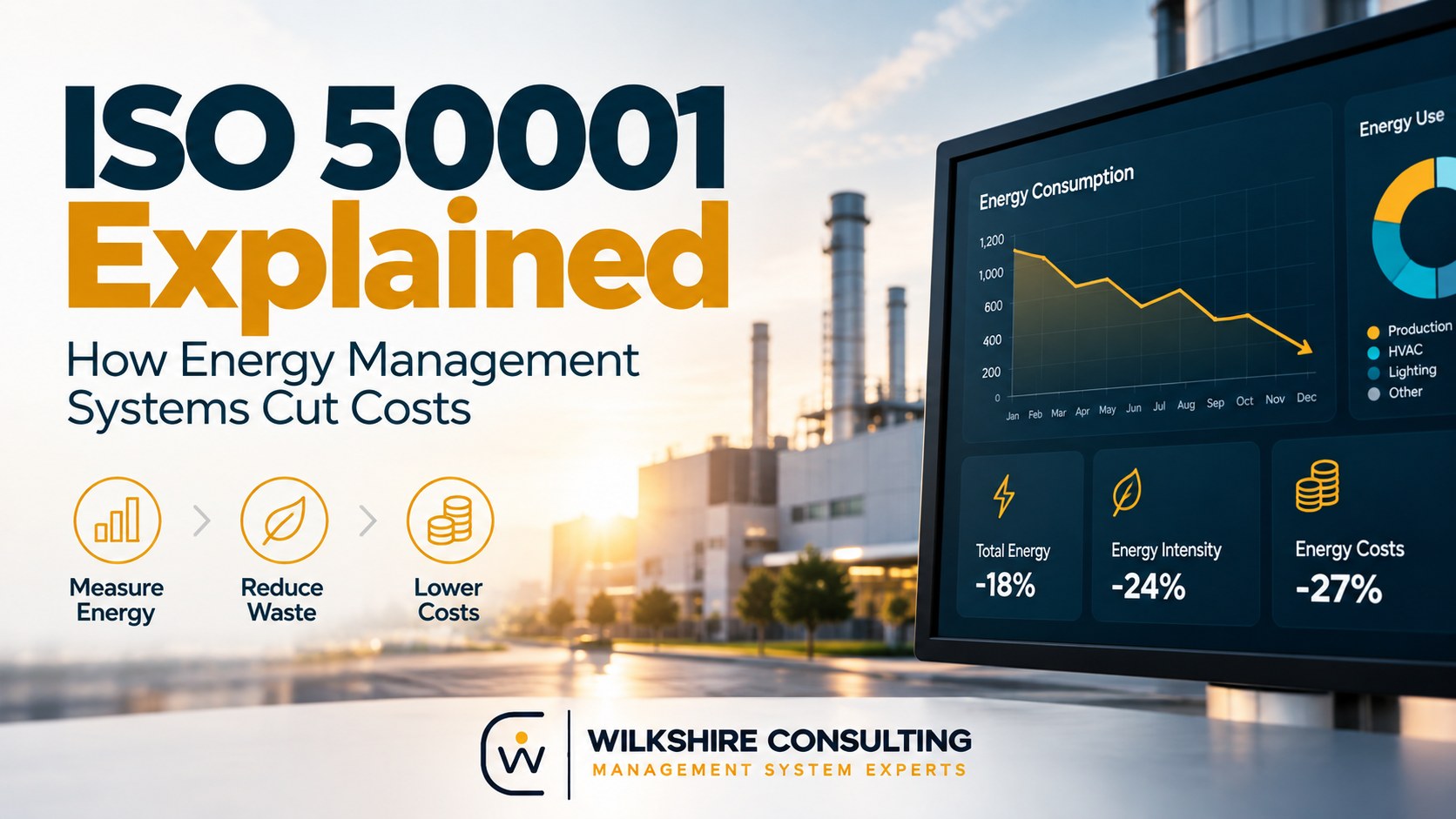
ISO 50001 is the international standard for energy management. Here’s what it is, how it cuts energy costs, and whether it’s worth it for your business.
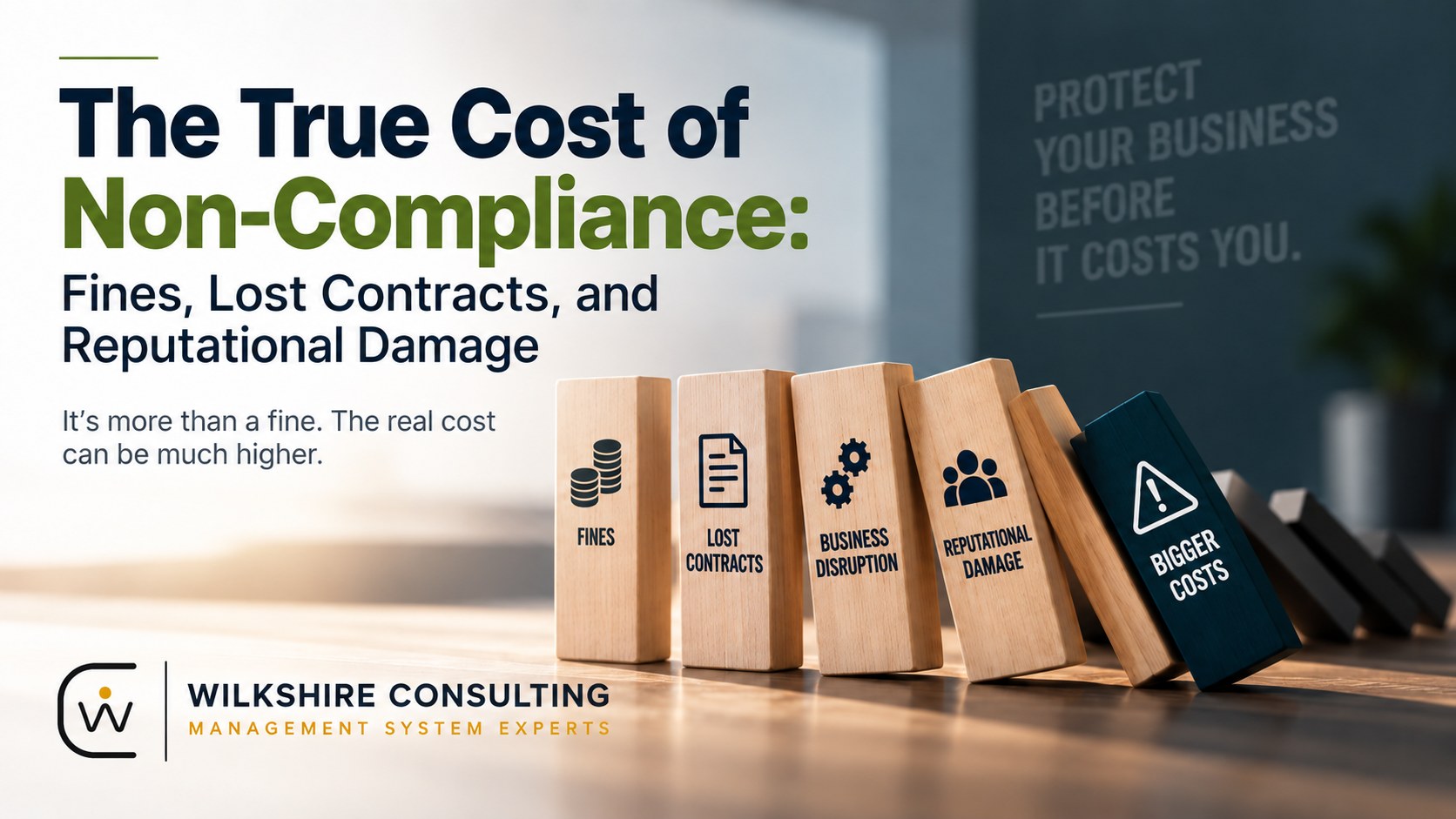
The fine is the smallest part of the bill. What non-compliance really costs — in lost contracts, disruption, and reputational damage, with the real numbers.
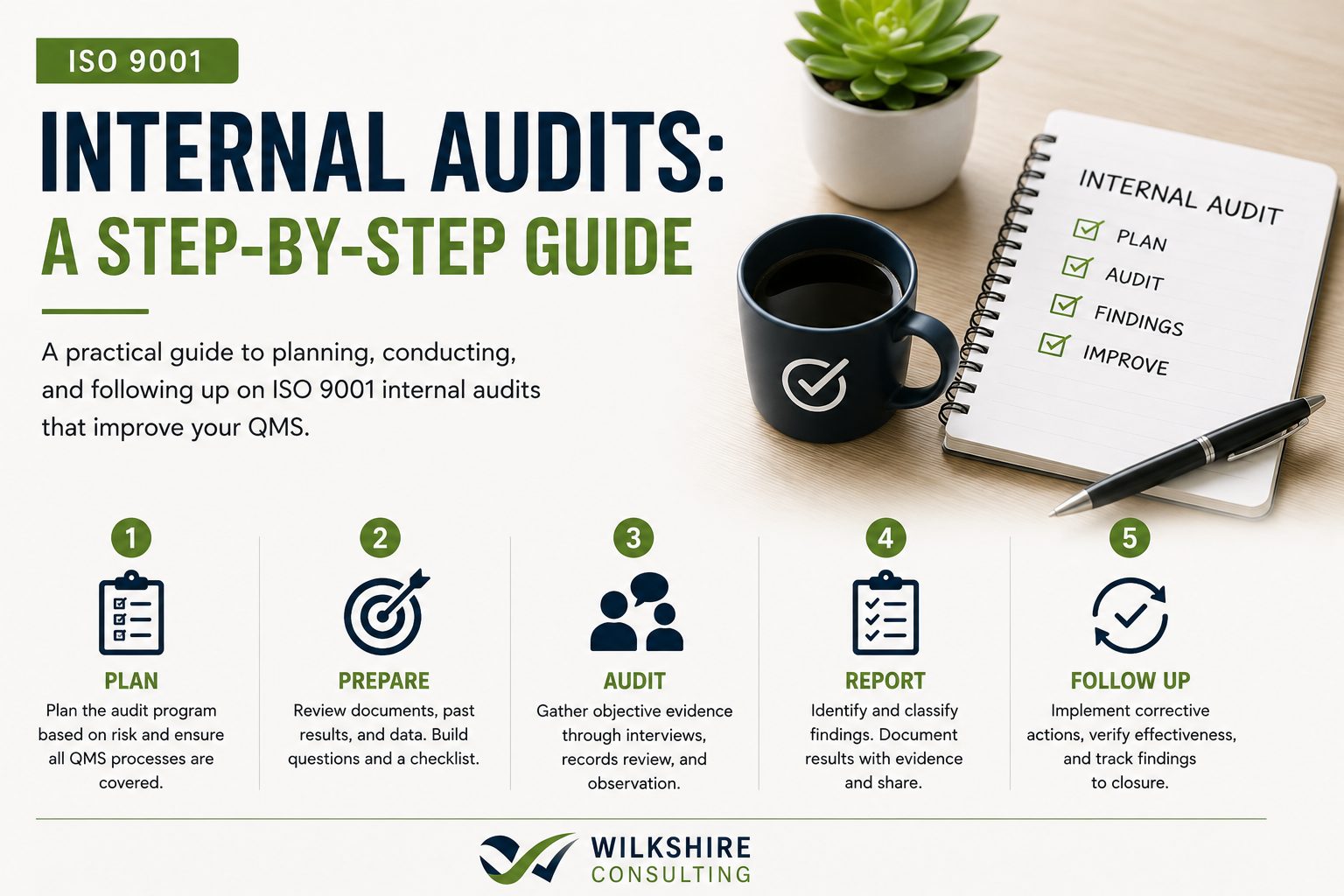
A practical, step-by-step guide to running an ISO 9001 internal audit — from planning and scope through findings, corrective action, and follow-up.
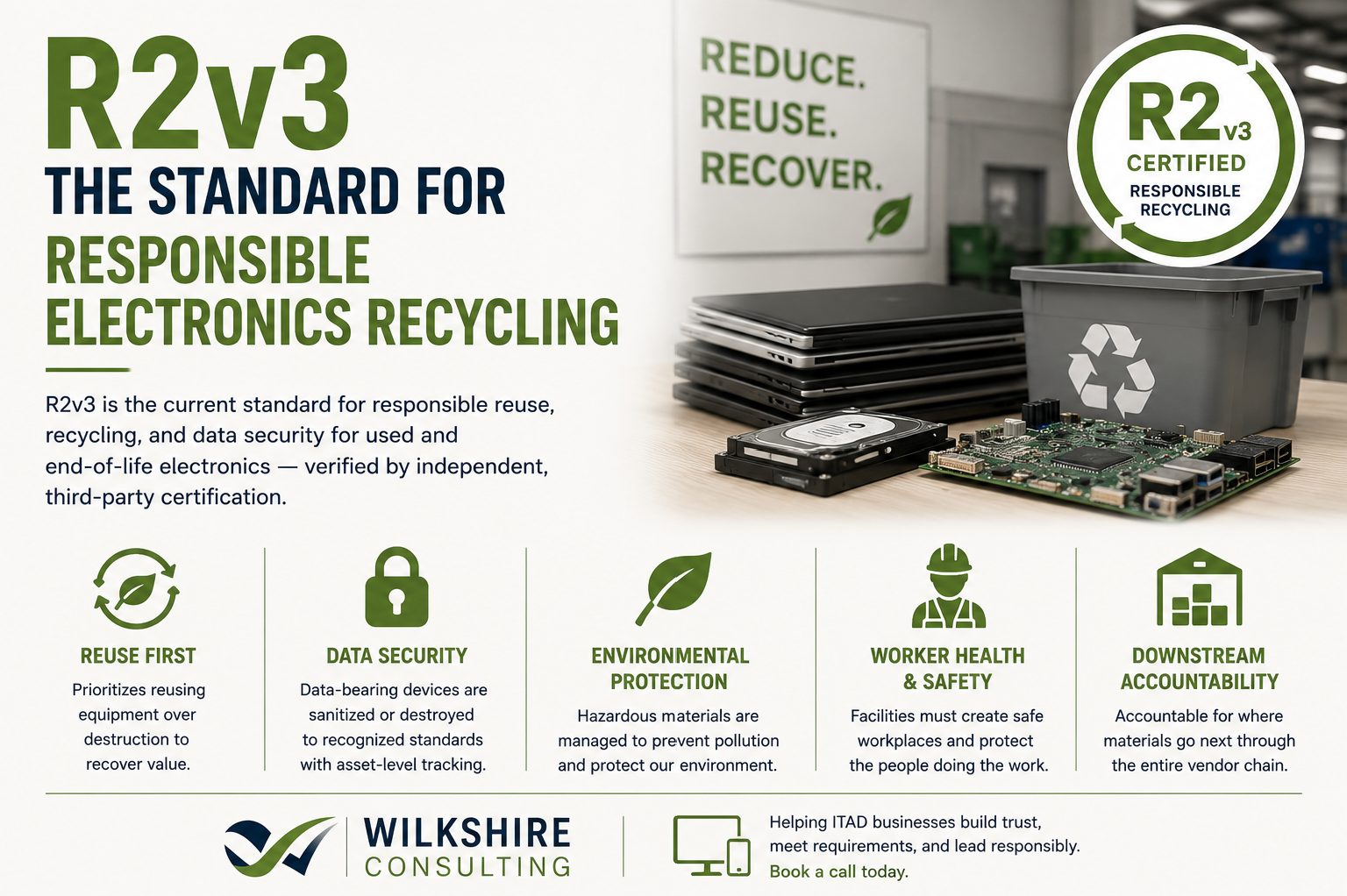
R2v3 is the leading third-party standard for responsible electronics recycling and ITAD. Here's what it is, what it requires, and why it matters — in plain English.
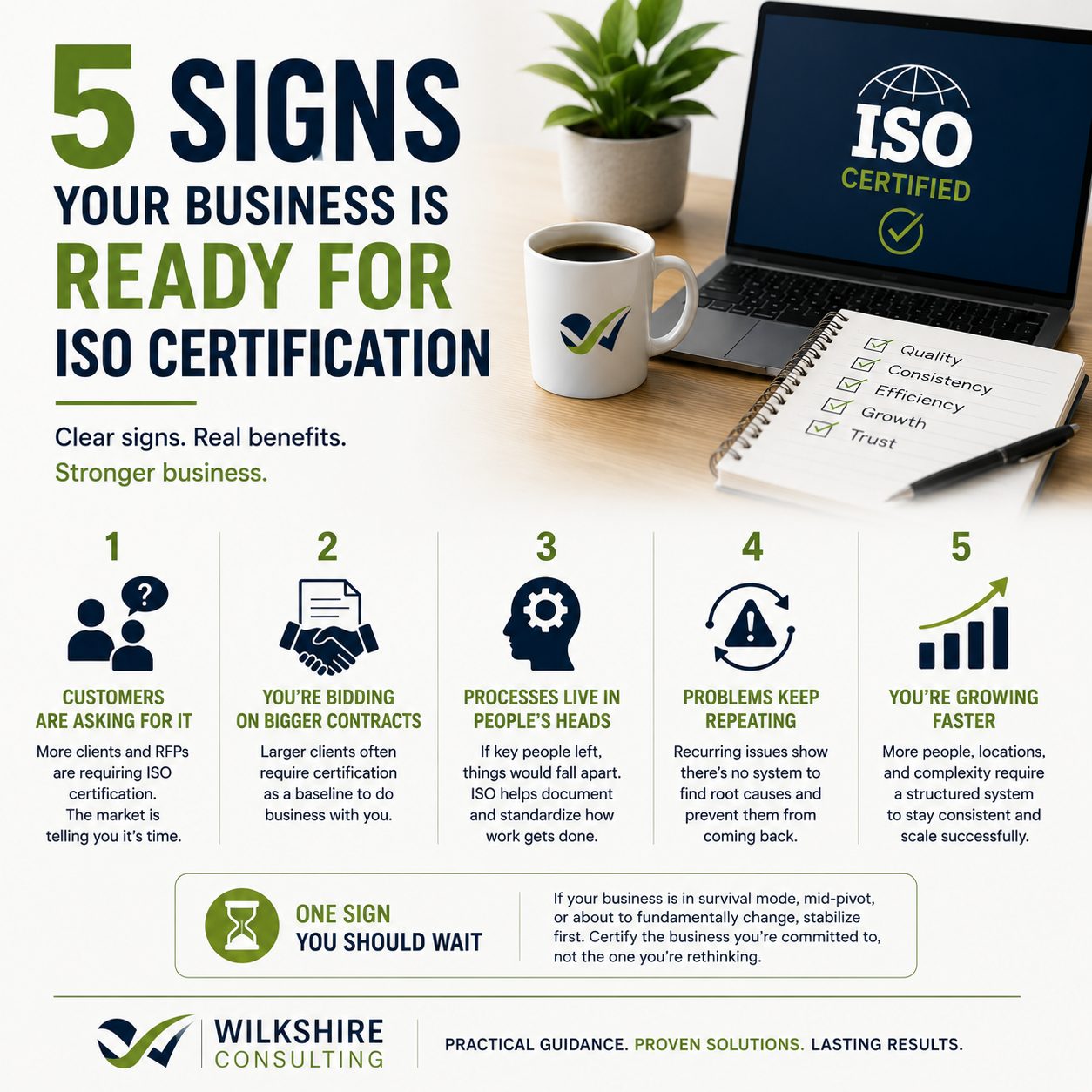
Not sure if it's the right time to pursue ISO certification?
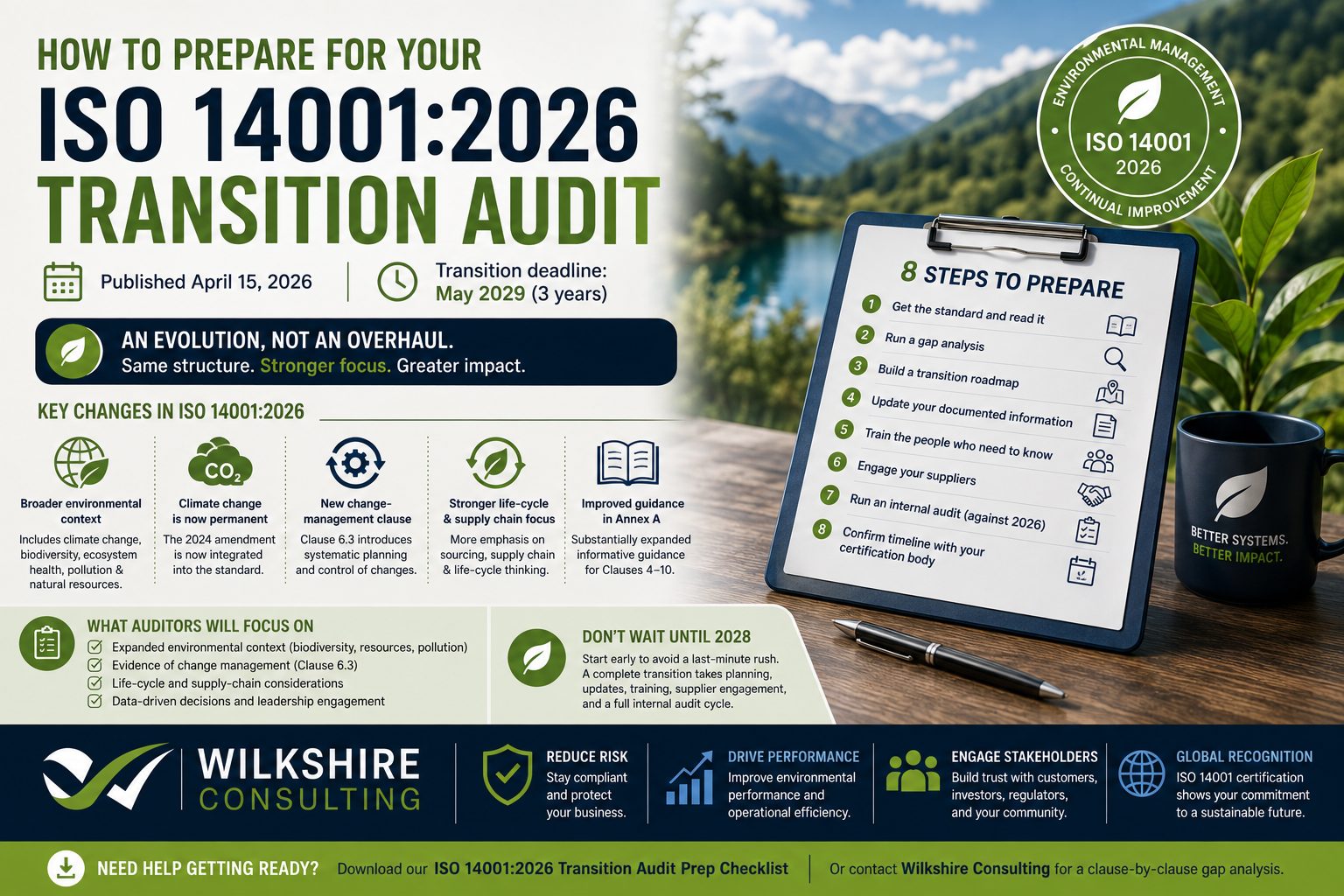
ISO 14001:2026 is published and the transition clock is running. Here's a step-by-step guide to preparing for your transition audit before the May 2029 deadline.
The 2026 ISO transitions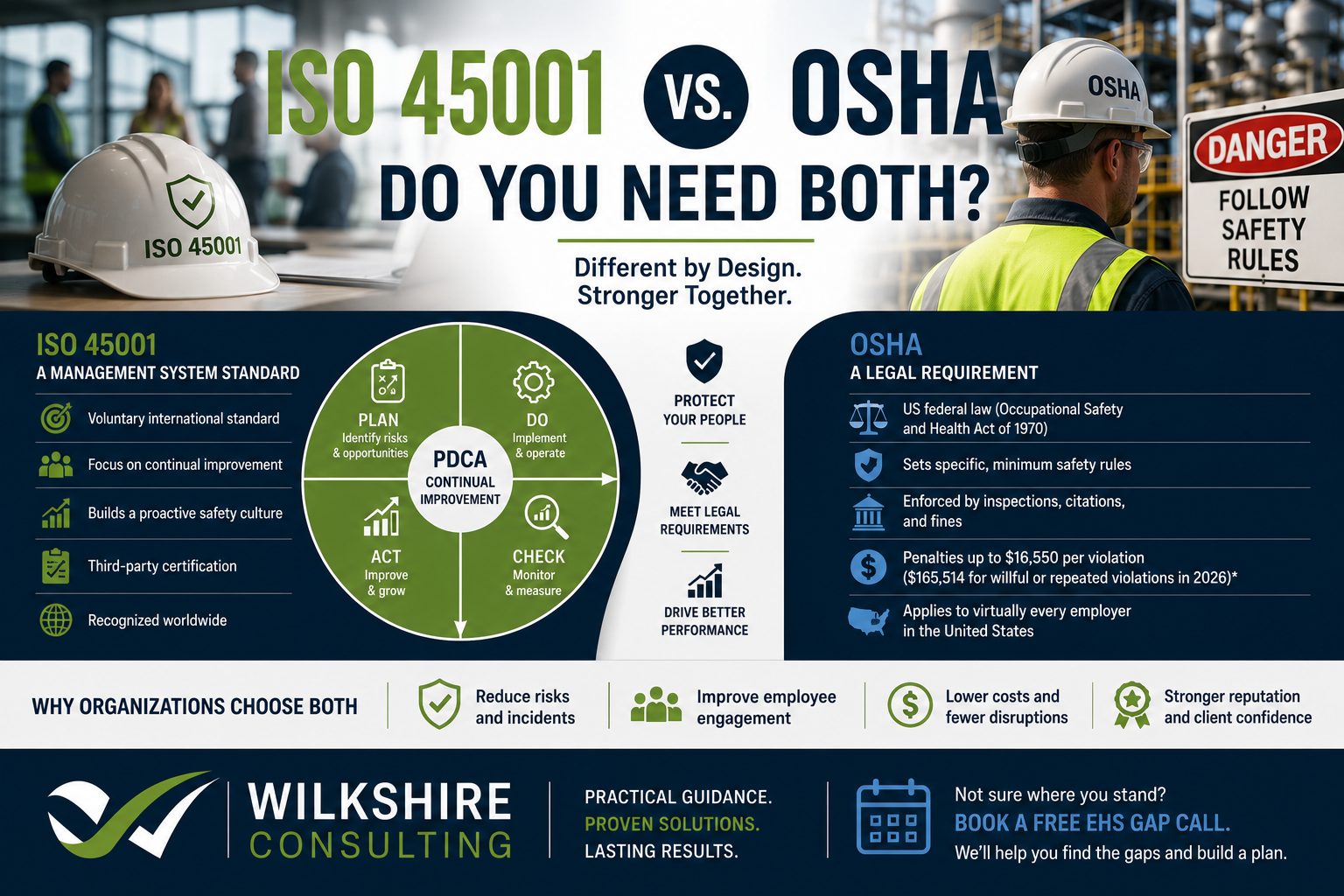
ISO 45001 and OSHA aren't the same thing and one doesn't replace the other. Here's what each actually requires and why most serious safety programs need both.
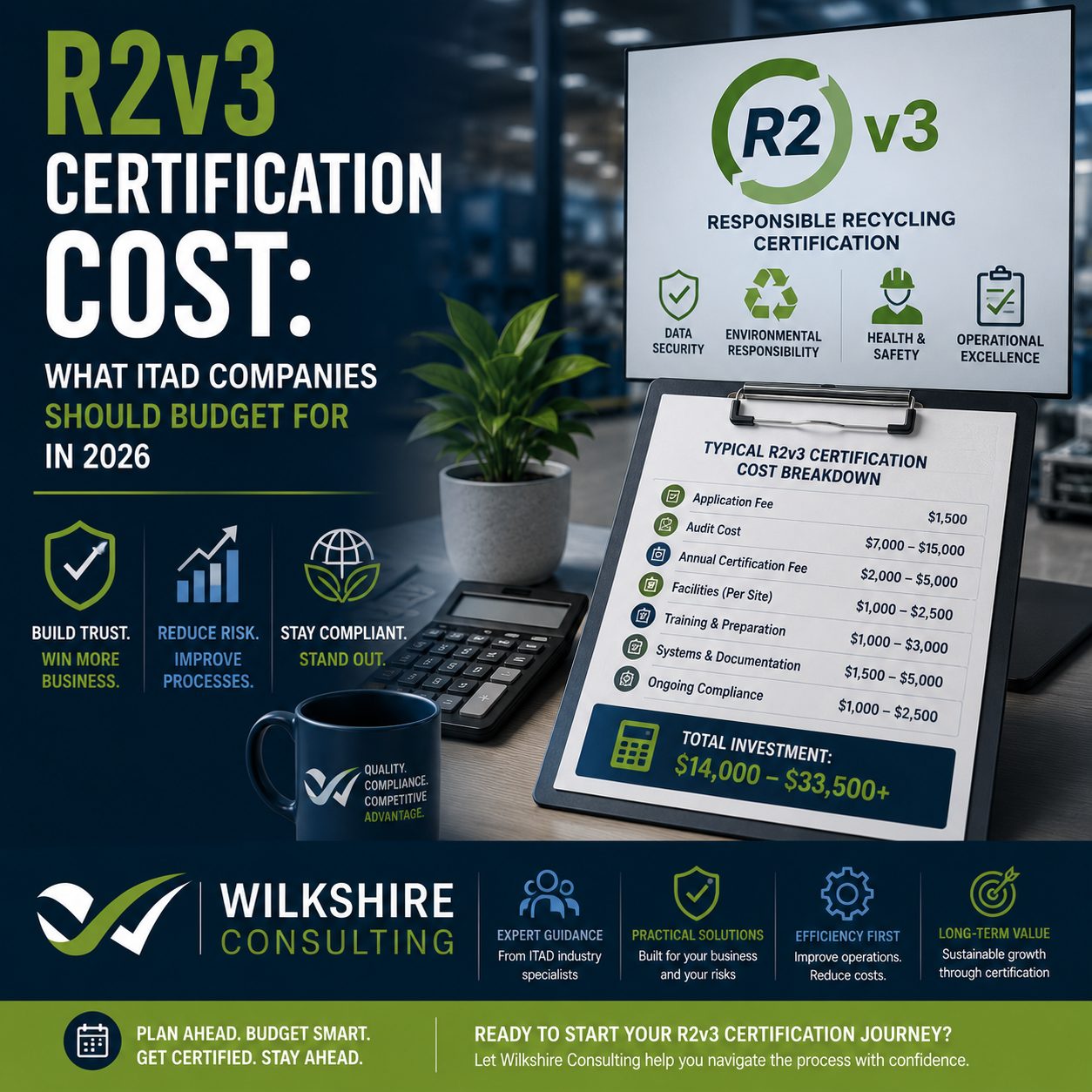
A real-world breakdown of what R2v3 certification costs in 2026 — licensing fees, audit costs, consulting, and what drives the price up or down.
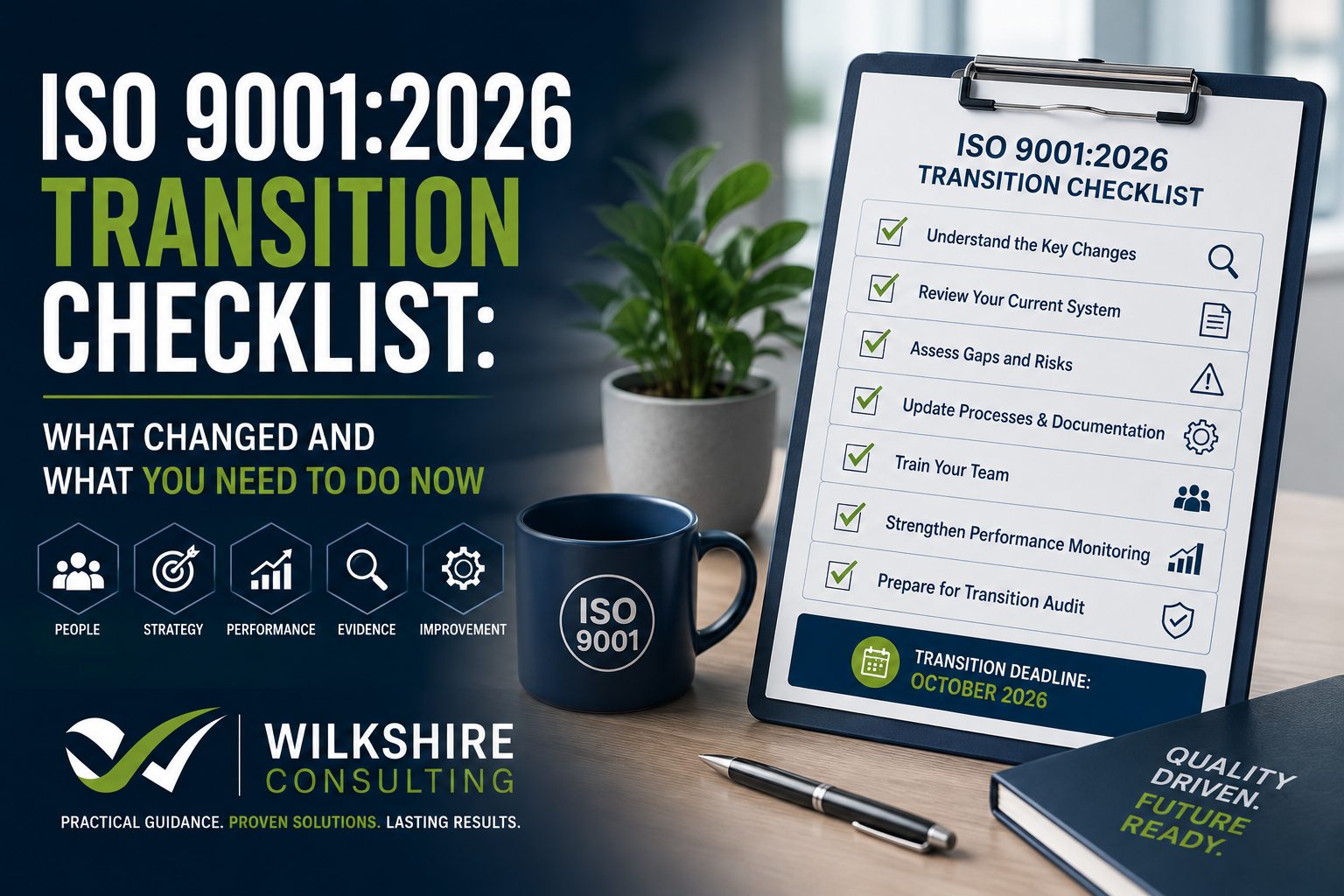
A plain-language breakdown of what's actually changing in ISO 9001:2026, when it takes effect, and a checklist to get your QMS ready.
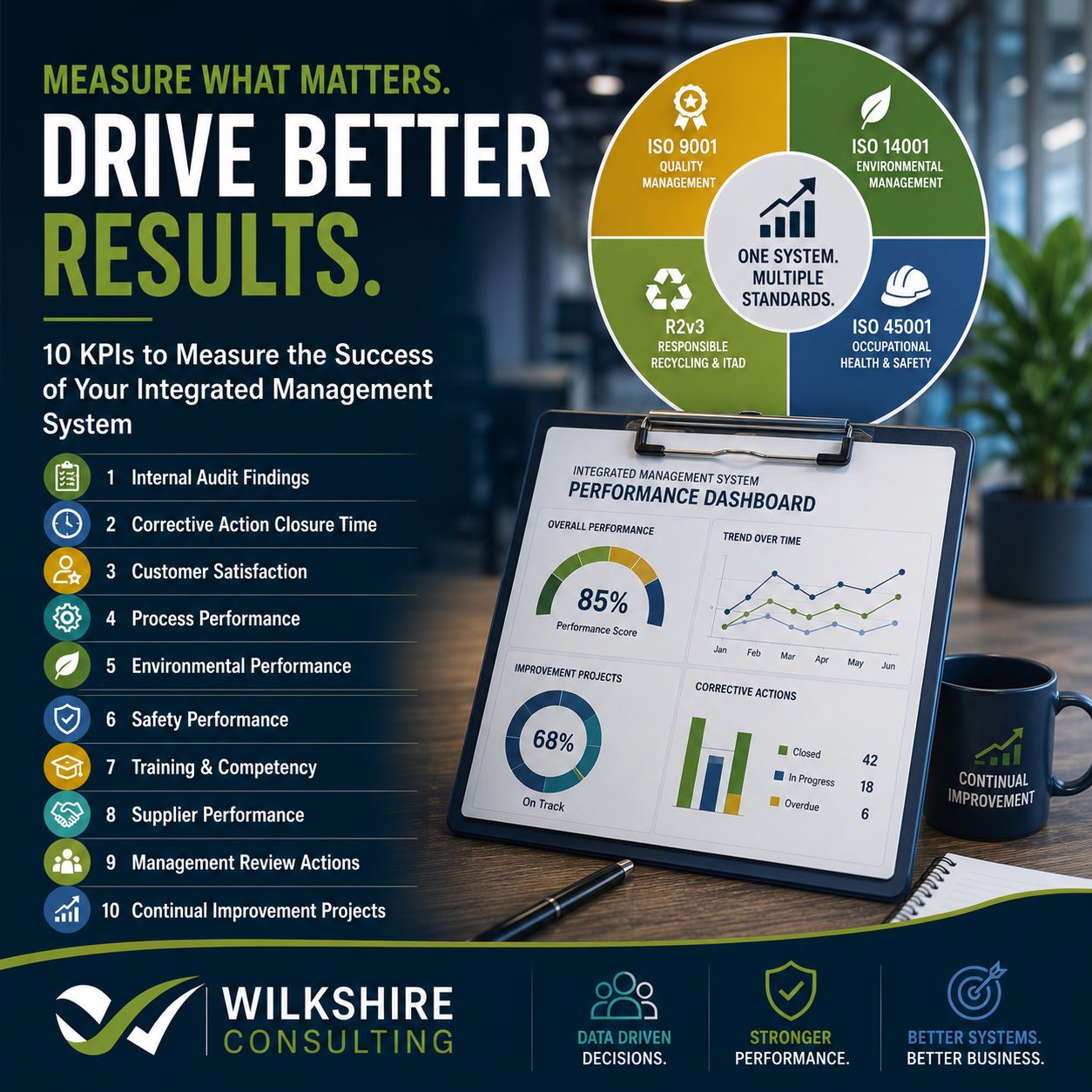
Implementing an Integrated Management System is a significant investment of time, resources, and commitment.
Bringing multiple management standards together sounds like a straightforward idea.
For many organizations, the word 'audit' immediately brings to mind long checklists, stacks of documentation, and days of disruption.
The best management systems are often the ones employees don't notice.
Most organizations don't set out to build four separate management systems.
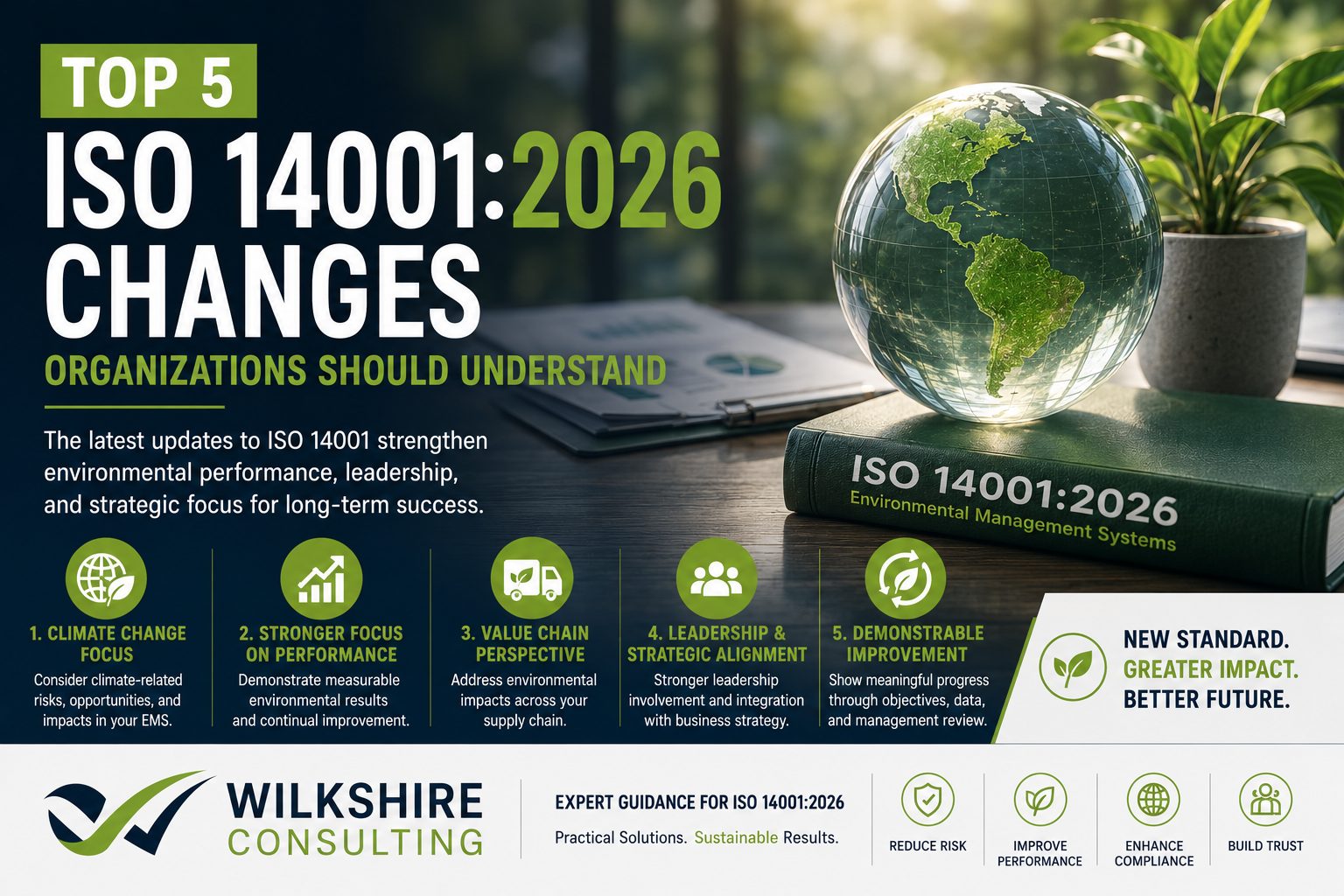
The release of ISO 14001:2026 marks the latest evolution of the world's most widely recognized Environmental Management System (EMS) standard.
The 2026 ISO transitions
ISO 14001:2026 introduces climate change considerations, a stronger focus on demonstrated environmental performance, and greater attention to supply chains. What changed,
The 2026 ISO transitions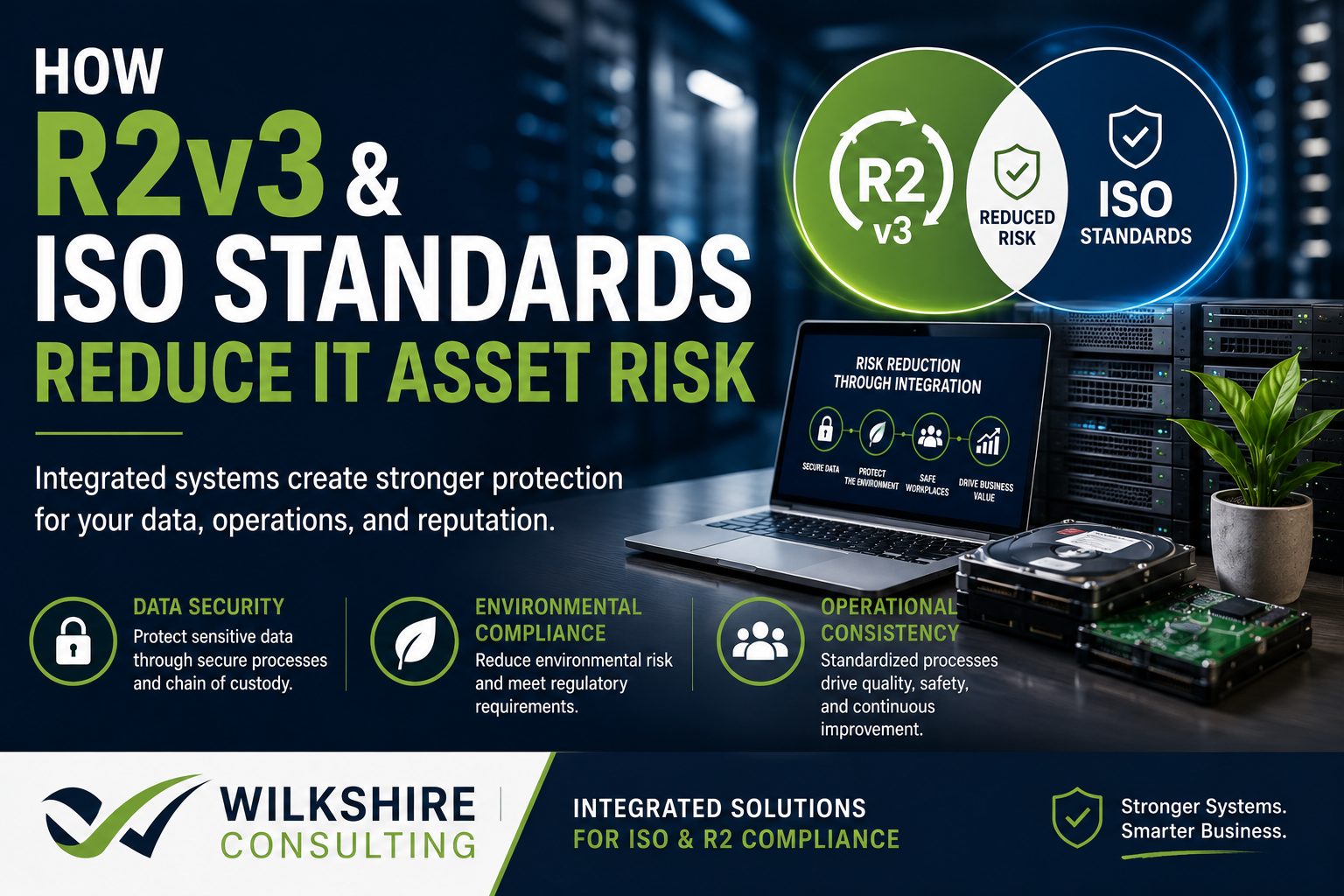
Every organization that manages IT assets faces risk. Some risks are obvious. Data breaches.
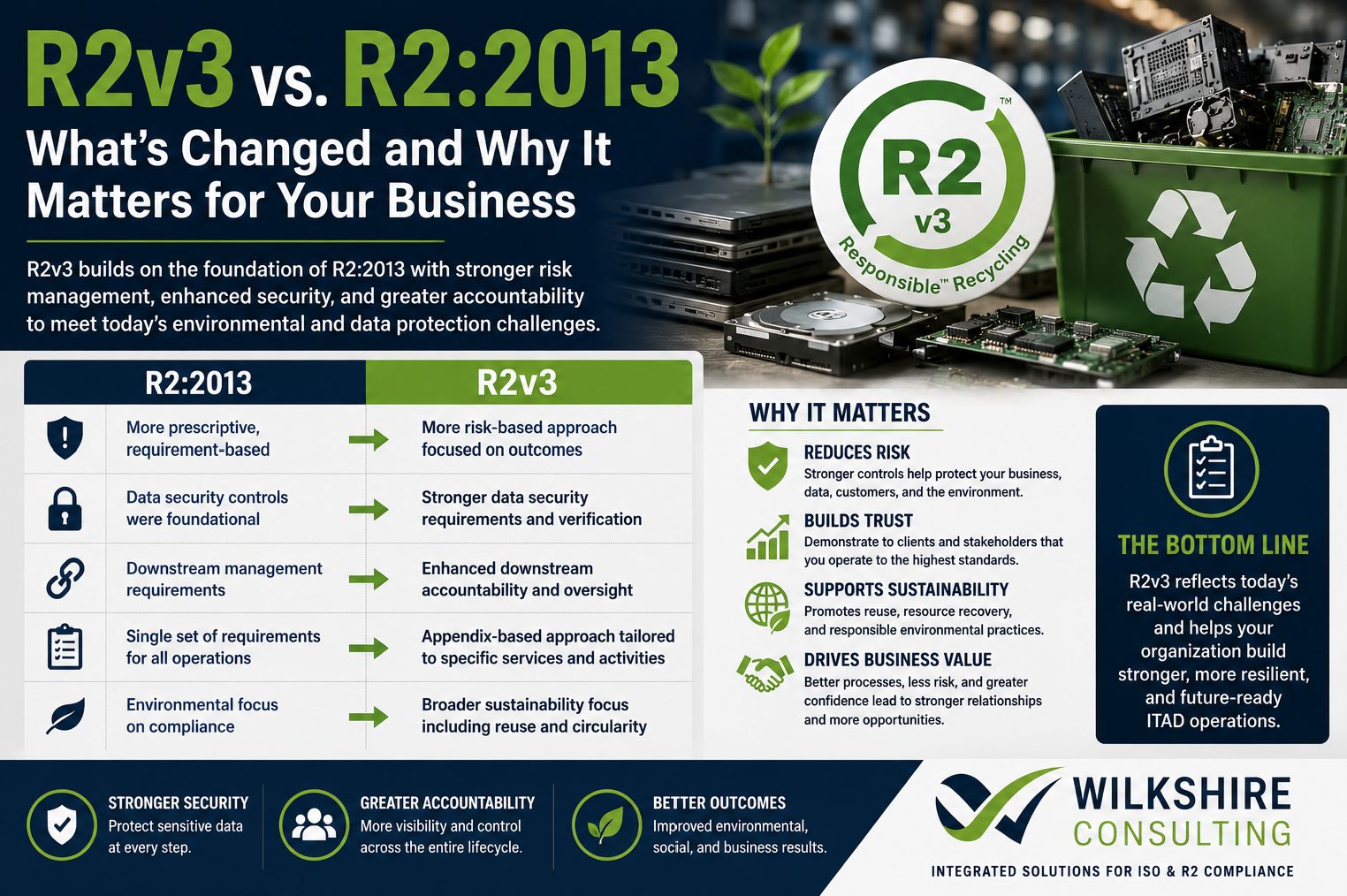
For many years, R2:2013 served as the benchmark for responsible electronics recycling and IT asset disposition (ITAD).
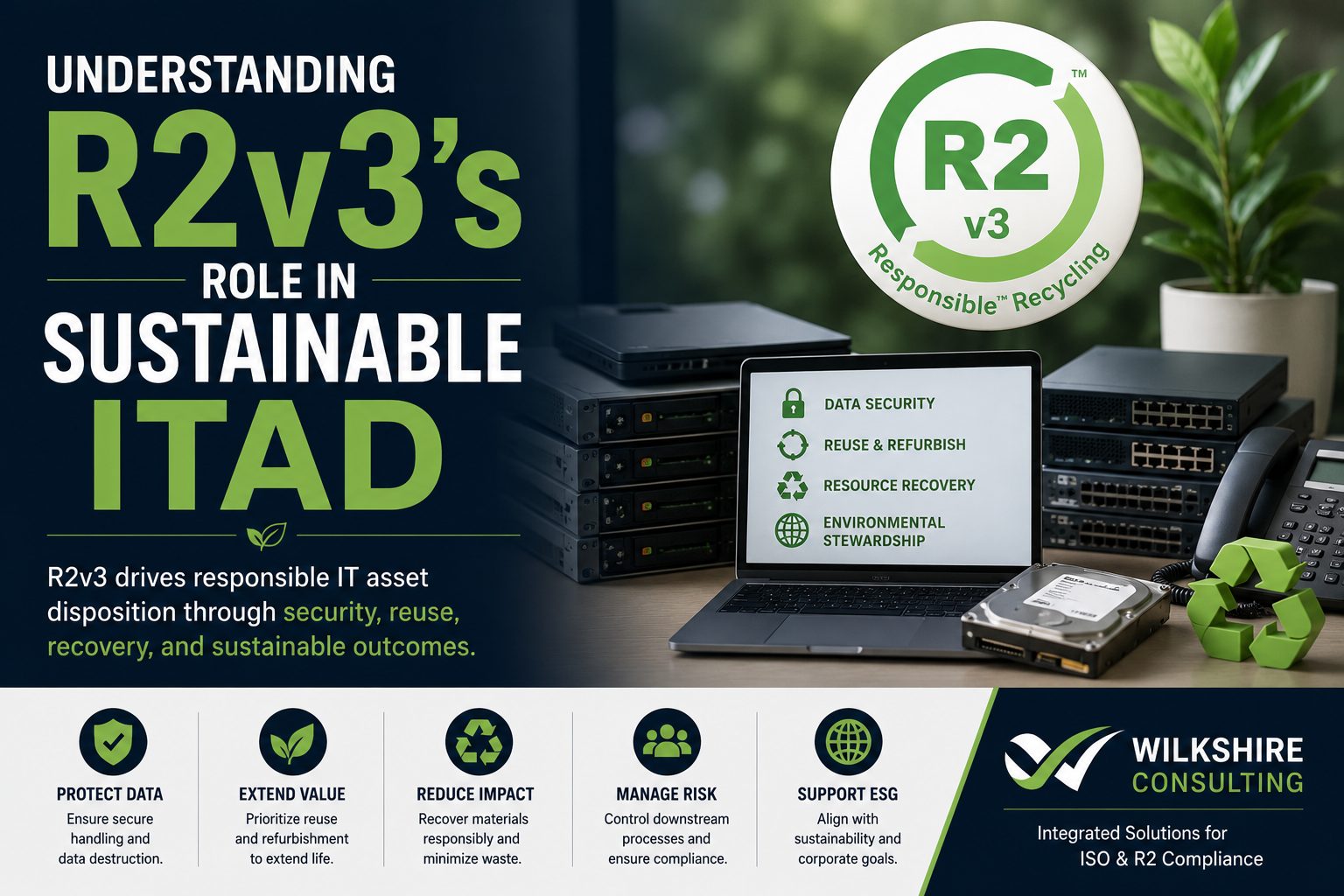
When most people hear the term IT Asset Disposition (ITAD), they think about one thing: When most people hear the term IT Asset Disposition (ITAD), they think about one t
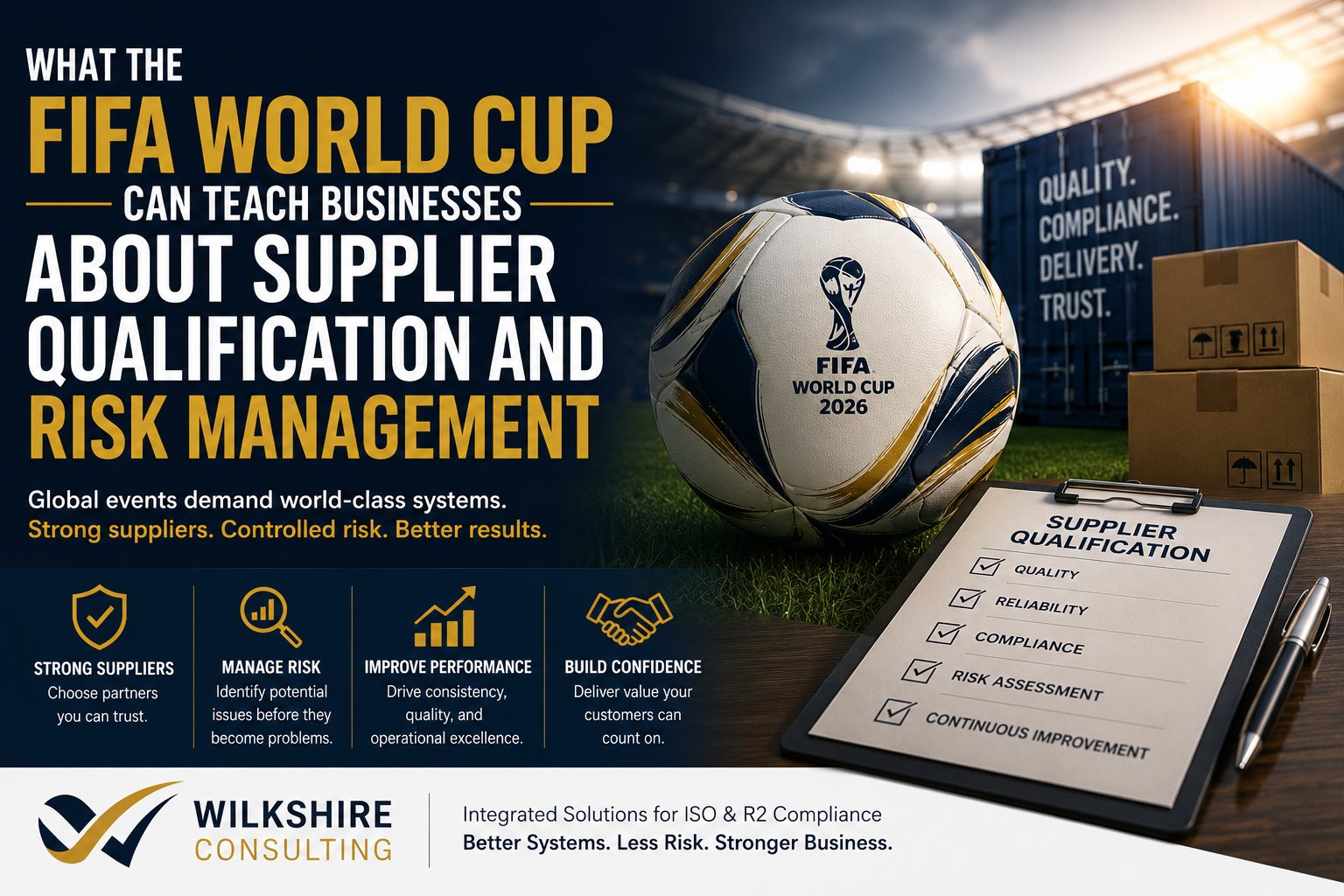
Every four years, the FIFA World Cup captures the attention of billions of people around the globe.
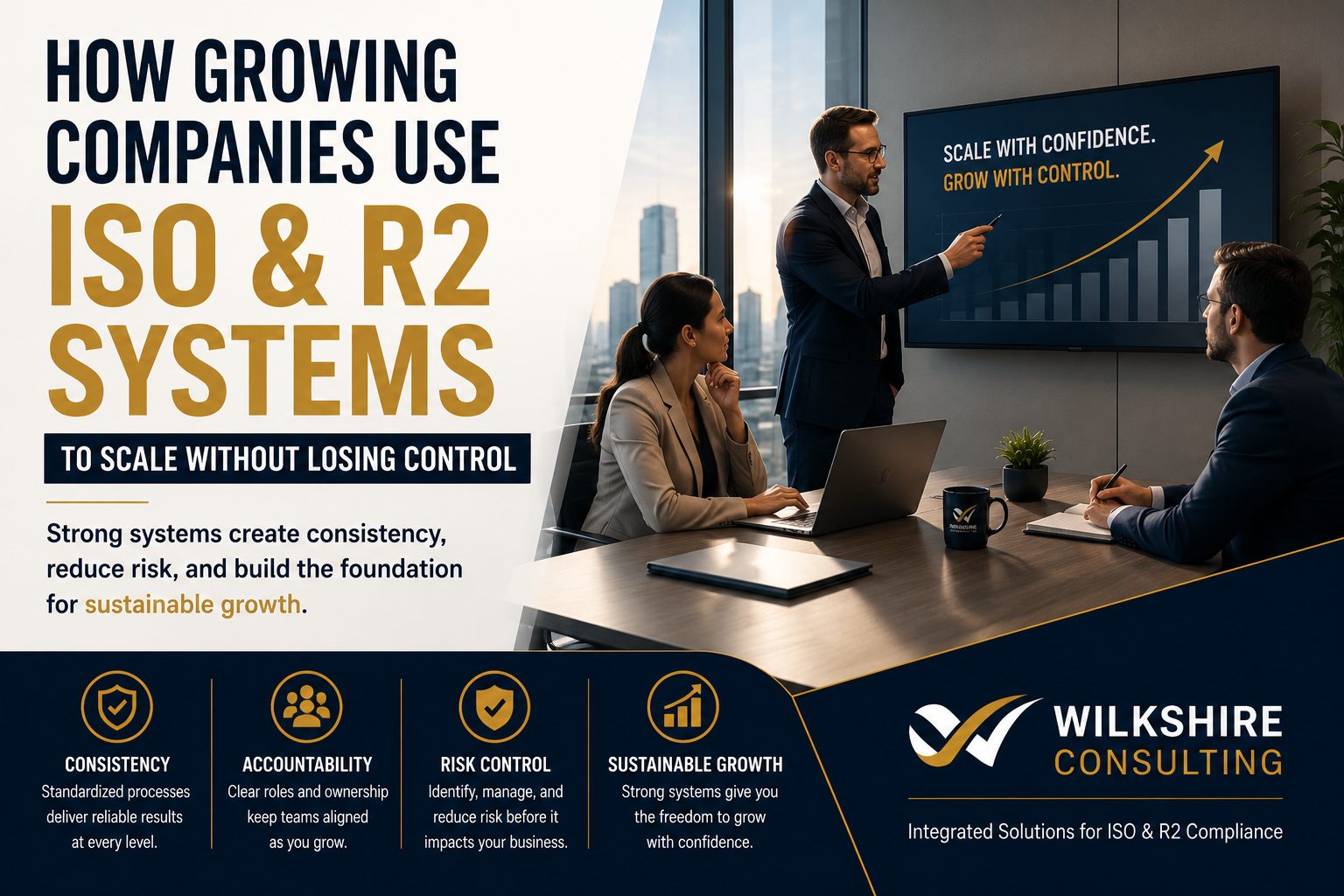
Growth sounds exciting — until operations start slipping. At first, everything feels manageable: - Teams communicate easily - Leadership sees everything - Problems get fi
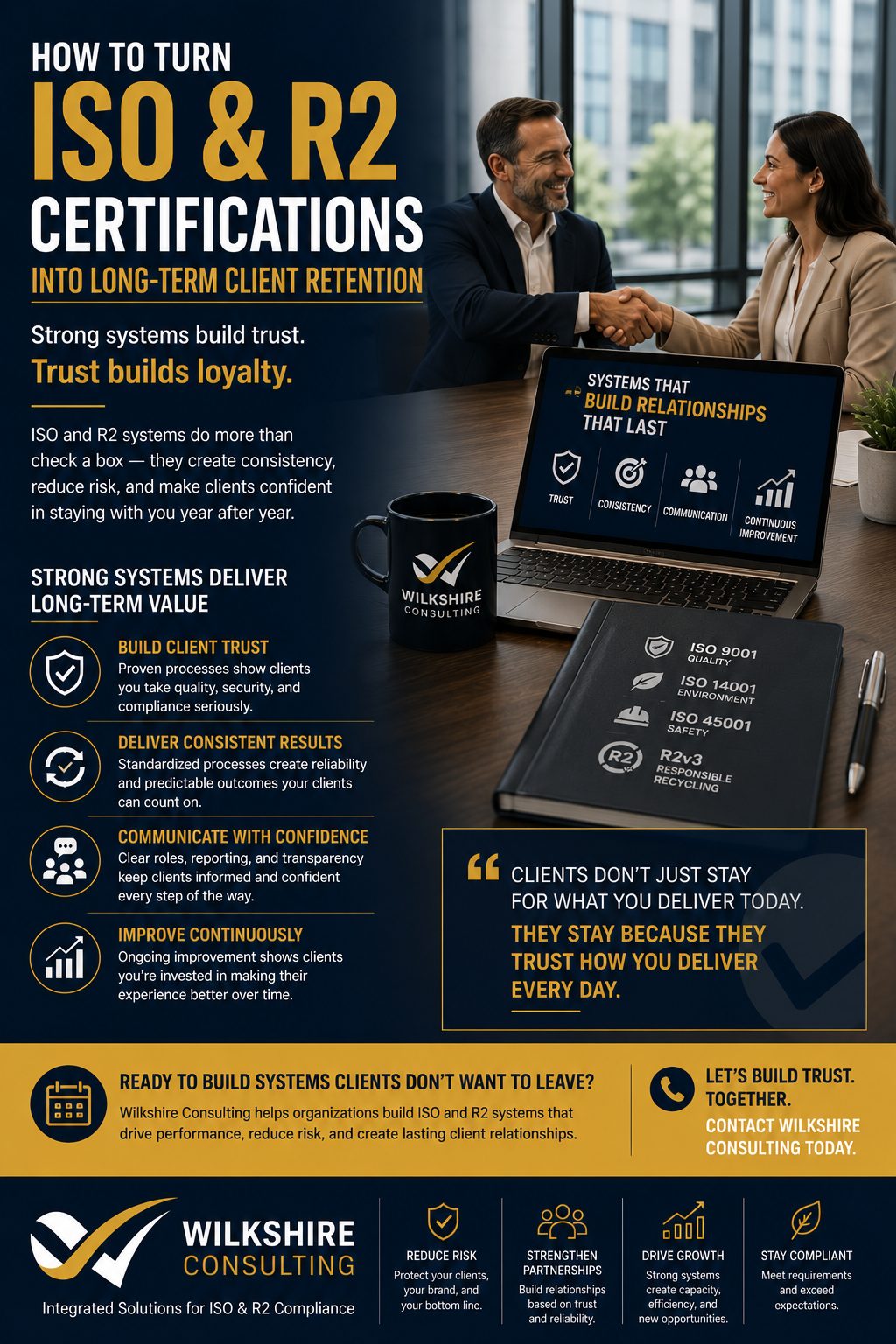
Winning a client feels great. Keeping them for years? That’s where real business growth happens.
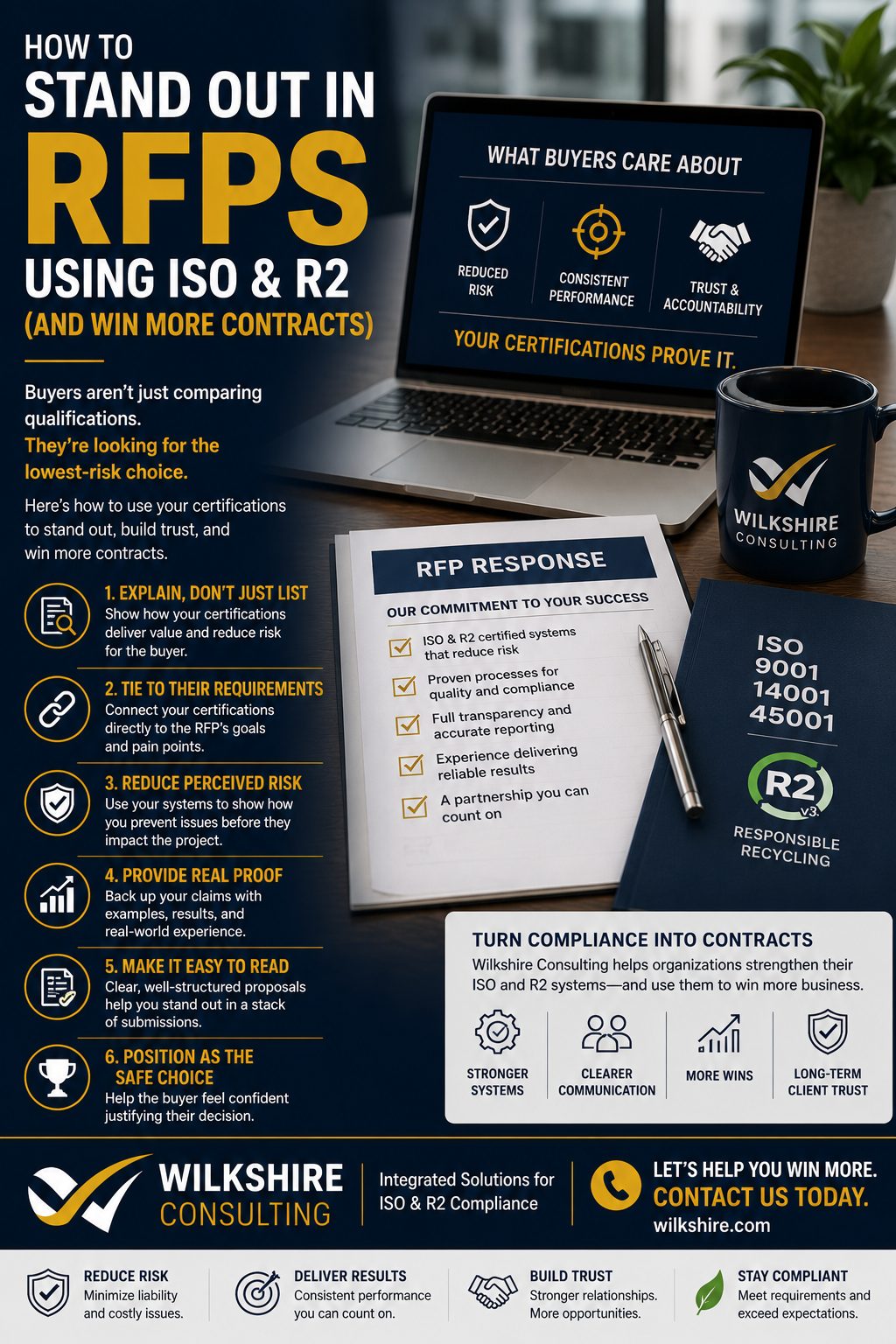
Most companies approach RFPs the same way. They answer the questions. Attach their certifications.
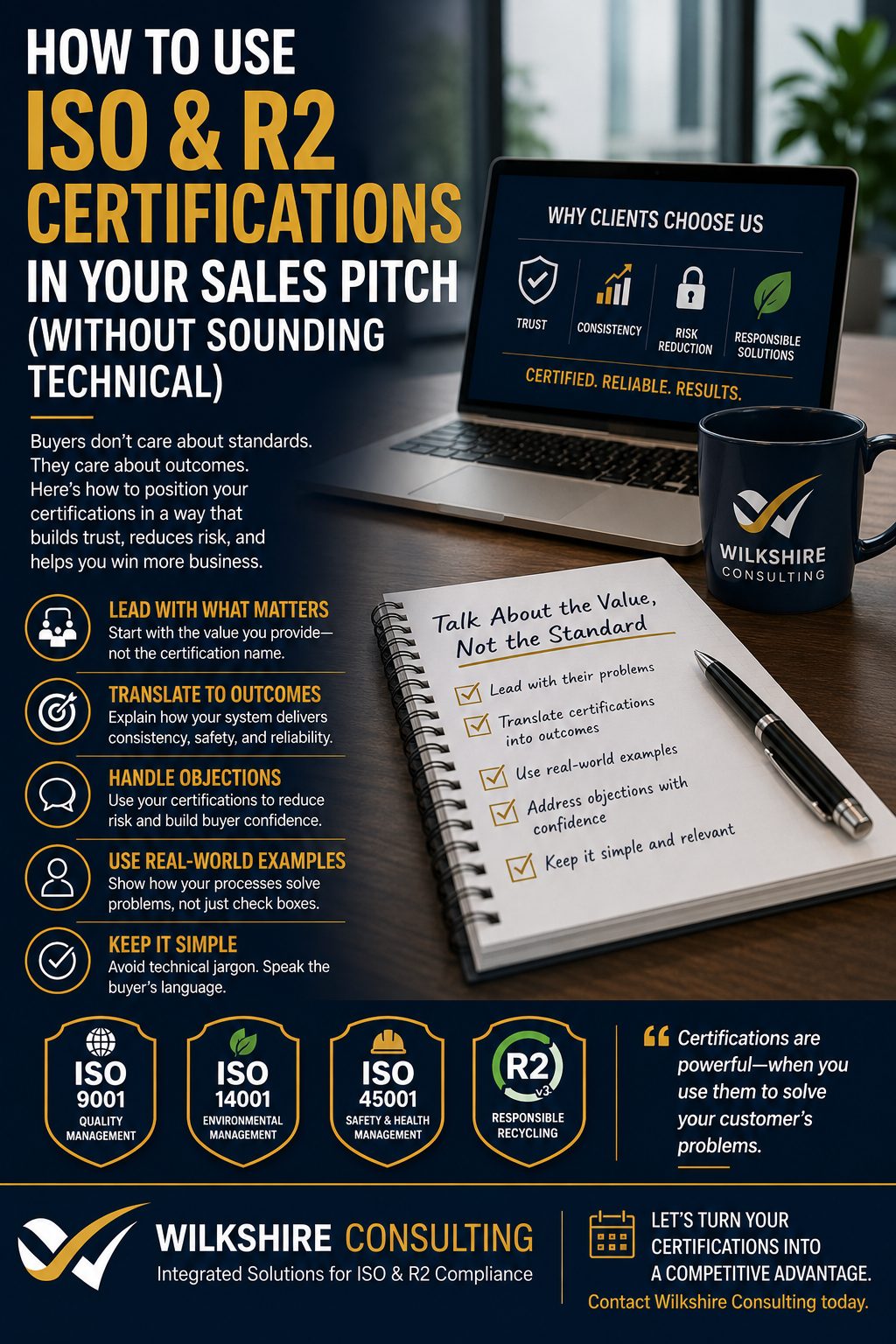
Most companies get this part wrong. They invest time, money, and effort into ISO or R2 certification……and then completely underuse it in sales conversations.
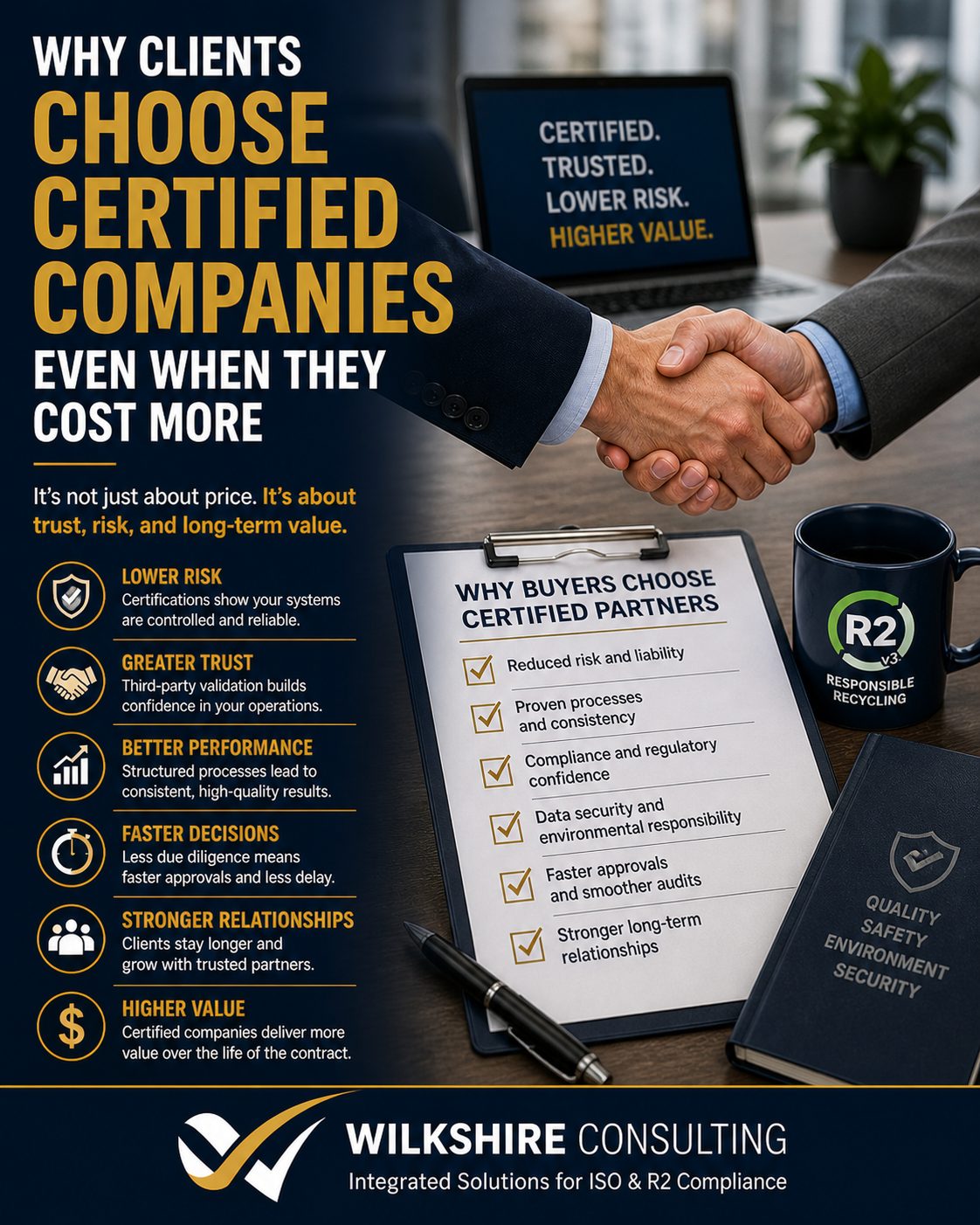
Most companies assume price is the deciding factor. It’s not. At least not in the markets where ISO and R2 certifications actually matter.
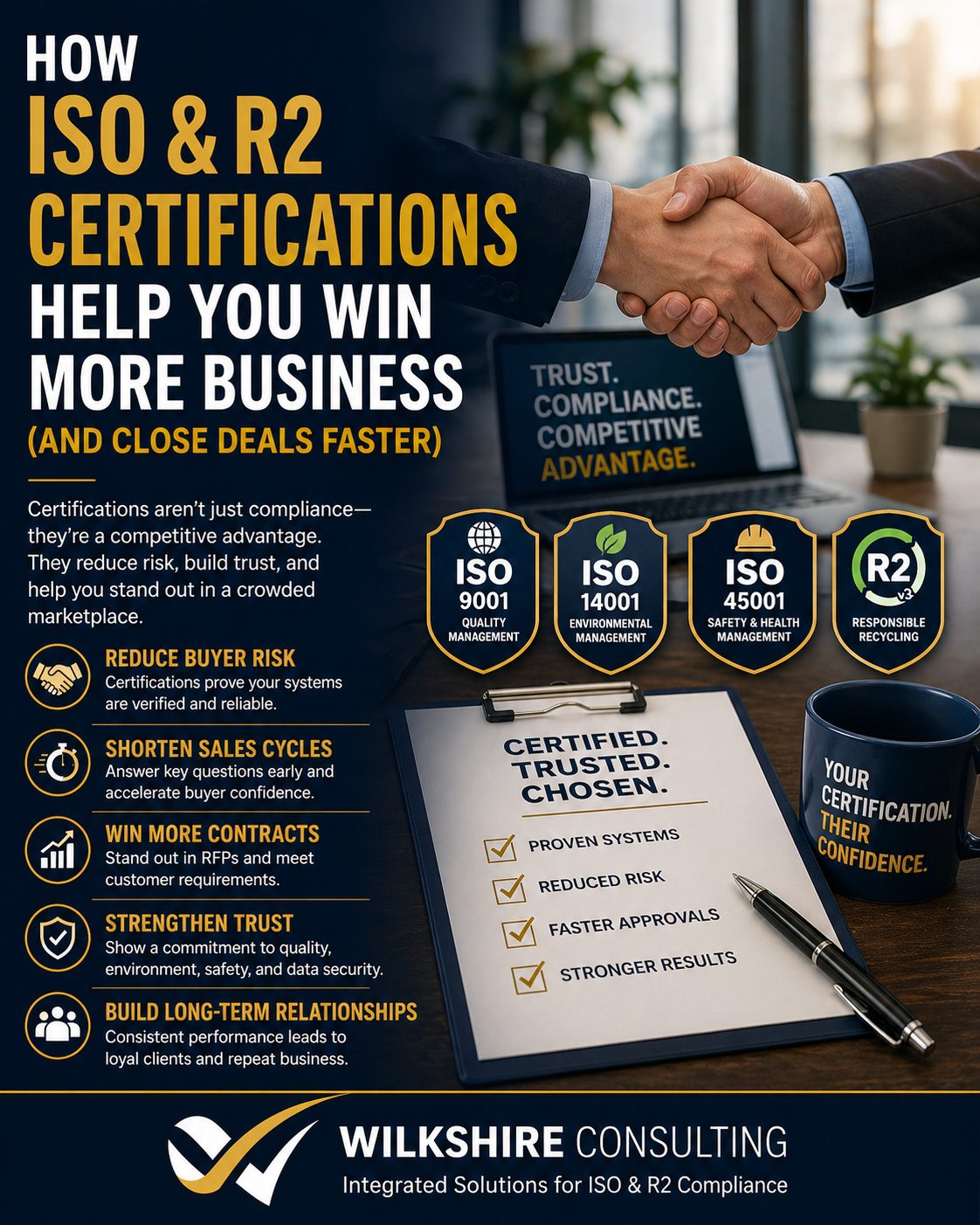
For many organizations, ISO and R2 certifications are viewed as operational requirements — necessary for compliance, but disconnected from revenue.
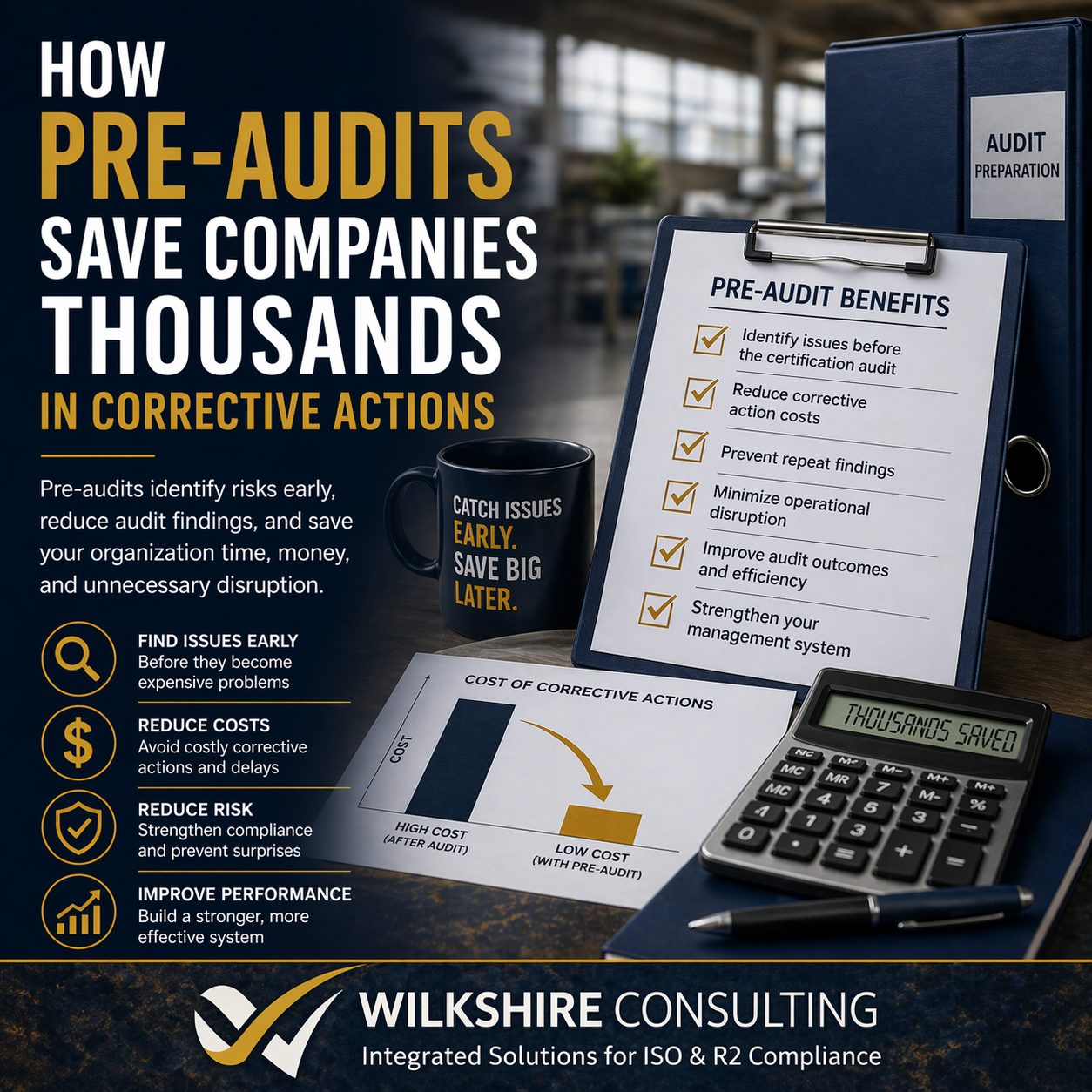
Most organizations treat audits as a checkpoint. They prepare, go through the certification audit, address findings, and move forward.
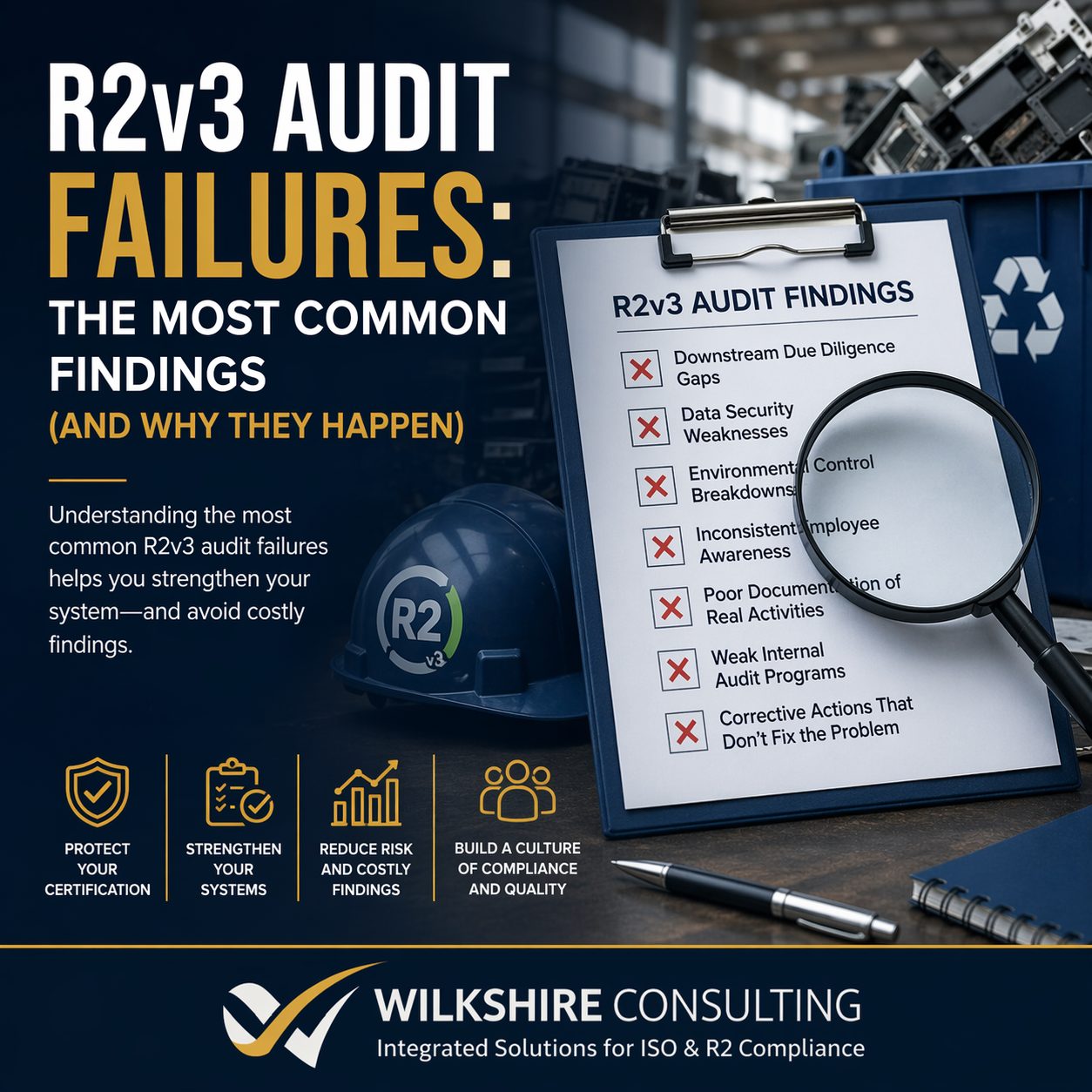
R2v3 audits are becoming more rigorous every year. Certification bodies are no longer just verifying documentation — they are evaluating whether your system actually work
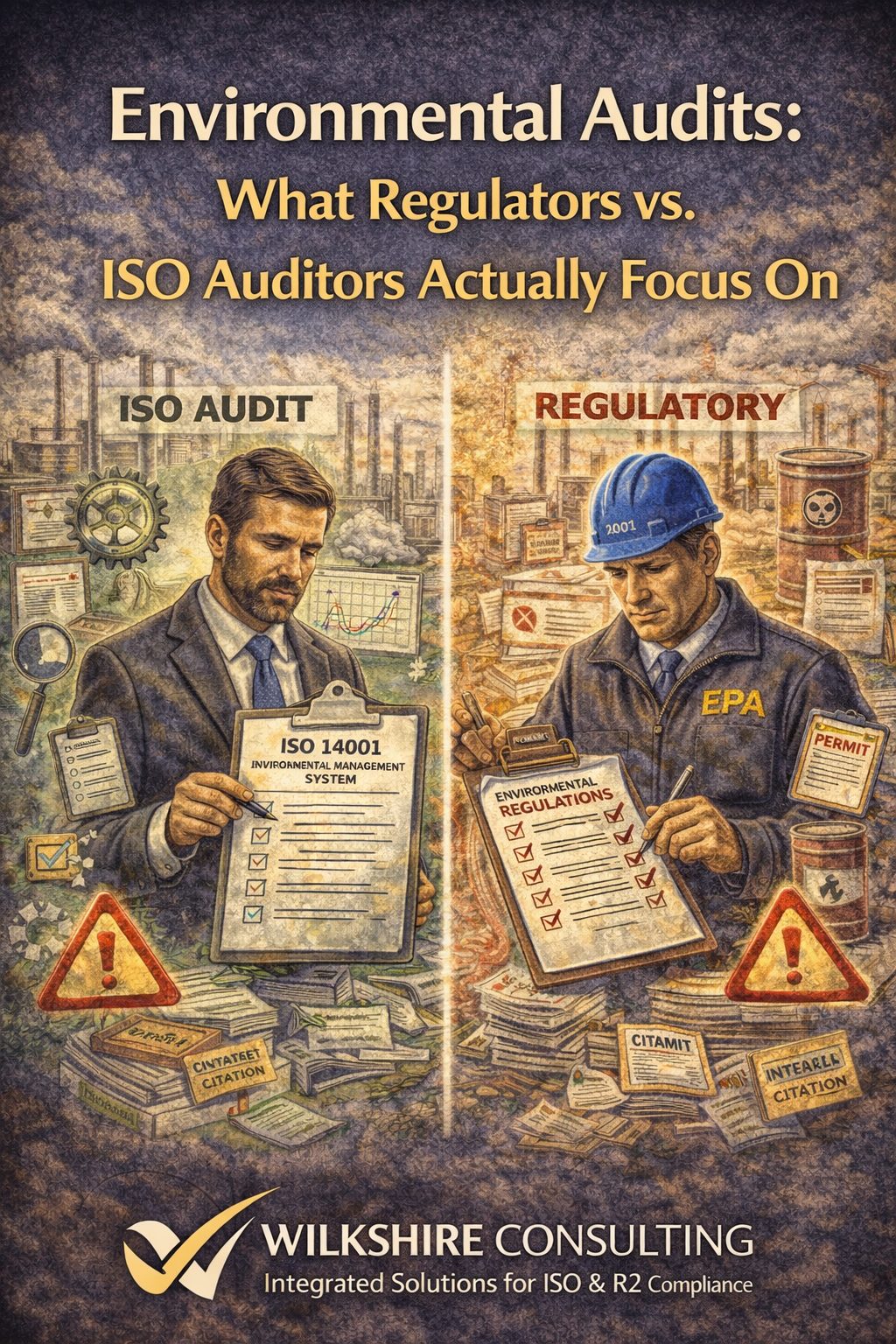
Many organizations assume that ISO 14001 certification means they are fully prepared for environmental audits.
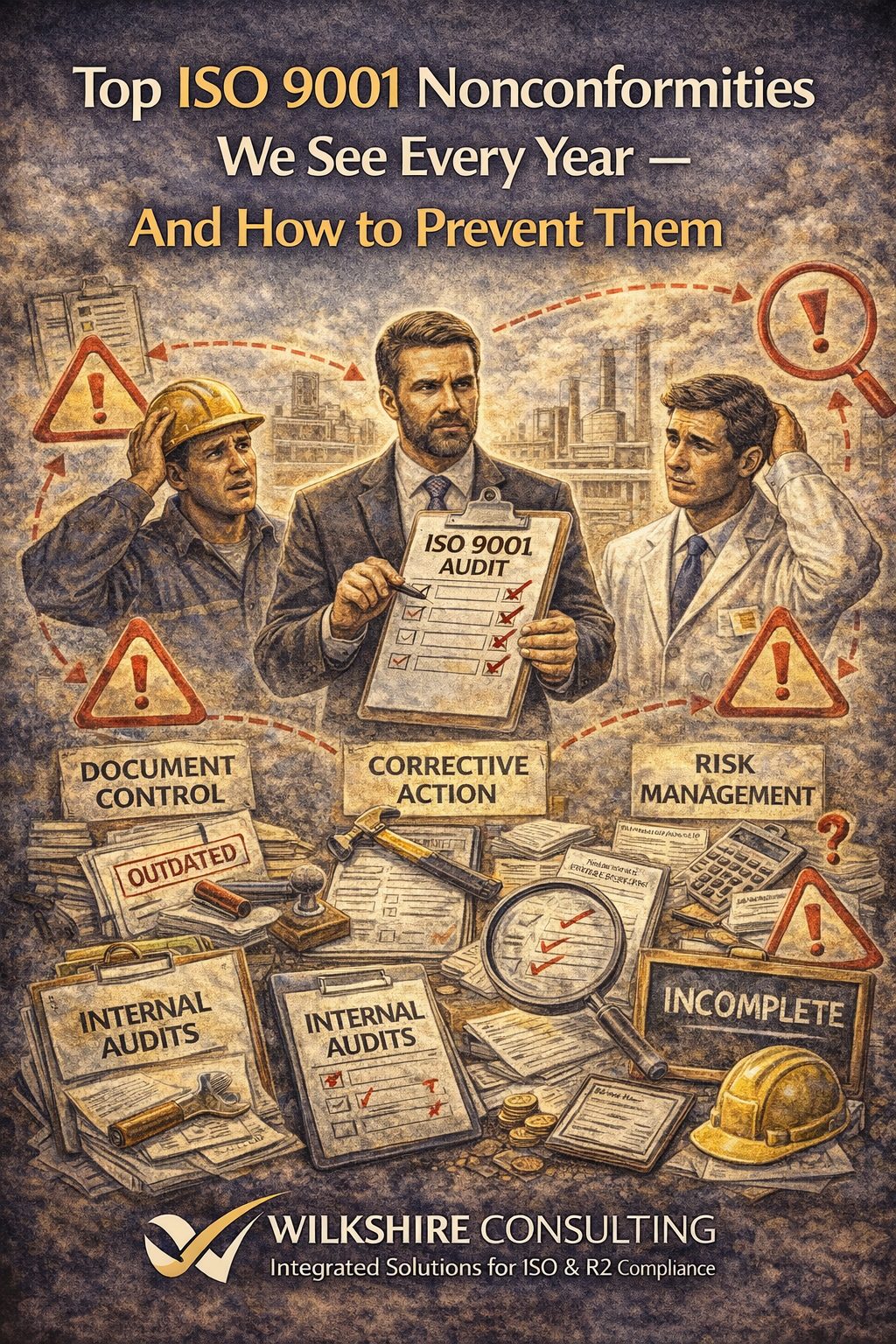
Every year, organizations across industries undergo ISO 9001 audits — and every year, the same nonconformities appear.
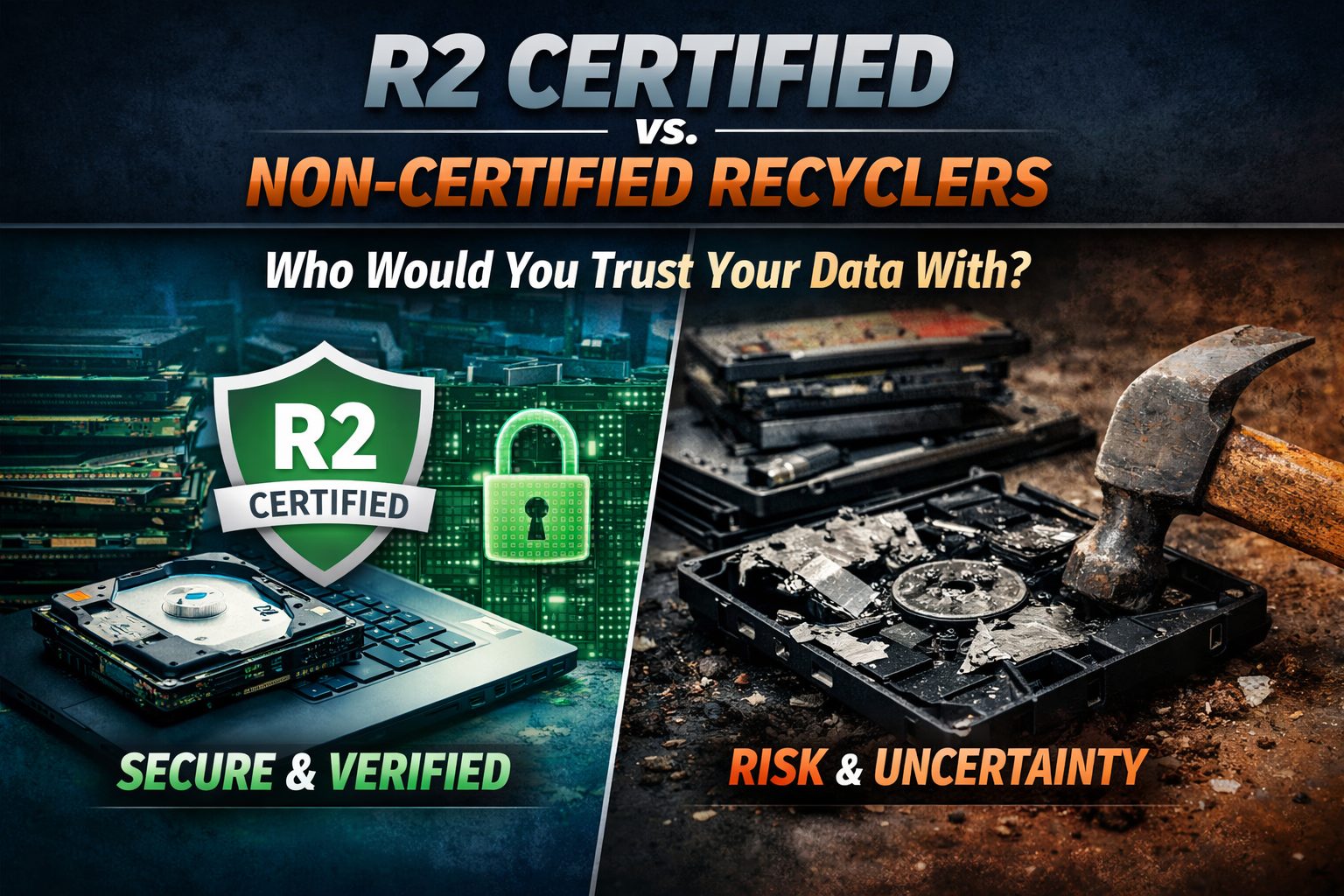
R2-Certified vs. Non-Certified Recyclers: Who Would You Trust With Your Data?
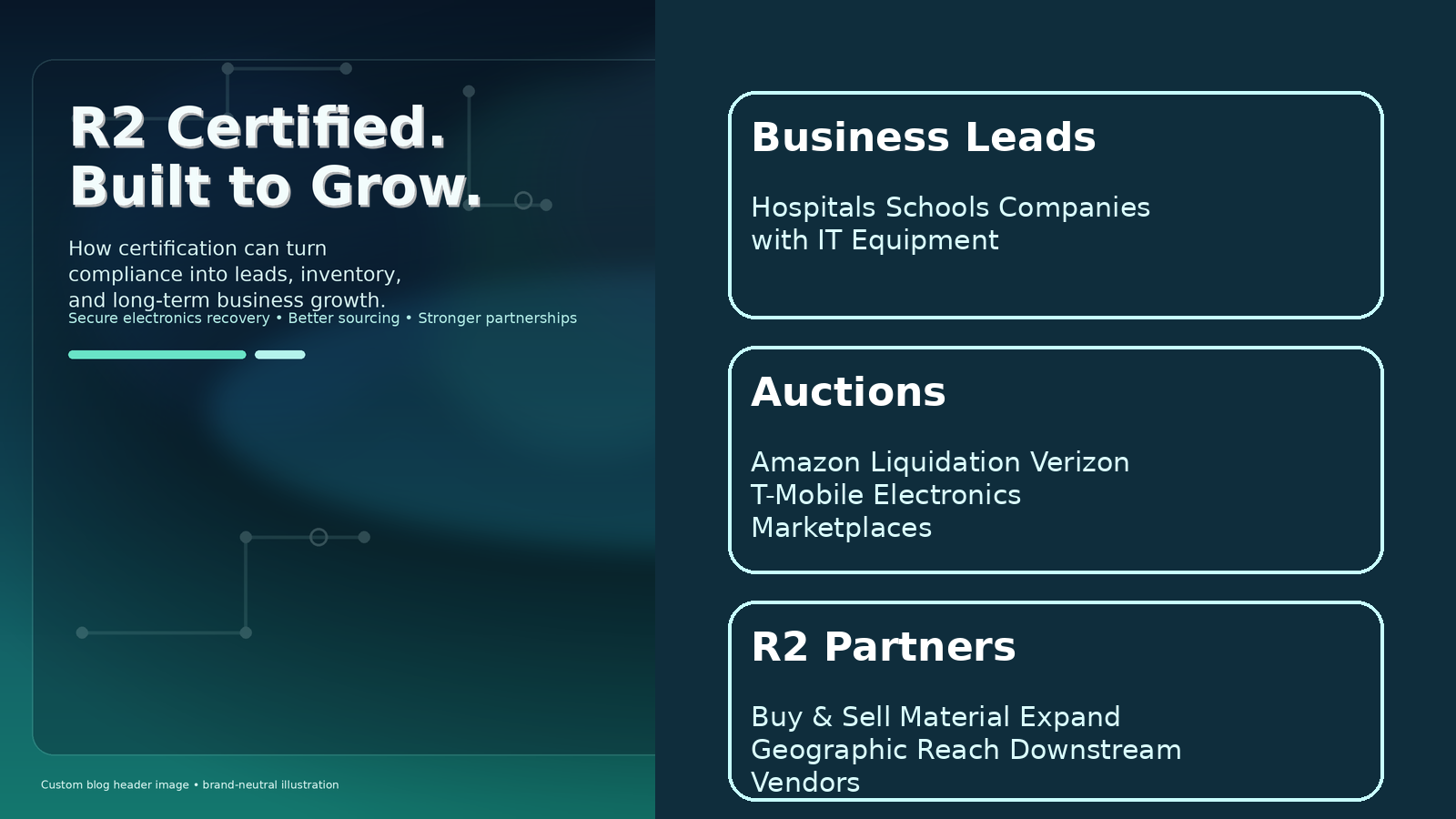
R2 certification can do more than prove compliance. Learn how an R2-certified company can win hospitals, schools, and business clients, source inventory from auctions, an
Most organizations approach ISO audits the same way: Most organizations approach ISO audits the same way: They prepare documentation, review procedures, train employees o
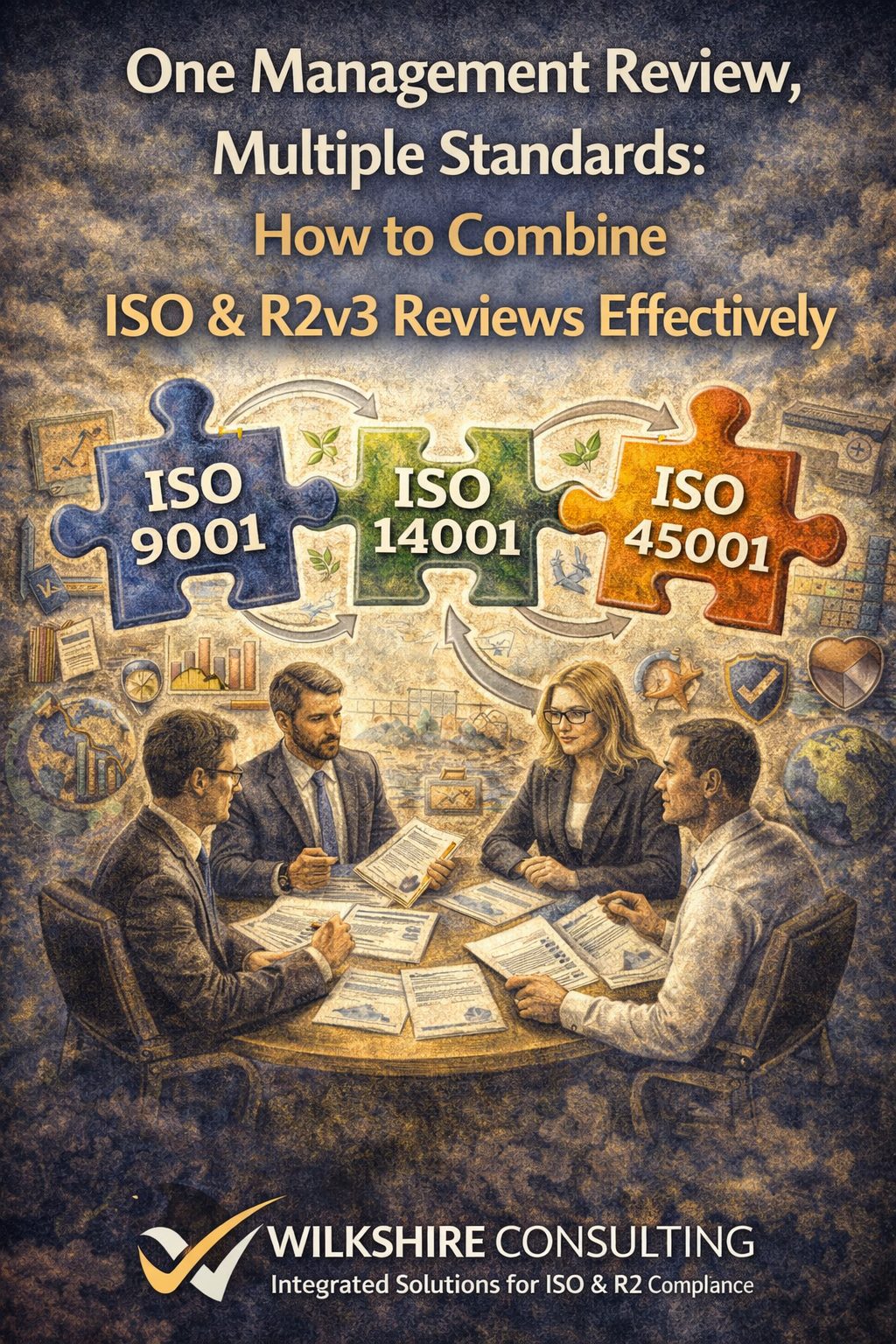
Management review is one of the most important — and most underutilized — elements of any ISO or R2v3 management system.
Downstream vendor management is one of the most critical — and most scrutinized — components of R2v3 Responsible Recycling.It is also one of the areas where organizations
Job Hazard Analysis (JHA) is one of the most powerful tools within an ISO 45001 occupational health and safety management system.
Environmental aspect registers are one of the most important components of an ISO 14001 environmental management system.
Process Mapping for ISO 9001: What Auditors Look For vs. Process mapping is one of the most misunderstood elements of ISO 9001.
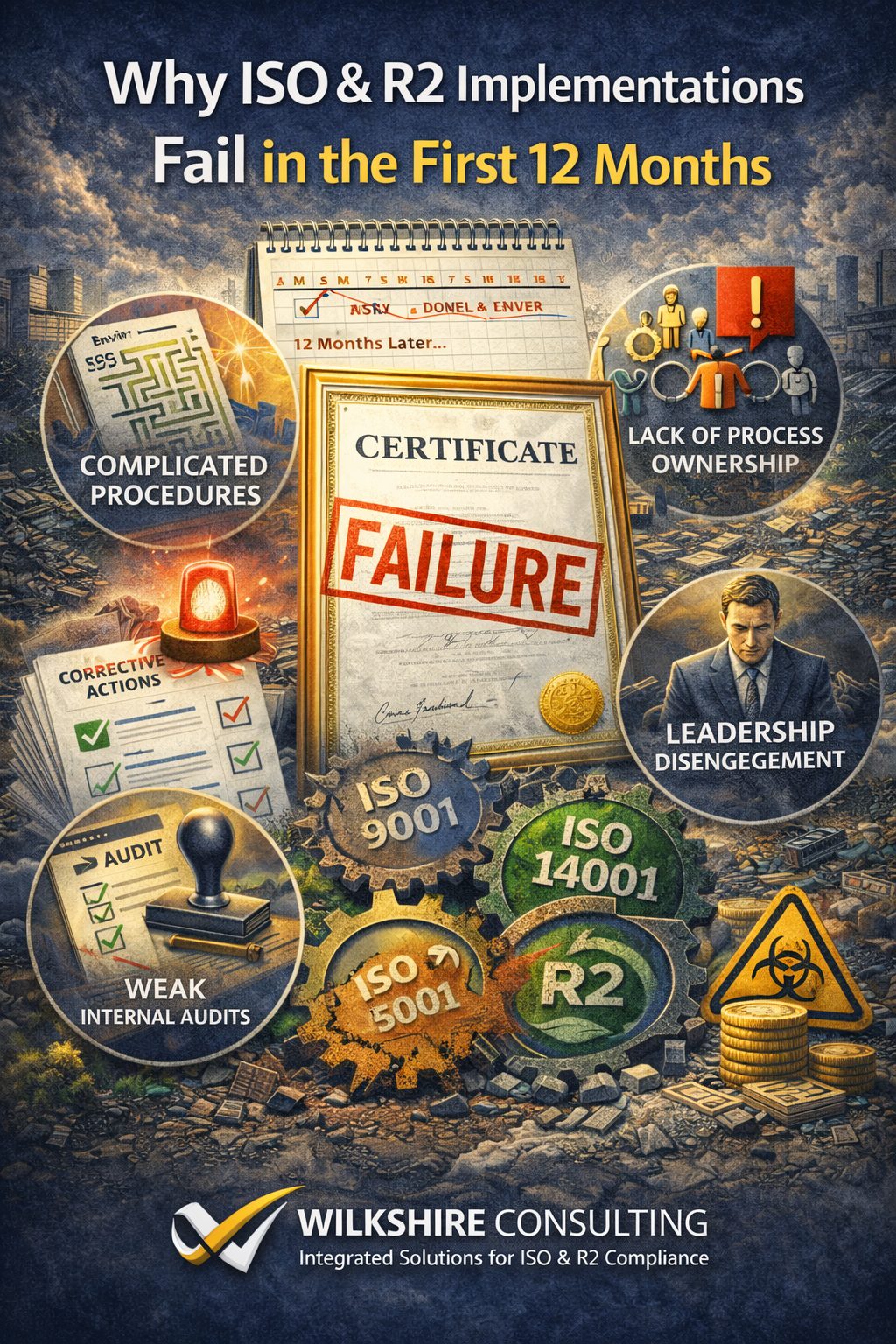
Many organizations achieve certification — and then slowly lose control of their management system.The documentation exists. The certificate is framed.
For electronics recyclers and IT asset disposition (ITAD) providers, R2 certification is often viewed as a gateway requirement — something necessary to access enterprise
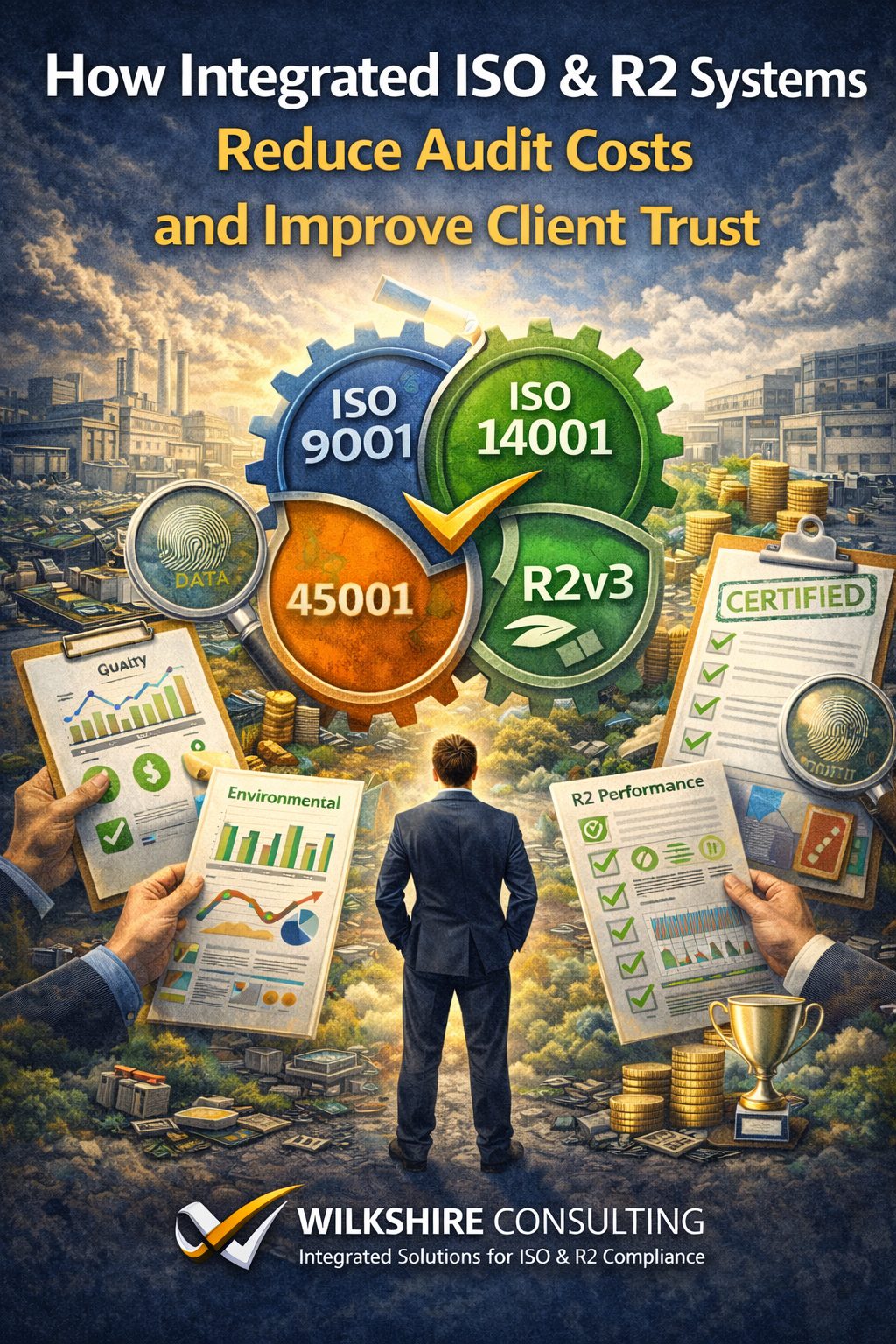
Managing ISO 9001, 14001, 45001 and R2v3 as separate systems means higher costs, duplicated effort and audit fatigue. What integration actually changes.
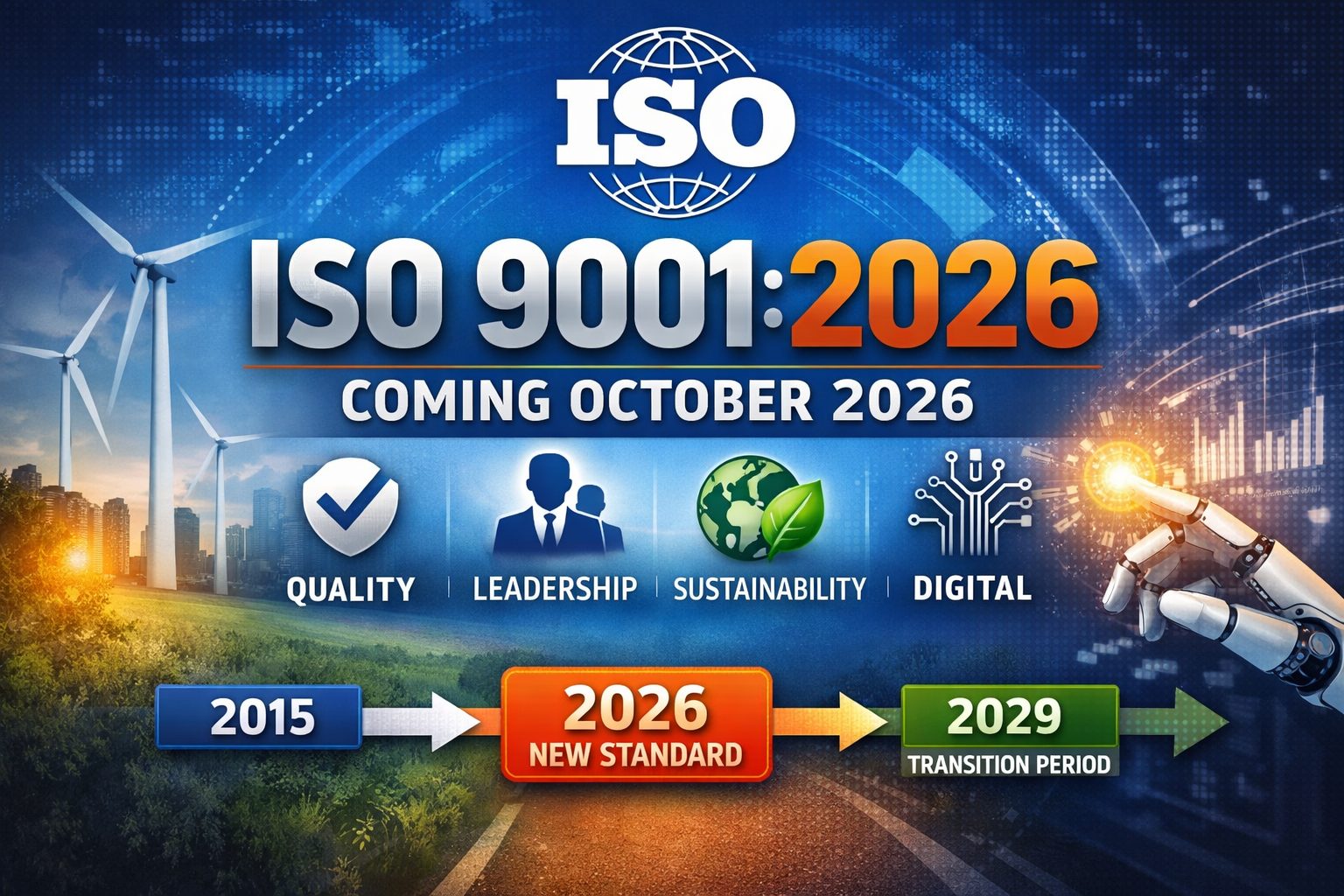
The next revision of the world’s most widely adopted Quality Management System standard is on its way.ISO 9001:2026 is expected to be published in October 2026, replacing
R2v3 Responsible Recycling was once viewed primarily as a compliance obligation — a certification required to access certain contracts or satisfy downstream expectations.
Many organizations believe they have strong safety programs because their numbers look good. Incident rates are low. Lost time injuries are minimal. Reports show improvem
ISO 14001 is often misunderstood as a standard focused solely on environmental permits, waste management, and regulatory checklists.
For many organizations, ISO 9001 is viewed as a necessary cost of doing business. A customer requires it, a market expects it, or a contract demands it.
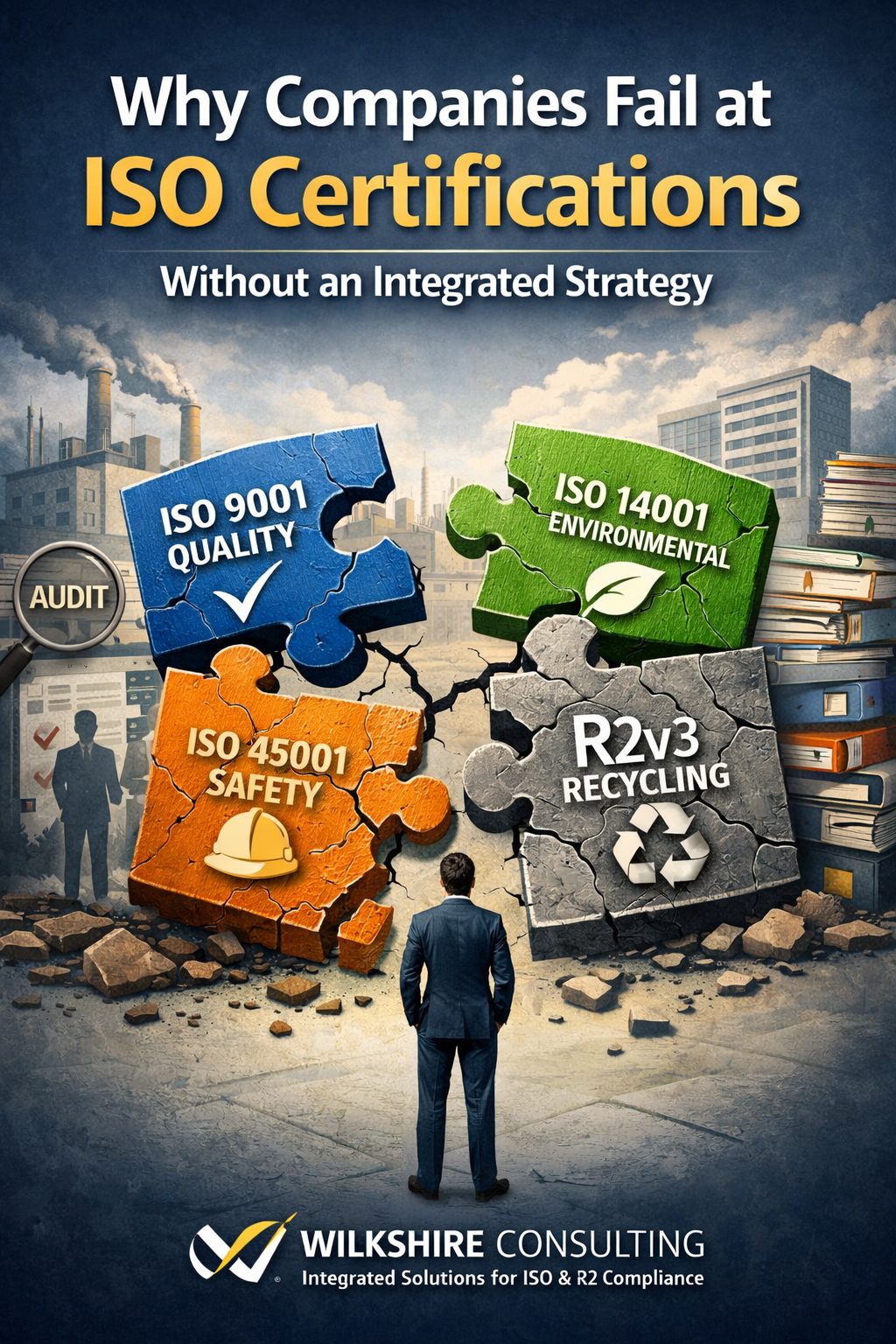
Many organizations pursue ISO certifications with good intentions: meet customer requirements, reduce risk, and demonstrate credibility.

One of the biggest surprises organizations face during an ISO 9001 audit is hearing this statement from an auditor:“Your system is compliant — but it isn’t effective.” Fo

At Wilkshire Consulting, we often meet organizations that proudly earned ISO 9001 certification — only to struggle, stall, or fail during their first surveillance audit.T
(A Wilkshire Consulting Long-Form Guide)Management Review is one of the most scrutinized — and frequently misunderstood — requirements in ISO 9001.
Earning your R2v3 certification is a major achievement — but many companies fail to capitalize on it.
Achieving R2v3 certification is a major milestone for electronics recyclers, refurbishers, and ITAD providers. But many organizations underestimate what it truly takes to
At Wilkshire Consulting, we work with recyclers, ITAD companies, and refurbishers across North America who often ask the same question: “How do we actually make money wit

ISO 9001 Clause 7, Support, explained: how resources, competence, communication, and documented information give your QMS its foundation.
The ISO 9001 clause guide
When organizations pursue ISO 9001 certification, they often focus on documentation, audits, and process control.

As the electronics recycling and IT asset disposition (ITAD) industry continues to grow, the expectations placed on certified recyclers are increasing.

ISO 9001 Clause 8 in depth: how planning, requirements, design, suppliers, production, release and nonconforming outputs fit together to deliver quality.
The ISO 9001 clause guide
In the electronics recycling and IT asset disposition (ITAD) industry, trust, compliance, and environmental responsibility aren't optional-they're essential.

In today's competitive global marketplace, businesses must balance two critical priorities: winning new customers and keeping existing ones loyal.

The electronics recycling industry is one of the fastest-growing sectors in the world, but it also comes with significant environmental, health, and safety (EHS) challeng

In today's globalized world, managing e-waste responsibly doesn't end once electronics leave your facility. The risks of improper disposal, illegal exports, and irrespons

For more than three decades, ISO 9001 has been the world's most recognized Quality Management System (QMS) standard, helping organizations ensure consistent quality, cust

The global demand for electronics is higher than ever, but so is the amount of e-waste generated each year.

In today's digital-first world, data is one of the most valuable and vulnerable assets. Every device recycled or refurbished by an IT Asset Disposition (ITAD) provider, r
The electronics recycling industry is evolving faster than ever. With global e-waste projected to exceed 75 million metric tons annually by 2030, the need for responsible

When organizations think of ISO 9001:2015, calibration may not be the first topic that comes to mind. Yet, calibration is one of the most critical aspects of ensuring pro
Equipment maintenance might not always be the first thing people think of when discussing ISO 9001, but it plays a vital role in ensuring consistent quality, safety, and

As technology continues to reshape how businesses operate, ISO standards are evolving to meet the demands of a digital-first economy.

In today's highly competitive and regulated marketplace, manufacturers face increasing pressure to ensure quality, manage risk, and meet customer expectations-all while s
Gaining ISO certification is a major milestone for any organization. It demonstrates a commitment to quality, efficiency, and continuous improvement.

Artificial intelligence (AI) is no longer a distant frontier – its powering everything from healthcare diagnostics to financial forecasting to customer service chatbots.

As the world shifts toward greater environmental and social accountability, businesses are facing a new reality: Environmental, Social and Governance (ESG) performance is

In an era where ransomware attacks can paralyze entire governments and AI is being used to supercharge cybercrime, cybersecurity is no longer just an IT issue – it’s a bu

As the global push for sustainable business accelerates, ESG-Environmental, Social, and Governance – has moved from boardroom buzzword to business imperative.

In an era where sustainability is a business imperative, organizations are reevaluating their approach to how they manage aging electronics.

The global surge in electronic waste has highlighted the urgent need for responsible handling, repair, reuse and recycling of electronics.

When organizations hear “ISO 9001” they often think compliance, certification audits, and lots of paperwork. But the real value of ISO 9001 lies far beyond ticking the bo

In this ISO 9001 Overview we’ll be going over the ISO 9001 standard and is the last blog post in this series of ISO 9001:2015. If you're looking to take your business to

ISO 9001 Clause 10.3 explained: the standard's final clause, and why continually improving your QMS's suitability and effectiveness never stops.
The ISO 9001 clause guide
ISO 9001 Clause 10.2 explained: how to handle nonconformities correctly, from immediate correction to root-cause analysis that prevents recurrence.
The ISO 9001 clause guide
ISO 9001 Clause 10.1 explained: the foundation for improvement, and how organizations identify and act on opportunities to improve the QMS.
The ISO 9001 clause guide
An overview of ISO 9001 Clause 10, Improvement: how its three sections turn nonconformities and data into lasting gains for your QMS.
The ISO 9001 clause guide
ISO 9001 Clause 9.3 explained: what top management must review, the required inputs and outputs, and why management review can't be skipped.
The ISO 9001 clause guide
ISO 9001 Clause 9.2 explained: how to plan and run internal audits that genuinely check whether your QMS conforms and is effectively maintained.
The ISO 9001 clause guide
ISO 9001 Clause 9.1 explained: how to monitor, measure, analyze, and evaluate QMS performance so decisions are based on data, not assumptions.
The ISO 9001 clause guide
An overview of ISO 9001 Clause 9, Performance Evaluation: how monitoring, internal audits and management review show whether your QMS is working.
The ISO 9001 clause guide
ISO 9001 Clause 8.7 explained: how to identify, control and correct nonconforming outputs before they reach customers, and prevent recurrence.
The ISO 9001 clause guide
ISO 9001 Clause 8.6 explained: how organizations verify and authorize products and services before release, keeping defects from reaching customers.
The ISO 9001 clause guide
ISO 9001 Clause 8.5 explained: the controlled conditions for production and service delivery, from traceability to post-delivery activities.
The ISO 9001 clause guide
ISO 9001 Clause 8.4 explained: how to control externally provided processes, products, and services so suppliers never compromise quality.
The ISO 9001 clause guide
ISO 9001 Clause 8.3 explained: the structured approach to product and service design, from planning inputs to controls, outputs, and changes.
The ISO 9001 clause guide
ISO 9001 Clause 8.2 explained: how organizations determine, review, and communicate product and service requirements to meet customer needs.
The ISO 9001 clause guide
The circular economy for used electronic recycling is ever expanding. Playing a huge role in building a sustainable used electronic recycling chain has been the developme

ISO 9001 Clause 8.1 explained: how organizations plan and control operations, from setting requirements to managing risk, suppliers, and change.
The ISO 9001 clause guide
An overview of ISO 9001 Clause 8, Operation: how sections 8.1 through 8.7 work together to plan, execute, and control quality processes.
The ISO 9001 clause guide
ISO 9001 Clause 7.5 explained: the requirements for creating, updating and controlling the documented information your QMS depends on.
The ISO 9001 clause guide
ISO 9001 Clause 7.4 explained: what to communicate, when, to whom and how, for both internal and external QMS communication.
The ISO 9001 clause guide
ISO 9001 Clause 7.3 explained: why employees need to understand the quality policy and their own role in the QMS, not just follow procedures.
The ISO 9001 clause guide
ISO 9001 Clause 7.2 explained: how to determine, provide and prove the competence of everyone whose work affects your QMS.
The ISO 9001 clause guide
ISO 9001 Clause 7.1 explained: the people, infrastructure, environment and knowledge resources your QMS needs to actually work.
The ISO 9001 clause guide
An overview of ISO 9001 Clause 7, Support: how resources, competence, awareness, communication and documented information work together.
The ISO 9001 clause guide
ISO 9001 Clause 6.3 explained: how to plan changes to your QMS so they don't create unintended consequences or break its integrity.
The ISO 9001 clause guide
ISO 9001 Clause 6.2 explained: how to set measurable quality objectives that fit your quality policy, and plan who does what, with which resources and by when.
The ISO 9001 clause guide
ISO 9001 Clause 6.1 explained: how to identify, assess and address risks and opportunities as part of planning your QMS.
The ISO 9001 clause guide
An overview of ISO 9001 Clause 6, Planning: addressing risks and opportunities, setting quality objectives, and planning changes to the QMS.
The ISO 9001 clause guide
ISO 9001 Clause 5.3 explained: how defining and communicating roles, responsibilities and authorities keeps your QMS accountable and effective.
The ISO 9001 clause guide
ISO 9001 Clause 5.2 explained: what a quality policy must include, how to write one, and why it's the foundation the rest of your QMS builds on.
The ISO 9001 clause guide
ISO 9001 Clause 5.1 explained: what leadership and commitment from top management actually looks like, and why it can't just be delegated.
The ISO 9001 clause guide
An overview of ISO 9001 Clause 5, Leadership: what top management commitment, quality policy, and defined roles and authorities require.
The ISO 9001 clause guide
If you're working to implement ISO 9001:2015 in your organization, you’ve likely heard about the importance of proper documentation.
Documentation templates
ISO 9001 clause 4.4 explained: what “establishing the QMS and its processes” requires, how process interactions work, and why it matters for effectiveness.
The ISO 9001 clause guide
ISO 9001 Clause 4.3 explained: how to determine and document your QMS scope so it reflects your real products, services and locations.
The ISO 9001 clause guide
ISO 9001 Clause 4.2 explained: how to identify interested parties, monitor their needs and expectations, and keep your QMS aligned to them.
The ISO 9001 clause guide
ISO 9001 Clause 4.1 explained: what “understanding the organization and its context” means, and how internal and external issues shape your QMS.
The ISO 9001 clause guide
An overview of ISO 9001 Clause 4, Context of the Organization: internal and external issues, interested parties, and defining your QMS scope.
The ISO 9001 clause guide
Environmental compliance is an ever-growing topic that is gaining momentum and popularity every day. Its importance cannot be understated as the future is dependent on it

ISO 45001 is the internationally recognized standard for Occupational Health & Safety Management Systems. ISO 45001 provides a structured framework for organizations of a
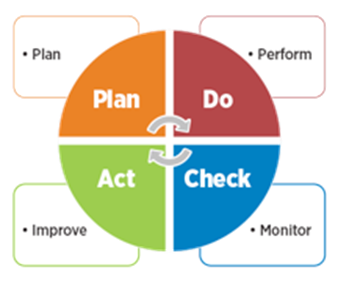
Is your business aiming to enhance your processes, improve quality, and foster a culture of continuous improvement? These are all benefits of the Plan, Do, Check, Act (PD

Climate change is an ever-growing topic and ISO has joined in on the party. In case you haven't heard the news already, two additional statements will be added to the Man

In this next blog post we will be discussing the 7th and last Quality Management Principle, Relationship management. Relationship management is about managing relationshi
The seven quality management principles
In this next blog post we will be discussing the 6th Quality Management Principle, Evidence based decision making. Evidence based decision making is about improving the o
The seven quality management principles
In this next blog post we will be discussing the 5th Quality Management Principle, Improvement. Improvement is about enhancing what has been done prior and using these pa
The seven quality management principles
In this next blog post we will be discussing the 4th Quality Management Principle, Process approach. Process Approach is about understanding the system of interrelated pr
The seven quality management principles
In this next blog post we will be discussing the third Quality Management Principle, Engagement of people. Engagement of people is about engaging with people internally w
The seven quality management principles
Technological innovation in the way of consumer electronics devices is moving so rapidly at this time it’s hard to keep up. The is innovation is coupled with electronic d

In this second blog post about the seven quality management principles (QMP), we will be discussing Leadership. What is leadership? What effects can leadership have on a
The seven quality management principles
In this series of blog posts we will be discussing the seven quality management principles (QMP). In this blog post we will be discussing the first out of the seven, whic
The seven quality management principles
Customer focus is what the ISO 9001:2015 Quality Management System standard is all about. An effectively implemented quality management system (QMS) is the really just th
The seven quality management principles
So, you think you need an R2v3 Certificate? In this blog post we will focus on the basic overview of getting R2v3 certification in place at your facility. R2v3 Standard O

Step 1 - Assessment of current documentation and management system One of the initial steps in implementing your ISO 9001 quality management system (QMS) is determining y

For Electronic Recyclers, there is a lot of pressure to address the environmental, health and safety concerns around the material they process and handle.

Making money selling used mobile devices (cellular phones, tablets, smart watches, etc.) can be a profitable endeavor, but it will definitely require some careful plannin

The R2:2013 standards days are numbered. We are exactly 150 days away from June 30, 2023 deadline to be precise. Upon last review of the SERI R2:2013 database there are l

The used cell phone market is hot right now and according to Customer Market Insights (CMI) – Global Refurbished and Used Mobile Phone Market in 2021 was estimated to be

ISO 9001:2015 certification timelines depend on facility size, process complexity, existing systems, management commitment and resource allocation. What we see in practic

There is a lot of chatter online about the pros and cons of documentation template packages used for ISO 9001, ISO 14001, ISO 45001 and R2v3 implementation. Some document
Documentation templates
Implementation and CertificationFor small businesses, when it comes to hiring a consultant to help with establishing, implementing and certifying a management system many

SERI’s R2v3 Reuse and Recycling Standard establishes the requirements for responsible reuse and recycling of used electronics devices, materials and components. Used elec

In part 1 of this blog post we discussed how to prepare for your stage 1 certification / registration audit. Just to reiterate was covered in the prior blog post: How to
Certification audit stages
R2v3 Core Requirement 1 Scope Core requirement 1 of the R2v3 standard details the requirements for an R2 facilities scope of certification.

There are many Benefits to becoming ISO 9001:2015 Certified. Those benefits, in a well-established quality management system, extend throughout the organization to all le
Certification audit stages
SERI had made some significant changes to the sustainable electronics Reuse & Recycling R2 Standard. Version 3 of the standard (R2v3) was released July 1st, 2020 as an AN

There are many benefits to becoming ISO 9001:2015 Certified. Those benefits, in a well-established quality management system, extend throughout the organization to all le

Getting certified to ISO 9001:2015 is relatively straight forward for most organizations. Obviously, organizations vary tremendously by size and complexity but the ISO 90

- ISO 9001:2015 is the world’s most popular international standard and consists of a set of requirements that form a Quality Management System (QMS).

Internal Audit - ISO 9001:2015Conducting an internal audit that is passable to an external certification body auditor is relatively easy to accomplish. But what’s the poi
Nothing matches that. Try fewer words, or clear the filters.
Next step
Thirty minutes, free, no obligation. You'll leave knowing where you stand whether or not you hire us.