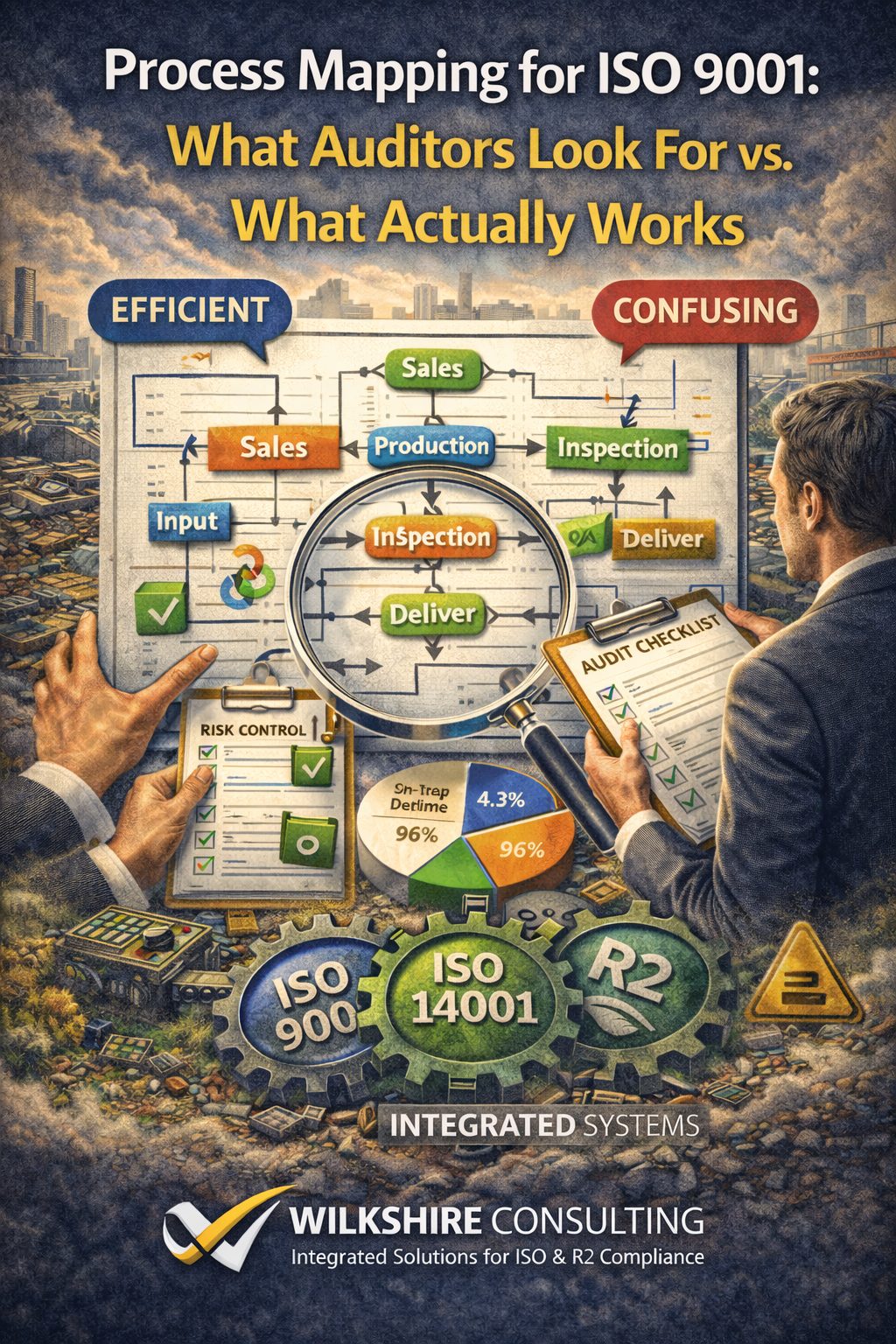
Process mapping is one of the most misunderstood elements of ISO 9001.
Some organizations treat it as a documentation requirement — something created to satisfy Clause 4.4 and then filed away. Others overengineer it, producing complex flowcharts that no one uses.
But when done correctly, process mapping becomes one of the most powerful tools in your quality management system.
The key is understanding the difference between what auditors need to see and what actually improves operations.
What ISO 9001 Actually Requires
ISO 9001 does not require elaborate flowcharts or expensive software. It requires that organizations:
- Determine the processes needed for the QMS
- Define inputs and outputs
- Identify sequence and interaction
- Assign responsibilities
- Address risks and opportunities
- Monitor and measure performance
That’s it.
Yet many organizations either oversimplify or overcomplicate this requirement.
What Auditors Look For in Process Mapping
During an audit, certification bodies typically evaluate whether:
- Processes are clearly defined
- Responsibilities are assigned
- Inputs and outputs are understood
- Risks are considered
- Controls are implemented
- Metrics are tracked
Auditors are not grading graphic design. They are assessing whether your process structure supports consistent output and risk control.
A one-page diagram can satisfy the requirement — if it reflects reality.
Where Many Organizations Go Wrong
Overcomplication
Some companies create highly detailed maps showing every minor step, exception path, and decision point.
While thorough, these maps often:
- Become outdated quickly
- Confuse employees
- Require constant revision
Complex maps increase maintenance burden without necessarily improving control.
Oversimplification
On the opposite end, some organizations create vague, high-level diagrams that fail to define:
- Ownership
- Control points
- Key risks
- Performance indicators
These maps pass initial review but fail under deeper audit scrutiny.
Disconnect from Operations
The most common issue is misalignment. Process maps describe an ideal workflow that does not match actual practice.
Auditors quickly identify this when:
- Employees describe steps differently
- Records do not align with the map
- Controls are missing in practice
This disconnect creates nonconformities — and operational inefficiency.
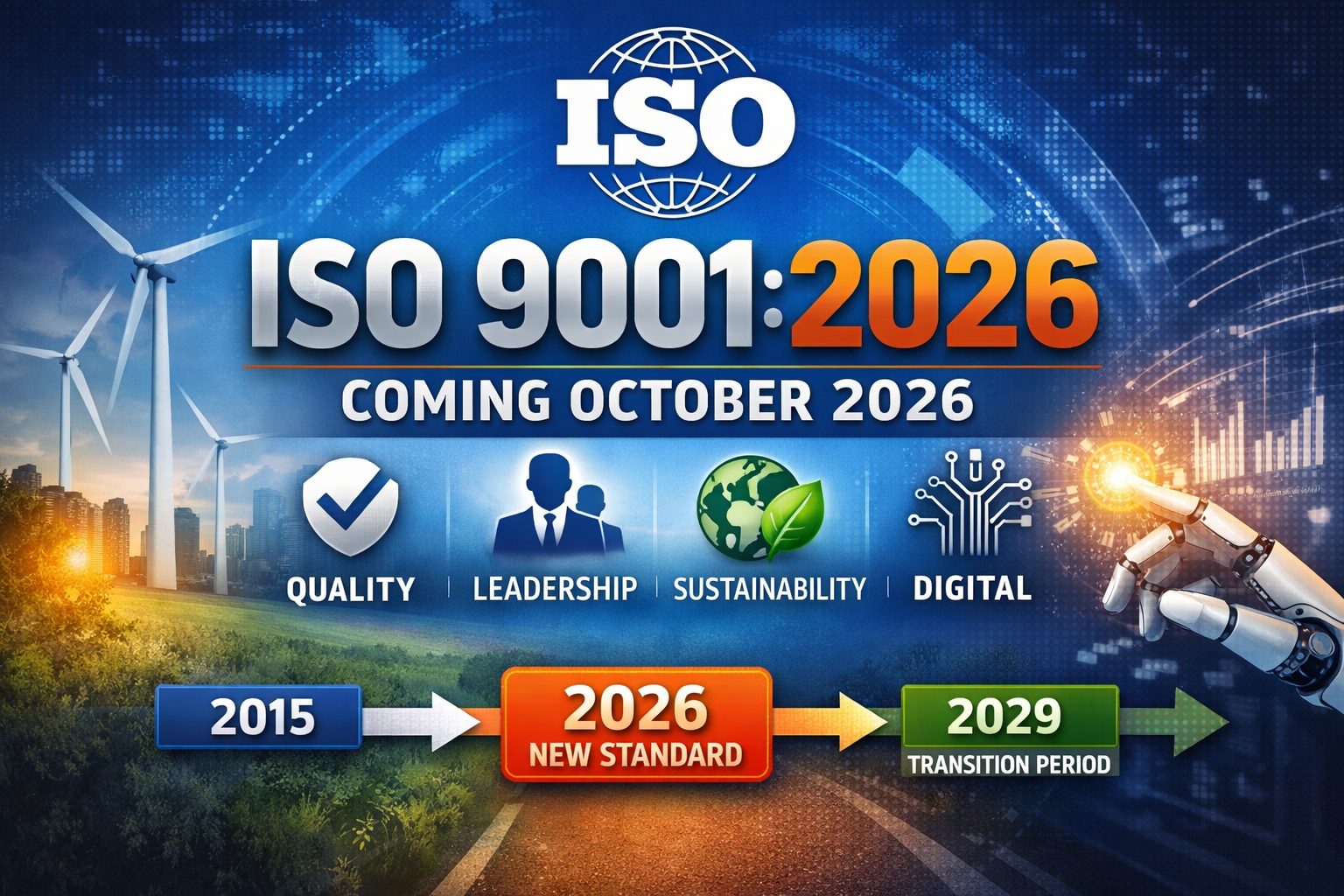
Do you need to know what is coming on the new ISO 9001:2026 revision? Read below:
ISO 9001:2026 Is Coming – What Businesses Need to Know Now
What Actually Works in Real Organizations
Effective process mapping balances clarity and practicality.
1. Focus on Core Processes First
Start with major value-creating processes such as:
- Sales / Contract Review
- Purchasing
- Production or Service Delivery
- Inspection / Verification
- Corrective Action
Supporting processes (HR, maintenance, training) can follow.
2. Define Clear Inputs and Outputs
Every process should answer:
- What triggers it?
- What is produced?
- Who receives the output?
When inputs and outputs are unclear, handoffs fail — and quality suffers.
3. Assign Ownership — Not Just Departments
“Production” is not a responsible party. A person or role must own the process.
Process ownership ensures:
- Accountability for performance
- Oversight of risks
- Continuous improvement
Without ownership, process control weakens quickly.
4. Identify Control Points and Risks
ISO 9001 emphasizes risk-based thinking. Process maps should highlight:
- Critical control steps
- Verification activities
- Risk mitigation measures
This strengthens both audit defensibility and operational reliability.
5. Tie Metrics to the Process
Each core process should have at least one measurable indicator.
For example:
- On-time delivery
- Scrap rate
- Customer complaints
- Supplier defect rate
Metrics transform process mapping from static documentation into a management tool.
The Interaction of Processes Matters Most
One of the most overlooked ISO 9001 requirements is understanding the interaction between processes.
Quality failures often occur at process boundaries:
- Sales promises something operations cannot deliver
- Purchasing selects suppliers without quality input
- Production bypasses inspection
Effective process mapping highlights these intersections — not just individual workflows.
Auditors frequently trace issues through process interactions to evaluate system effectiveness.
Integrated Systems Strengthen Process Mapping
Organizations operating ISO 9001 alongside ISO 14001, ISO 45001, or R2v3 benefit from integrated mapping.
For example:
- Environmental controls may intersect with production steps
- Safety controls may impact maintenance processes
- Data security requirements may affect receiving and processing
Mapping these overlaps prevents conflicting procedures and reduces duplication.
Integrated mapping improves clarity and simplifies audits.
Interested in learning more about ISO & R2 integrated systems? Check out the blog below:
How Integrated ISO & R2 Systems Reduce Audit Costs and Improve Client Trust
The True Purpose of Process Mapping
Process mapping is not about satisfying Clause 4.4.
It is about answering one critical question:
Can this organization consistently deliver controlled, predictable outcomes?
If your process maps:
- Reflect reality
- Assign accountability
- Identify risk
- Track performance
Then they serve both operational and audit purposes.
If they exist only for certification, they will eventually become outdated — and ineffective.
How Wilkshire Consulting Designs Practical Process Maps
At Wilkshire Consulting, we design ISO 9001 process structures that are:
- Clear and scalable
- Aligned with real operations
- Integrated with environmental, safety, and R2 systems
- Easy to maintain
- Audit-ready without being overbuilt
Our goal is not to create documentation for its own sake — but to build management systems that strengthen operational control and support growth.
Because effective process mapping is not about drawing boxes and arrows.
It’s about building accountability, reducing risk, and improving performance.