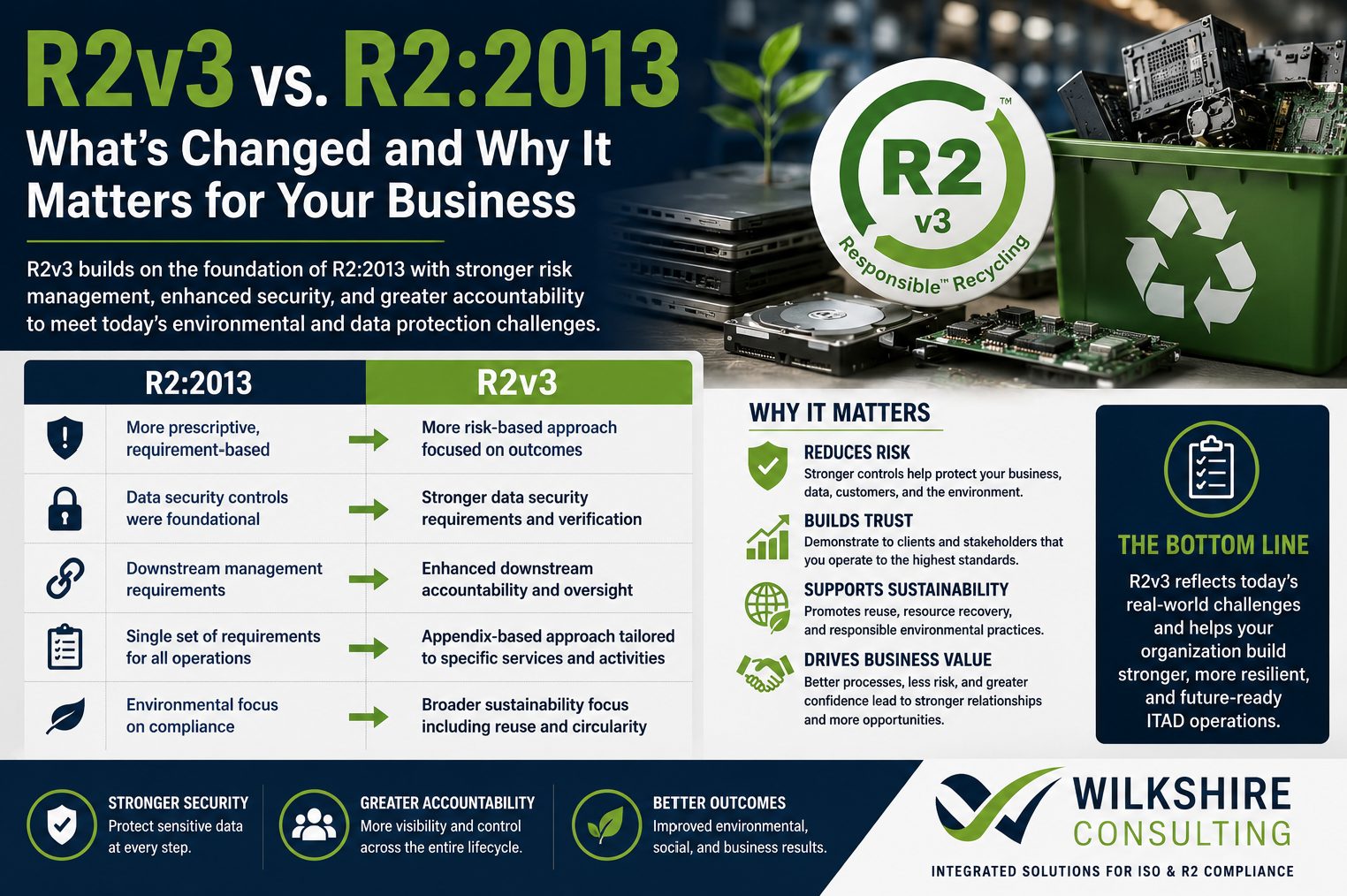
For many years, R2:2013 served as the benchmark for responsible electronics recycling and IT asset disposition (ITAD).
It helped establish industry expectations around:
- Environmental responsibility
- Data security
- Downstream vendor management
- Operational accountability
But as technology evolved, so did the risks facing organizations.
Data breaches became more common.
Supply chains became more complex.
Sustainability expectations increased.
Customers demanded greater transparency.
The industry needed a stronger framework.
That’s why R2v3 was introduced.
And while some organizations view R2v3 as simply an updated version of the standard, the reality is much bigger.
R2v3 represents a significant shift in how electronics recyclers and ITAD providers manage risk, security, sustainability, and accountability.
If your organization works in electronics recycling, refurbishment, or ITAD, understanding these changes is essential.
Why R2 Needed to Evolve
The original R2:2013 standard was groundbreaking when it was introduced.
It provided a framework for responsible recycling and data security at a time when industry standards were still developing.
But industries don’t stand still.
Over time, new challenges emerged:
- Increased cybersecurity threats
- More complex global supply chains
- Growing ESG expectations
- Greater focus on data privacy
- Increased scrutiny of downstream vendors
The R2 standard needed to evolve to address these realities.
R2v3 was designed to create stronger controls, greater transparency, and more flexibility for organizations with different operational models.
R2v3 Is More Risk-Based
One of the most significant changes in R2v3 is the increased focus on risk.
Under R2:2013, many organizations approached compliance as a checklist exercise.
Under R2v3, organizations are expected to actively evaluate and manage risk throughout their operation.
This includes:
- Data security risks
- Environmental risks
- Health and safety risks
- Downstream vendor risks
- Operational risks
The goal isn’t simply documenting processes.
The goal is understanding where risks exist and implementing controls that reduce them.
This aligns R2v3 more closely with modern management system standards such as ISO 9001, ISO 14001, and ISO 45001.
Enhanced Data Security Requirements
Data security has always been important in R2 certification.
But R2v3 takes it further.
With increasing concerns around cybersecurity and data privacy, organizations need stronger controls over how data-bearing devices are handled.
R2v3 places greater emphasis on:
- Data sanitization verification
- Device tracking
- Chain of custody controls
- Documented security procedures
- Risk-based security management
For customers, this creates greater confidence.
For certified organizations, it creates stronger protection against one of the industry’s biggest liabilities.
Stronger Focus on Downstream Accountability
One of the most important principles behind R2 certification is this:
Responsibility doesn’t end when materials leave your facility.
R2:2013 addressed downstream management.
R2v3 strengthens it.
Organizations are expected to have greater visibility into where materials go and how downstream vendors manage them.
Why does this matter?
Because sustainability and compliance can quickly break down when downstream partners are poorly managed.
The stronger focus on downstream accountability helps protect:
- The environment
- Customer trust
- Brand reputation
- Regulatory compliance
Introduction of Process Requirements
Another major change is the addition of more detailed process requirements.
R2v3 places greater emphasis on defining and controlling operational activities.
This helps organizations:
- Improve consistency
- Reduce variability
- Strengthen accountability
- Support continuous improvement
In many ways, this makes R2v3 feel more like a mature management system standard than its predecessor.
The Appendix Structure Changed Everything
One of the most noticeable differences between R2:2013 and R2v3 is the use of process-specific appendices.
Instead of applying the same requirements to every operation, R2v3 allows organizations to select appendices based on the services they provide.
Examples include:
- Data Sanitization
- Testing and Repair
- Specialty Electronics Reuse
- Materials Recovery
- Brokering
This approach creates greater flexibility while maintaining accountability.
Organizations are certified to the activities they actually perform.
That’s a major improvement over a one-size-fits-all model.
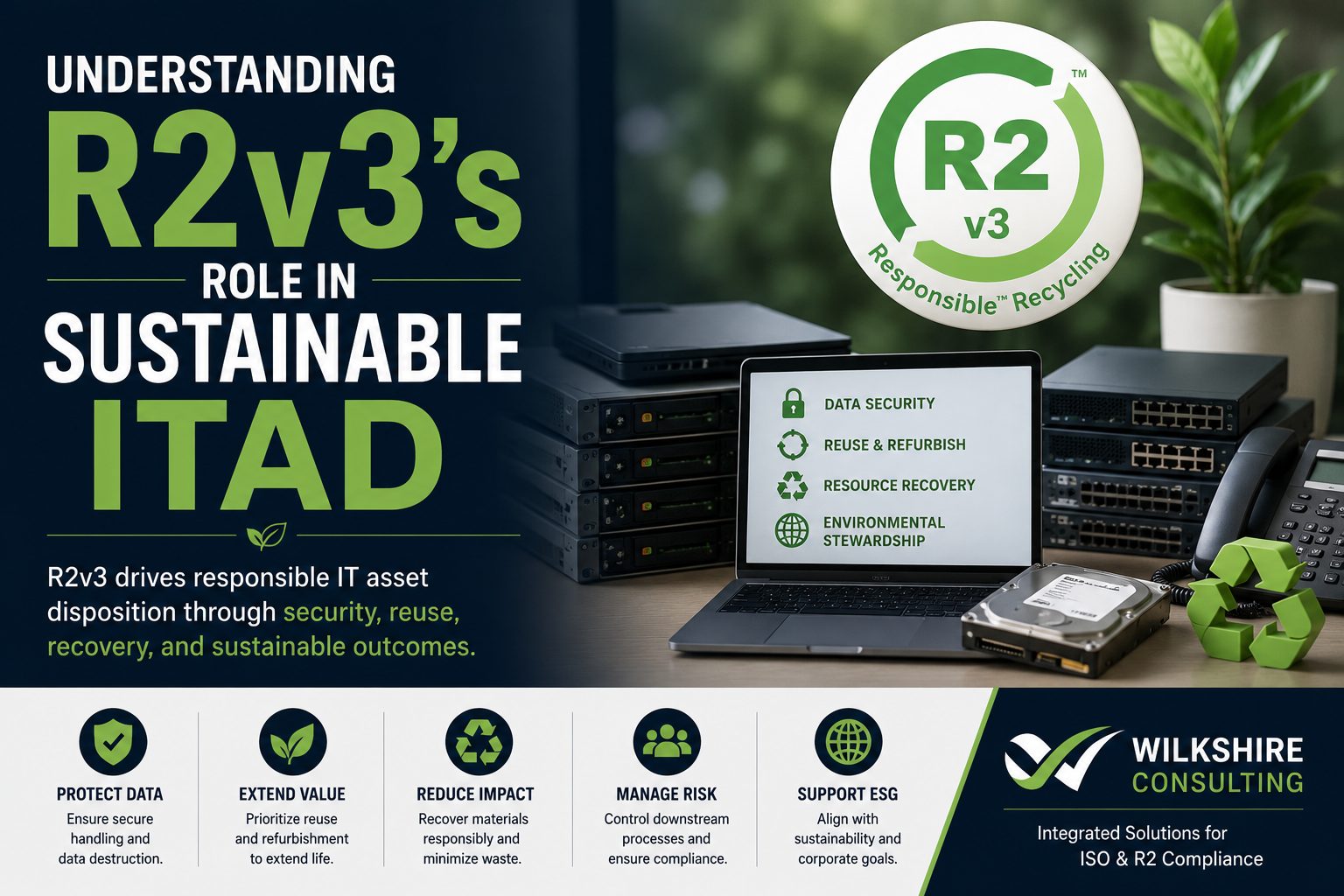
Sustainability Is More Prominent
Sustainability expectations have changed dramatically over the last decade.
Customers increasingly want to know:
- How assets are managed
- Whether devices are reused
- How materials are recovered
- What happens downstream
R2v3 reflects this shift.
The standard places stronger emphasis on:
- Reuse
- Resource recovery
- Circular economy principles
- Responsible downstream management
This helps organizations demonstrate meaningful environmental stewardship—not just compliance.
Why These Changes Matter to Customers
Many organizations focus on what R2v3 means for recyclers.
But the bigger question is:
What does it mean for customers?
The answer is simple.
R2v3 provides greater confidence.
Customers gain assurance that their provider has stronger controls around:
- Data security
- Environmental responsibility
- Risk management
- Supply chain oversight
- Operational accountability
That’s becoming increasingly important as organizations evaluate vendors and manage ESG commitments.
Common Challenges During the Transition
We’ve seen organizations struggle with several areas when adapting to R2v3.
The most common include:
Risk-Based Thinking
Many companies are comfortable following procedures.
Fewer are comfortable identifying and evaluating risk systematically.
Documentation and Process Controls
R2v3 requires organizations to think more deeply about how processes are defined, monitored, and improved.
Downstream Vendor Oversight
Greater accountability often means organizations must strengthen vendor qualification and monitoring programs.
Training and Awareness
Employees need to understand not just what they do—but why controls exist.
That cultural shift can take time.
R2v3 Is More Than an Update
Some organizations still view R2v3 as simply “R2 with new requirements.”
That’s not really accurate.
The philosophy behind the standard has evolved.
R2v3 is designed to create:
- Better risk management
- Stronger security
- Improved sustainability
- Greater transparency
- More accountability
Those changes reflect the realities facing the ITAD and electronics recycling industries today.
How Wilkshire Consulting Helps Organizations Navigate R2v3
At Wilkshire Consulting, we help organizations understand and implement R2v3 requirements without unnecessary complexity.
We work with companies to:
- Prepare for R2v3 certification
- Strengthen risk management processes
- Improve downstream controls
- Integrate R2v3 with ISO systems
- Prevent audit findings and nonconformities
Because successful certification isn’t just about passing an audit.
It’s about building a system that supports long-term operational success.
Ready to Strengthen Your R2v3 Program?
Whether you’re transitioning from an older R2 system or pursuing certification for the first time, understanding the intent behind R2v3 is critical.
The organizations that succeed are the ones that embrace the standard as a business improvement tool—not just a compliance requirement.