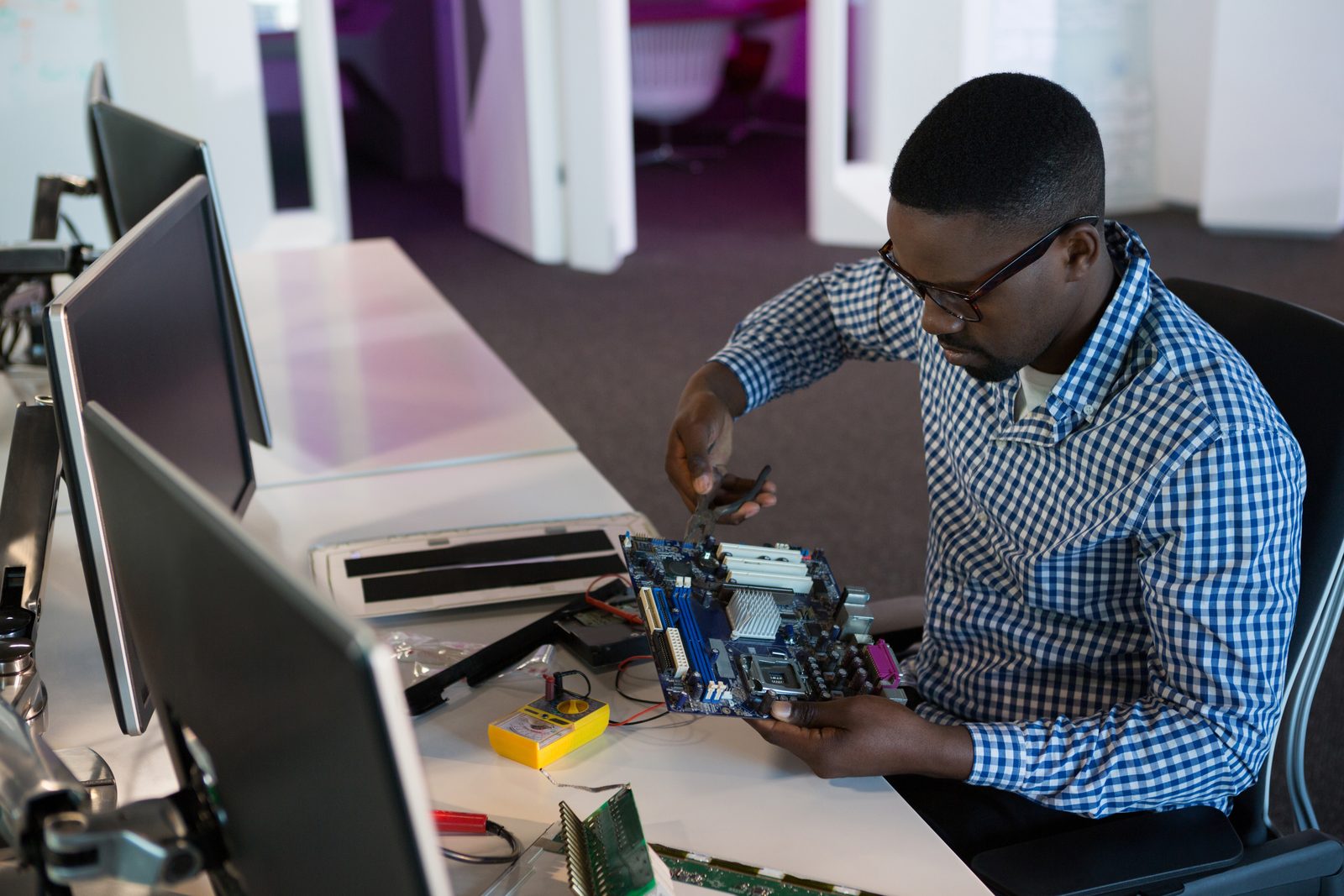
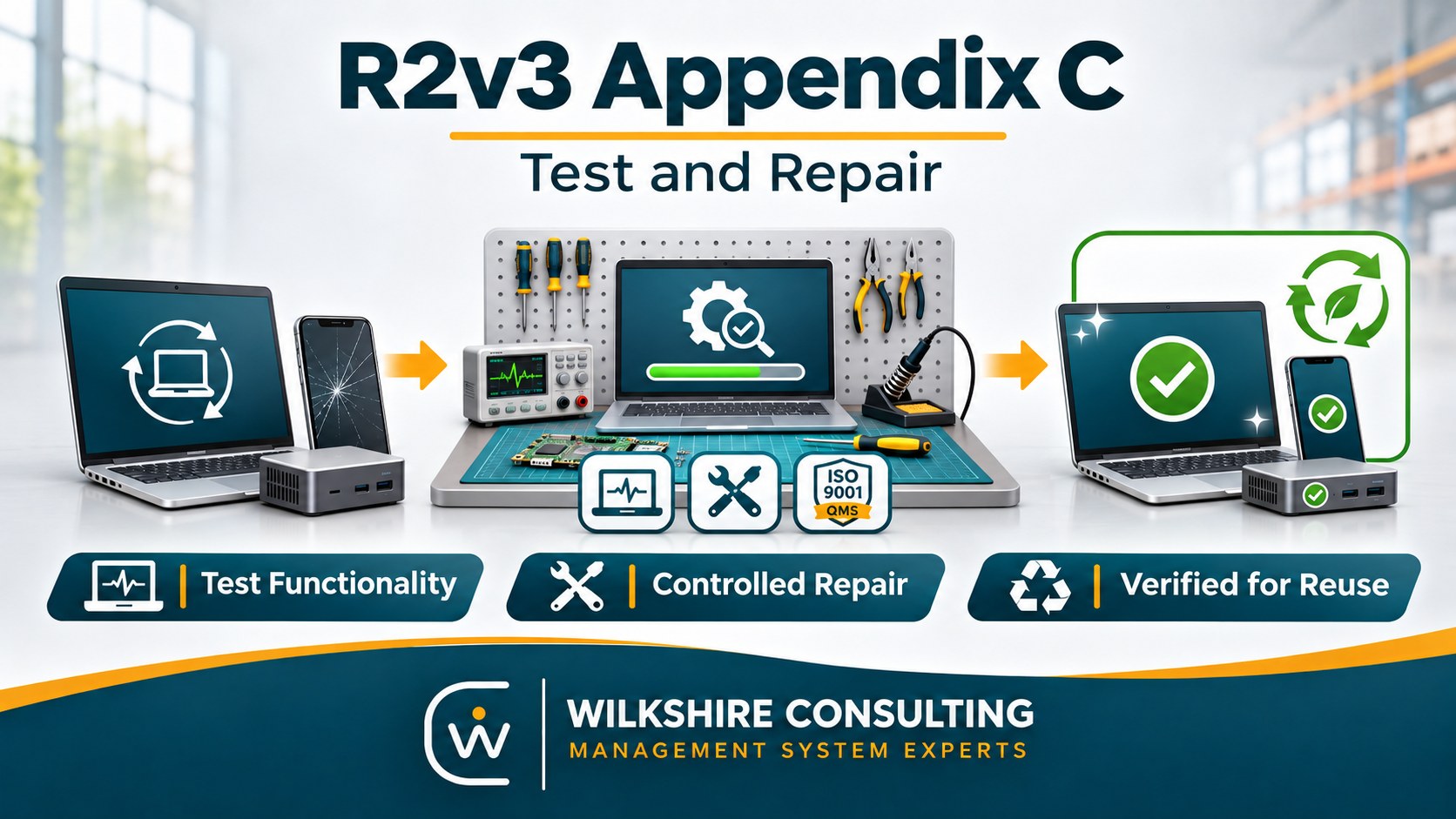
Appendix C of the R2v3 Standard sets the requirements for facilities that test, repair, or refurbish electronics to produce functional equipment for reuse. If your operation takes in used devices and sends them back out working — whether that’s phones, laptops, servers, or components — this is the appendix that governs how you do it.
Like all R2v3 process appendices, Appendix C only applies if you actually perform the activity. A facility that merely collects and forwards equipment doesn’t need it; a facility that puts hands on devices to get them working again does.
Who Appendix C Applies To
Appendix C is for facilities with the competency and tools to test and/or repair and refurbish electronics for reuse. In practice, that’s refurbishers, resellers, and ITAD operations that do more than a quick visual or power-on check — facilities that verify functionality, fix what’s broken, and prepare equipment to be used again rather than recycled for materials.
Reuse sits at the top of the R2 hierarchy, ahead of recycling, because reusing a working device preserves far more value and avoids the environmental cost of breaking it down. Appendix C is the standard’s way of making sure “reuse” actually means the equipment works, not just that it left the building.
What Appendix C Requires
Appendix C builds structure around the test-and-repair process so that a device labeled as functional genuinely is. At a high level, it requires that a facility:
- Test the equipment it has the capability to test, and be honest about what it can’t. Devices the facility is unable to properly test can’t simply be declared working.
- Repair and refurbish within a controlled process, so the outcome is consistent and verifiable rather than dependent on who happened to do the work.
- Describe equipment accurately using R2’s equipment categorization, including its functional category and its cosmetic condition, so a buyer knows exactly what they’re getting.
- Track throughput so controlled streams moving through test and repair stay accounted for, and keep to the clock: items must be processed within one year of receipt.
The thread running through all of it is traceability and honesty: the person receiving a reused device should be able to trust the condition it’s represented in.
The Quality Management System Requirement
Here’s the part that catches facilities off guard: Appendix C requires a certified Quality Management System underneath it — RIOS or ISO 9001. Testing and repairing equipment for resale is quality-sensitive work, so the standard requires the discipline of a formal QMS behind it.
This matters for planning. If your R2v3 scope will include test and repair, you’re not just implementing an appendix — you’re also committing to a certified QMS, ideally in place before or alongside your R2 work. That’s a bigger undertaking than a single appendix, and it’s worth knowing up front so it doesn’t surprise you mid-project. (Appendix F, brokering, carries the same QMS requirement.) We lay out how the pieces fit on our R2v3 page.
How Appendix C Fits With the Other Appendices
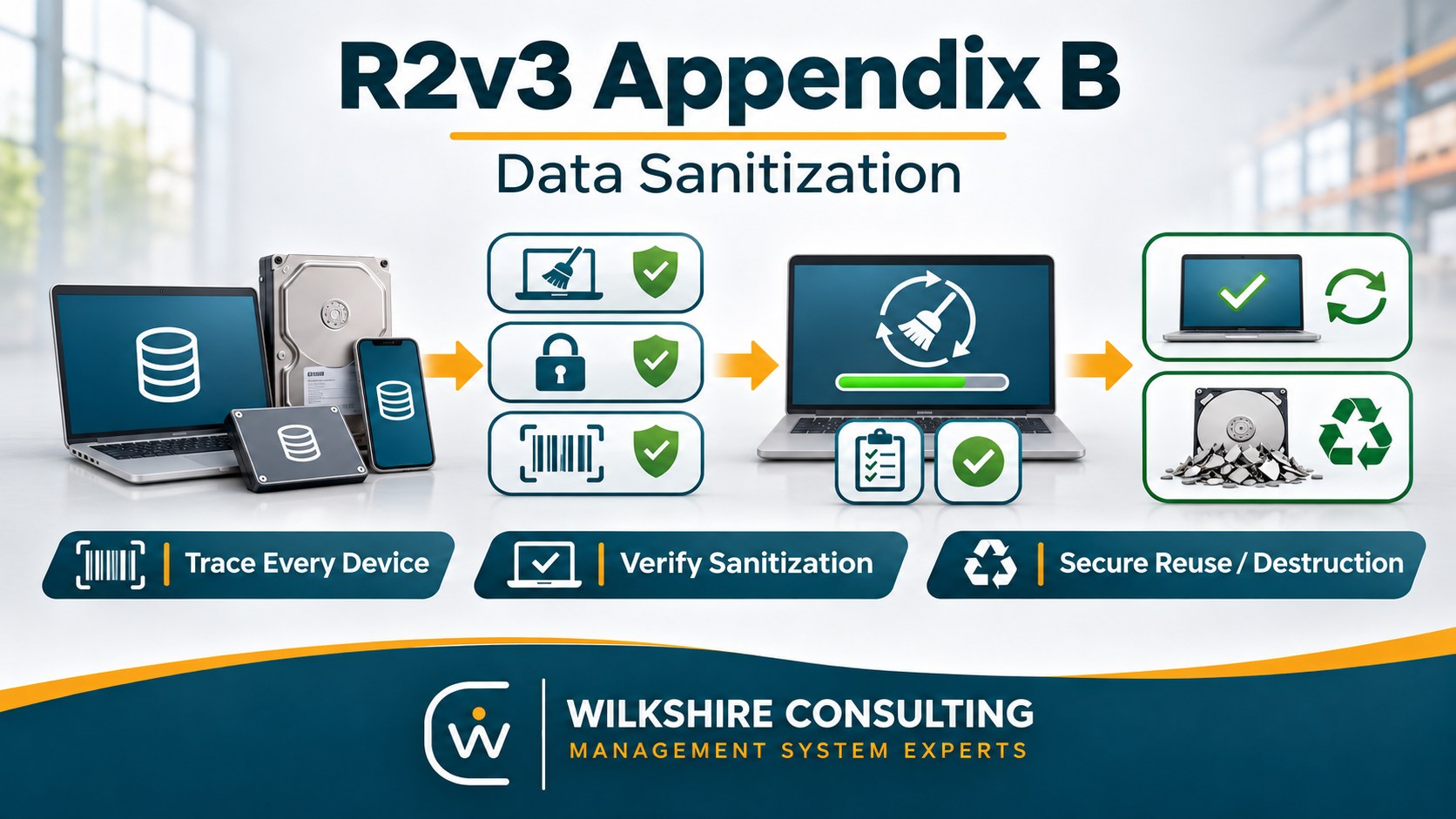
Appendix C rarely stands completely alone. Most reuse-focused facilities also hold Appendix B (Data Sanitization), because any data-bearing device being prepared for reuse has to have its data properly removed and documented first. And Appendix D (Specialty Electronics Reuse) can’t exist without C — any facility certifying to D for specialized equipment must also be certified to Appendix C.
So if reuse is your business, Appendix C is usually the center of your scope, with B and sometimes D built around it.
The Bottom Line
Appendix C is what turns “we resell used electronics” into a verifiable, auditable reuse operation. It requires real testing capability, a controlled repair process, accurate categorization, and — crucially — a certified quality management system behind the whole thing. For refurbishers and ITAD operations, it’s often the heart of the R2v3 scope, and the appendix most directly tied to the revenue that reuse generates.
Quick answers
Who needs R2v3 Appendix C? Facilities that test, repair, or refurbish electronics for reuse — refurbishers, resellers, and ITAD operations that do more than a basic power-on check.
Does Appendix C require ISO 9001? It requires a certified Quality Management System, and RIOS or ISO 9001 are the routes we see. Plan for that alongside the appendix itself.
What’s the difference between Appendix C and Appendix E? Appendix C is about testing and repairing devices to reuse them whole; Appendix E (Materials Recovery) is about breaking equipment down to recover raw materials. Reuse before recycling.
Can I certify to Appendix D without Appendix C? No. Specialty electronics reuse (Appendix D) requires Appendix C as a foundation.
Not sure which R2v3 appendices your facility’s scope actually needs? Score your facility with our free R2v3 readiness quiz, or book a free readiness call and we’ll help you map it out.