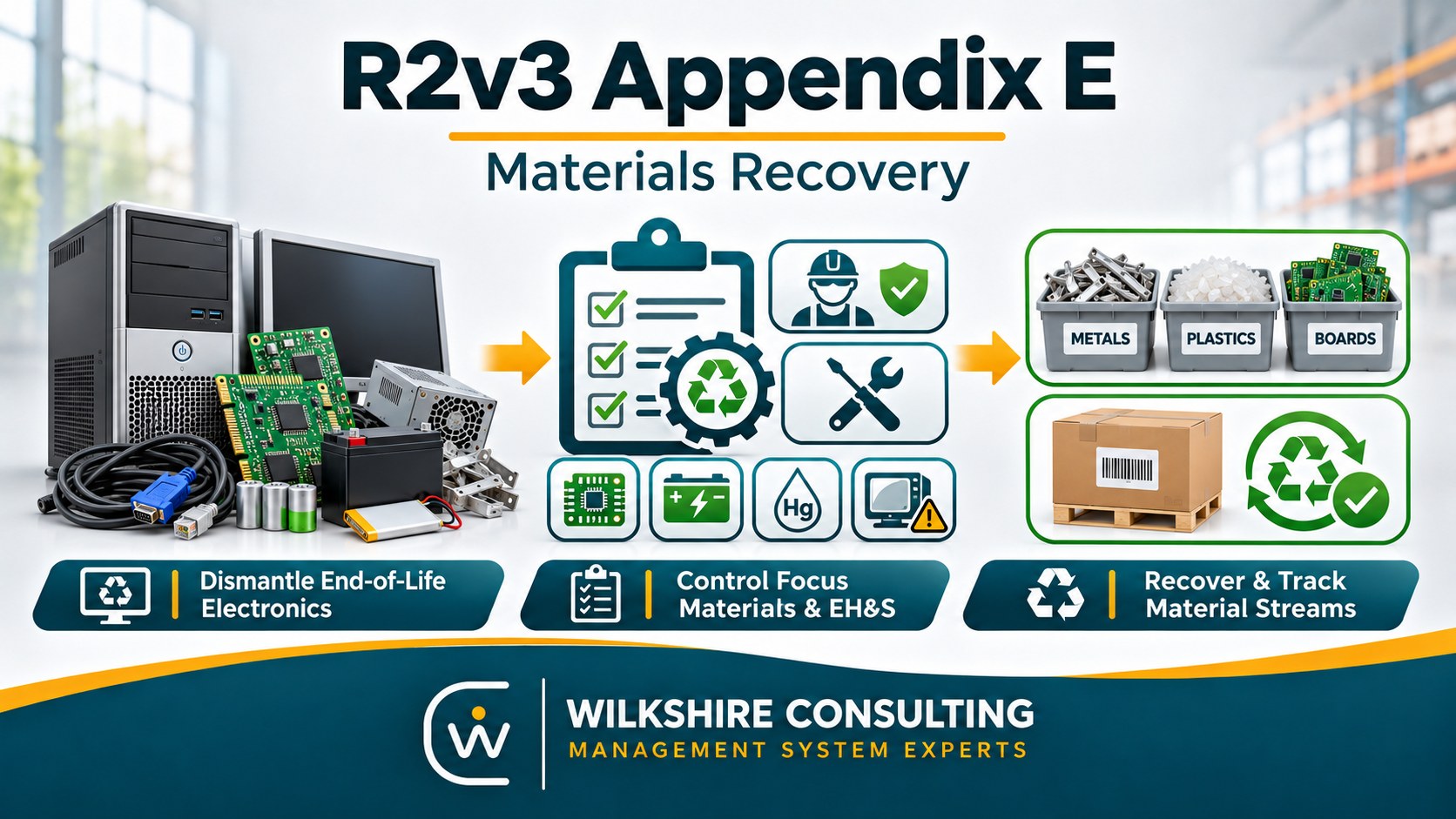
Appendix E of the R2v3 Standard covers materials recovery — the process of breaking electronics down to recover the materials inside them when reuse isn’t the right outcome. This is what most people picture when they think of “recycling”: dismantling equipment, separating metals and plastics, and processing recovered streams so the materials can re-enter the supply chain instead of going to landfill.
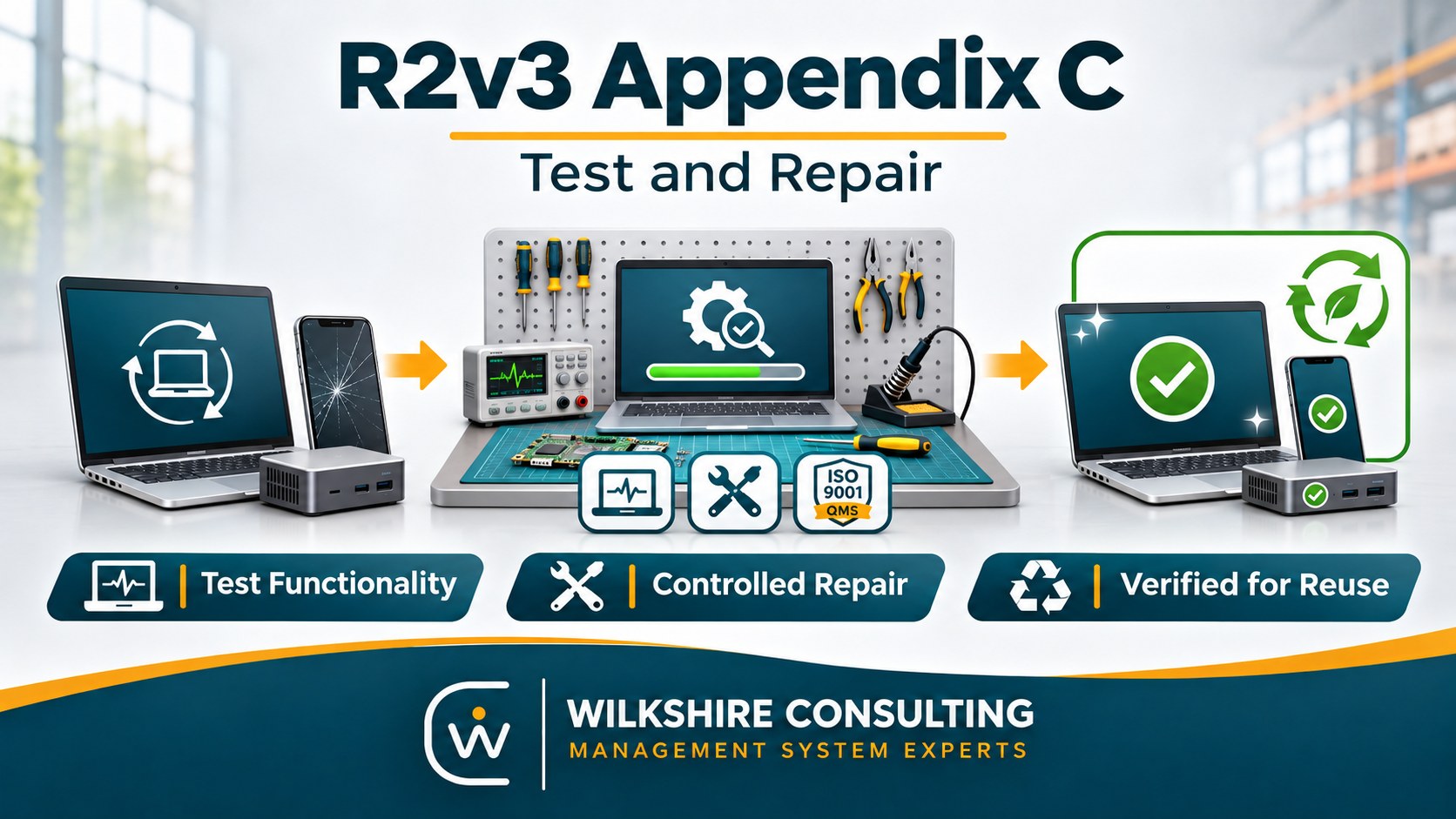
Where Appendix C is about keeping equipment whole and working, Appendix E is about what happens when a device has reached the end of its useful life and the value left in it is in its raw materials.
Who Appendix E Applies To
Appendix E applies to facilities that perform destructive dismantling or separation to recover materials — including manual dismantling that breaks equipment apart, shredding and crushing, and the processing or further refining of recovered material streams. In practice that’s dismantlers, shredders, scrap operations recovering commodities, and facilities that refine streams such as circuit boards. If your facility physically breaks equipment down to recover what’s inside, this is your appendix.
As with every R2v3 process appendix, it applies only to the activity you actually perform. A facility that only tests and resells devices doesn’t need Appendix E; a facility that tears them down for materials does. Not all hands-on work triggers it, either. Per SERI’s applicability guidance, taking intact parts off a device for reuse isn’t destructive dismantling, and a dedicated hard-drive shredder used only to destroy data is handled under data security requirements rather than Appendix E. If you’re on the borderline, confirm with your certification body before you scope.
What Appendix E Requires
Materials recovery carries more environmental and safety risk than reuse, because breaking equipment down exposes and releases the hazardous substances inside it. Appendix E reflects that with a heavier emphasis on controls. At a high level, it requires that a facility:
- Properly manage Focus Materials throughout the recovery process. Focus Materials are the higher-risk items R2v3 tracks closely — things like circuit boards, batteries, mercury-containing devices, and CRTs — and recovery operations have to handle them in a way that controls the risk rather than releasing it.
- Apply elevated environmental, health, and safety controls, because dismantling and processing create exposure risks that reuse operations don’t face.
- Carry appropriate protections, which for recovery operations commonly includes pollution-liability insurance given the nature of the work.
- Maintain control and traceability of recovered streams as they move toward final disposition, consistent with R2’s downstream accountability requirements.
The theme here is containment: making sure that the act of recovering valuable materials doesn’t become a source of environmental harm or worker exposure.
An Important Scope Caveat
One thing worth being very clear about: a certificate scoped to Appendix E covers materials recovery — not logical data sanitization. If a facility recovers materials but does not also hold Appendix B (Data Sanitization), it isn’t certified to wipe devices for reuse. (Physical destruction of data-bearing media on its own is handled under Core Requirement 7, which every R2 facility has to meet.)
This matters for anyone vetting a recycler. “R2v3 certified” is never the whole story — you have to read the scope and confirm it names the specific activities you need. A materials-recovery certificate tells you the facility was audited for responsible recovery, not that it’s been audited to wipe devices for reuse. Always match the certificate’s named appendices to the service you’re actually buying.
How Appendix E Fits the Bigger Picture
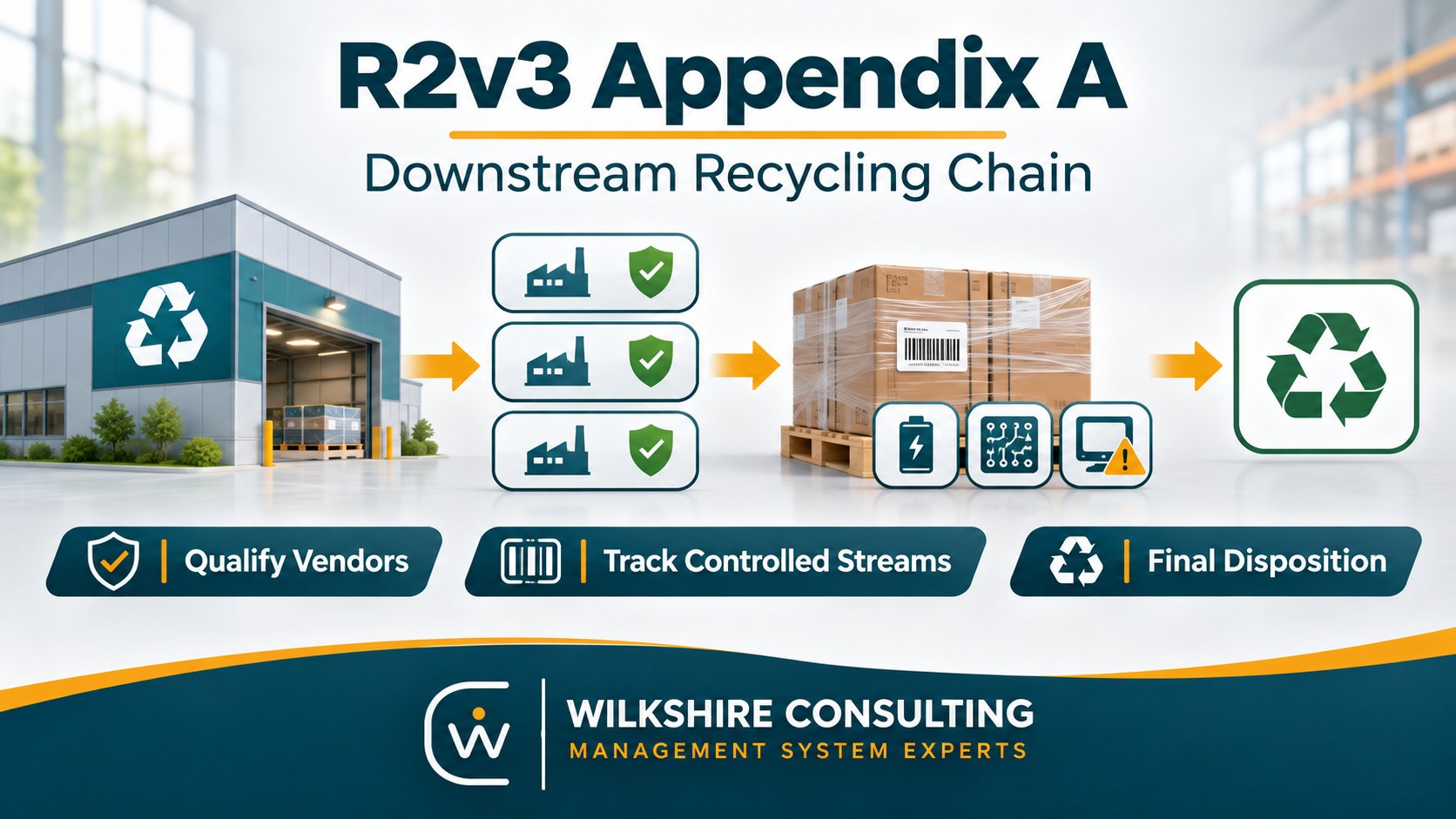
R2v3 is built around a hierarchy: reuse first, materials recovery second. Appendix E is the responsible floor beneath that hierarchy — the assurance that when equipment genuinely can’t be reused, the materials are recovered safely rather than dumped or exported irresponsibly. It often sits alongside Appendix A (Downstream Recycling Chain), since recovered streams that leave the facility for further processing have to be tracked through qualified downstream vendors.
The Bottom Line
Appendix E governs the recycling end of the business — recovering materials from end-of-life electronics under elevated environmental and safety controls. It requires careful management of Focus Materials, stronger EH&S protections, and clear traceability of recovered streams. And it comes with an important limit worth remembering: materials recovery and data sanitization are separate scopes, so a certificate covering one doesn’t automatically cover the other.
Quick answers
Who needs R2v3 Appendix E? Facilities that physically break electronics down to recover materials — dismantlers, shredders, scrap and commodity-recovery operations, and facilities refining recovered streams.
Does Appendix E cover data destruction? Not by itself. A certificate scoped to Appendix E covers materials recovery. Wiping devices for reuse needs Appendix B, and physical destruction of data-bearing media on its own is handled under Core Requirement 7. Check the certificate’s scope for the activities you need.
What are Focus Materials? The higher-risk materials R2v3 tracks closely — including circuit boards, batteries, mercury-containing devices, and CRTs — which recovery operations must manage carefully to control environmental and safety risk.
How is Appendix E different from Appendix C? Appendix C keeps equipment whole and working for reuse; Appendix E breaks equipment down to recover raw materials. R2v3 prioritizes reuse before recovery.
Running a recovery operation and want to be sure your R2v3 scope and controls line up? Score your facility with our free R2v3 readiness quiz, or book a free readiness call and we’ll walk through it with you.