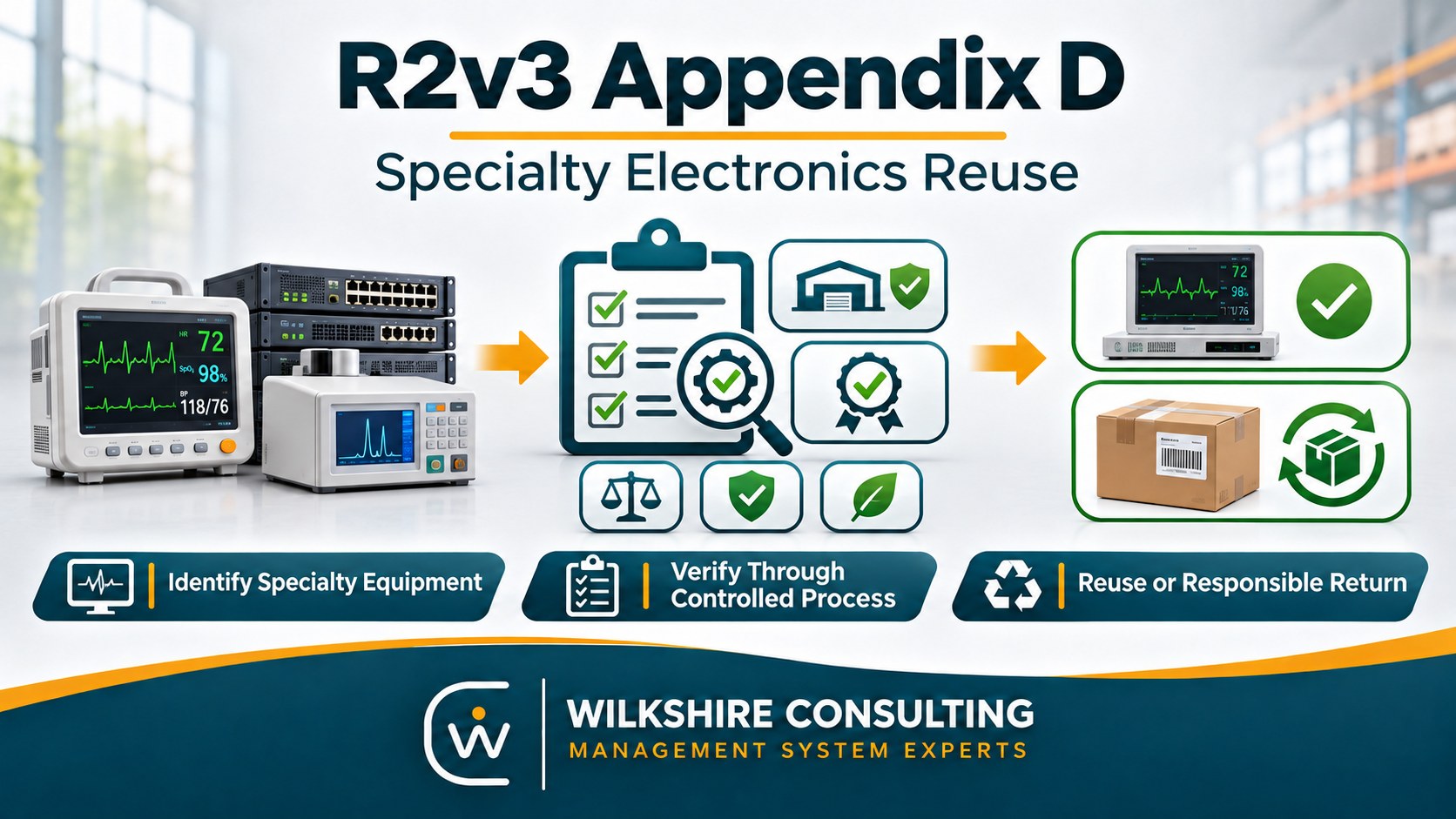
Appendix D of the R2v3 Standard covers the reuse of specialty electronics — the rare, specialized, commercial, and industrial equipment that isn’t generally sold at retail and can’t always be tested the way a laptop or phone can. Think medical devices, telecom and network hardware, and laboratory equipment. This appendix exists because the normal “test it, confirm it works, resell it” process doesn’t fully apply to gear that may be impossible to functionally test outside its intended environment.
If your facility handles that kind of equipment for reuse, Appendix D is how R2v3 makes sure it’s done responsibly even when standard testing isn’t an option.
What Makes Specialty Electronics Different
Most reused electronics can be plugged in and verified. Specialty electronics often can’t. A piece of medical imaging equipment, an industrial control system, or specialized telecom hardware may need its full operating environment — or a qualified technician, or regulatory clearance — before anyone can confirm it actually works. You can’t just power it on at a bench and call it functional.
That creates a gap: how do you responsibly pass along equipment for reuse when you can’t personally verify it? Appendix D answers that question with a structured verification process rather than a simple pass/fail test.
What Appendix D Requires
Appendix D sets out how a facility handles specialty electronics it cannot fully test in-house. At a high level, it requires that a facility:
- Test everything it does have the capability to test, in line with Appendix C — you don’t get to skip testing just because some of the equipment is hard to test.
- Have supplier relationships, processes, and policies in place to verify the specialty electronics that genuinely can’t be tested in-house, rather than guessing or over-claiming.
- Handle verification failures responsibly — so specialty electronics that don’t pass verification aren’t simply pushed into the market as reusable equipment.
The point is accountability without pretending. Appendix D lets a facility deal in equipment it can’t bench-test, as long as it has a credible, documented way to verify that equipment is genuinely reusable.
Appendix D Depends on Appendix C
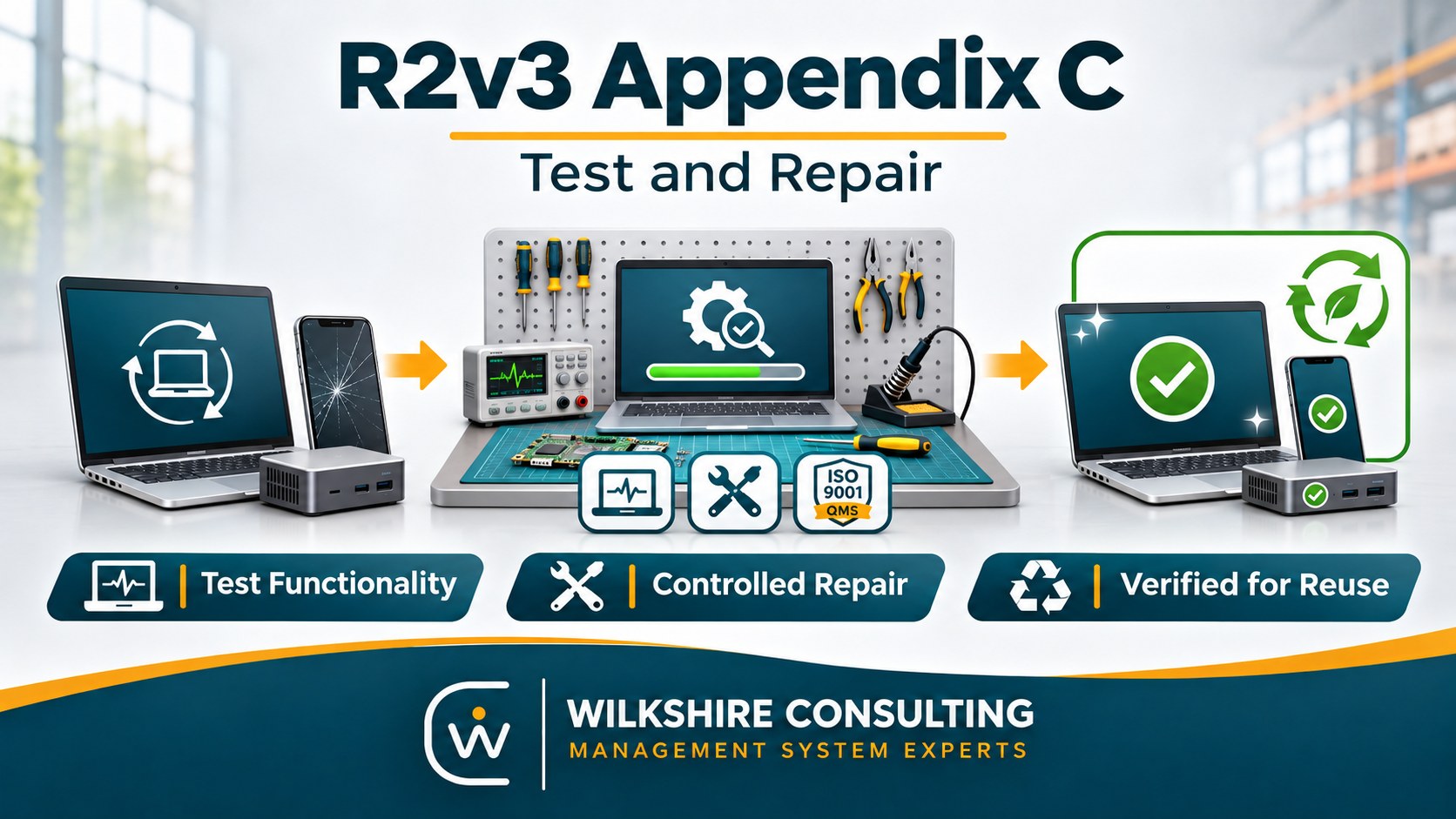
This is the most important structural fact about Appendix D: it cannot stand alone. Any facility certifying to Appendix D must also be certified to Appendix C (Test and Repair). Specialty electronics reuse is treated as a specialized extension of ordinary test and repair, not a separate track — so the full test-and-repair discipline, including the certified Quality Management System (RIOS or ISO 9001) that Appendix C requires, applies here too.
In planning terms: if specialty electronics are part of your scope, plan for Appendix C and a certified QMS as part of the package, not as optional add-ons.
Who Appendix D Applies To
Appendix D is for a relatively specialized set of facilities — those that specialize in managing a stream of commercial, industrial, or otherwise non-consumer electronics where full functional testing isn’t feasible: telecom and networking gear, medical devices, laboratory equipment, and similar high-value specialty hardware. If your reuse business is ordinary consumer IT, you likely don’t need Appendix D. If you move specialized equipment that can’t be tested like a standard device, this is the appendix that governs it.
The Bottom Line
Appendix D exists for the equipment that doesn’t fit the normal reuse mold — valuable, specialized gear that can’t simply be switched on and verified. It requires a facility to test what it can, verify what it can’t through credible processes and supplier relationships, and handle failures honestly. And because it sits on top of Appendix C, certifying to it means committing to the full test-and-repair framework, QMS included.
Quick answers
What counts as specialty electronics under R2v3? Rare and specialized equipment not generally available at retail — such as medical devices, commercial telecom and networking hardware, and laboratory equipment — that often can’t be fully functionally tested in a standard facility.
Can I certify to Appendix D on its own? No. Appendix D requires Appendix C (Test and Repair) as a foundation, which in turn requires a certified Quality Management System.
What happens if specialty electronics can’t be verified? Appendix D requires responsible handling of verification failures, so equipment that doesn’t pass verification isn’t passed into reuse as though it were proven.
Does my consumer-IT refurbishing operation need Appendix D? Usually not. Appendix D is for specialized, hard-to-test equipment. Standard consumer electronics reuse is covered by Appendix C.
Handling specialty or hard-to-test equipment and unsure how your R2v3 scope should be built? Score your facility with our free R2v3 readiness quiz, or book a free readiness call and we’ll help you sort it out.