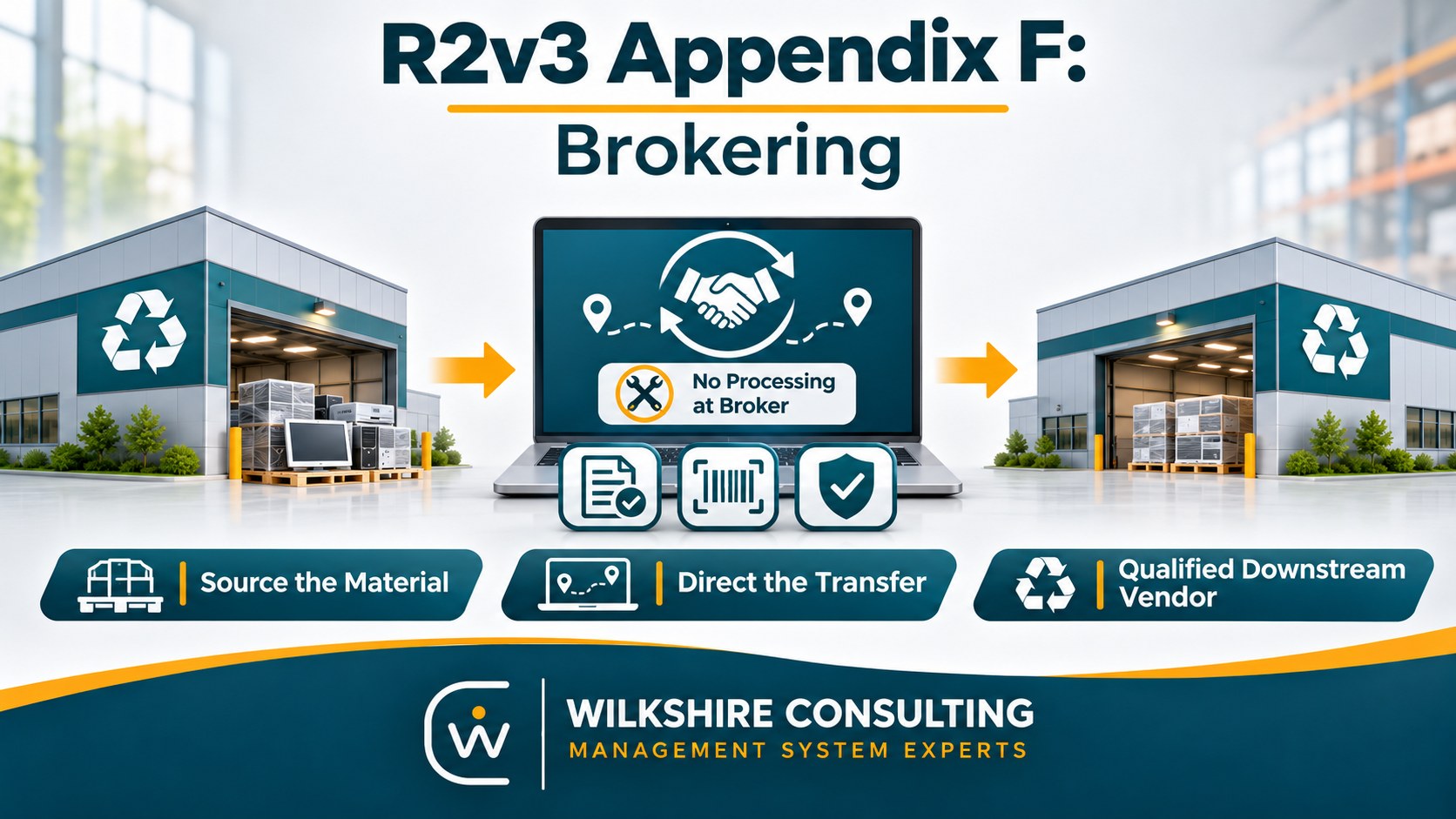
Appendix F of the R2v3 Standard covers brokering — sometimes called trading — where a facility sources and controls the delivery of equipment, components, or materials directly from a supplier to a downstream vendor without ever physically receiving or processing the items. If you arrange and control those transactions but the goods never pass through your building, this is the appendix that governs it.
It’s an easy one to overlook precisely because nothing physical happens at your site. But under R2v3, controlling the movement of material carries responsibility whether or not you ever touch it.
What Brokering Means Under R2v3
Brokering is the activity of connecting a supplier’s R2 Controlled Streams to a downstream vendor and managing that transfer, while the material ships directly between the two without stopping at your facility. You’re the one sourcing it, arranging it, and directing where it goes — you just never take physical possession.
The logic of Appendix F is that this still counts as controlling the material. The standard won’t let a facility sidestep accountability simply by keeping the goods off-site. If you’re the party deciding where a Controlled Stream ends up, you’re responsible for making sure it ends up somewhere responsible.
When Appendix F Applies — and When It Doesn’t
Appendix F applies to any R2 facility that manages the transfer of R2 Controlled Streams from a supplier directly to a downstream vendor without physically receiving or processing the items. If brokering activity like that is part of your operation, certification to Appendix F is required.
It does not apply if all your Controlled Streams are physically received at or pass through your facility. In that case you’re covered by the other process appendices, not brokering. The dividing line is control of the delivery, not who owns the goods or who pays for them. If you source a Controlled Stream and direct it straight to a downstream vendor, treat that as brokering, and if a particular deal is unclear, confirm with your certification body before you scope.
What Appendix F Requires
Appendix F makes sure brokered material is held to the same R2 standards as material that physically moves through a certified facility. At a high level, a facility undertaking brokering has to:
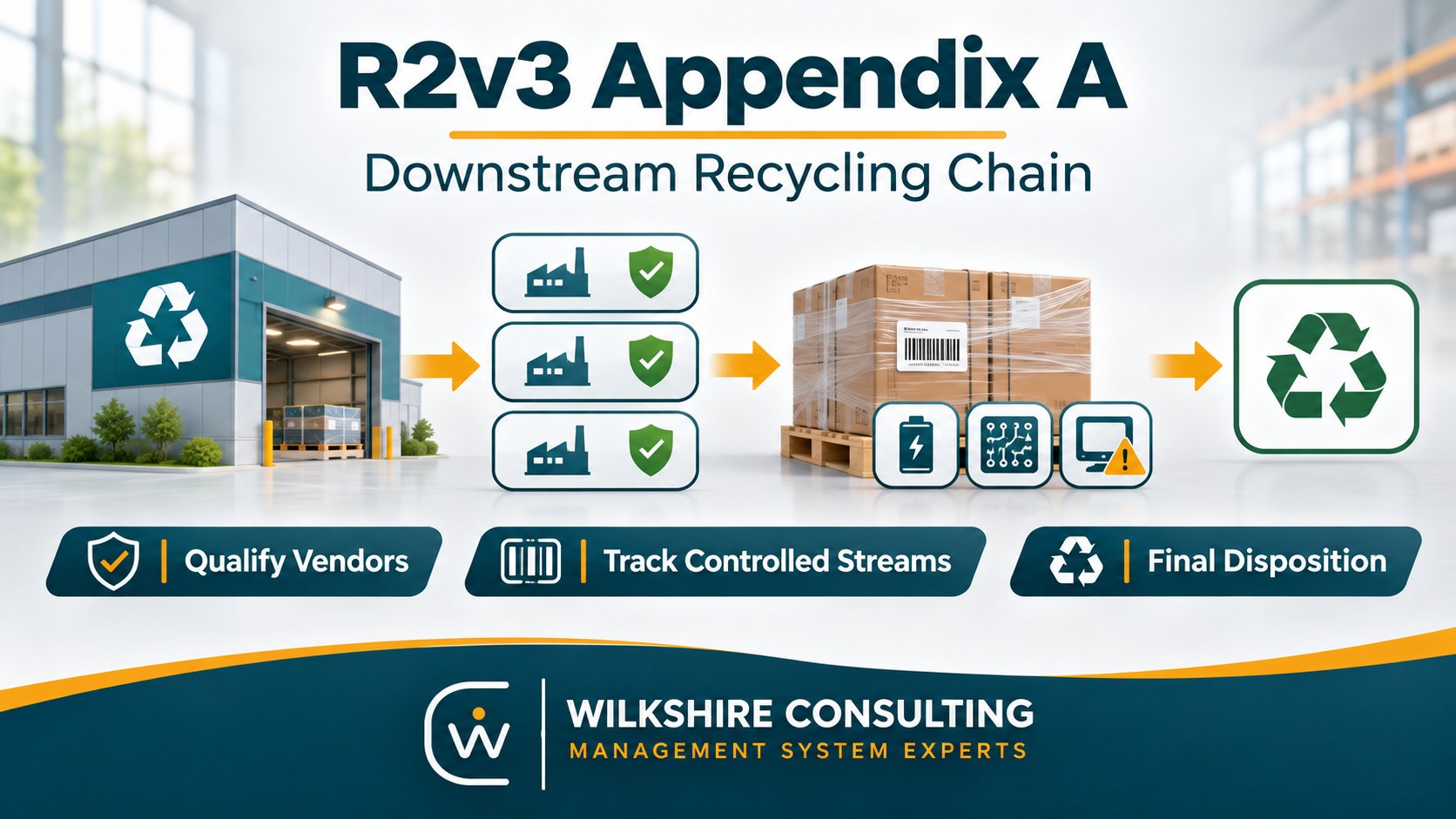
- Declare and document all brokering activities in its R2 scope, and include them in its audited activities under Appendix A (Downstream Recycling Chain). Brokering isn’t a side activity you can leave off the certificate — it has to be in scope and audited.
- Qualify every downstream vendor in the brokered chain, exactly as it would for material it handled directly.
- Demonstrate legal conformance for the brokered Controlled Streams (Core Requirement 4).
- Meet throughput tracking requirements (Core Requirement 5), so brokered volumes are accounted for.
- Address packaging and transport requirements for brokered shipments under Core Requirement 10, so material moves safely even though the broker never sees it.
In short: the same traceability and downstream accountability that govern physical material apply in full to brokered material.
The Quality Management System Requirement
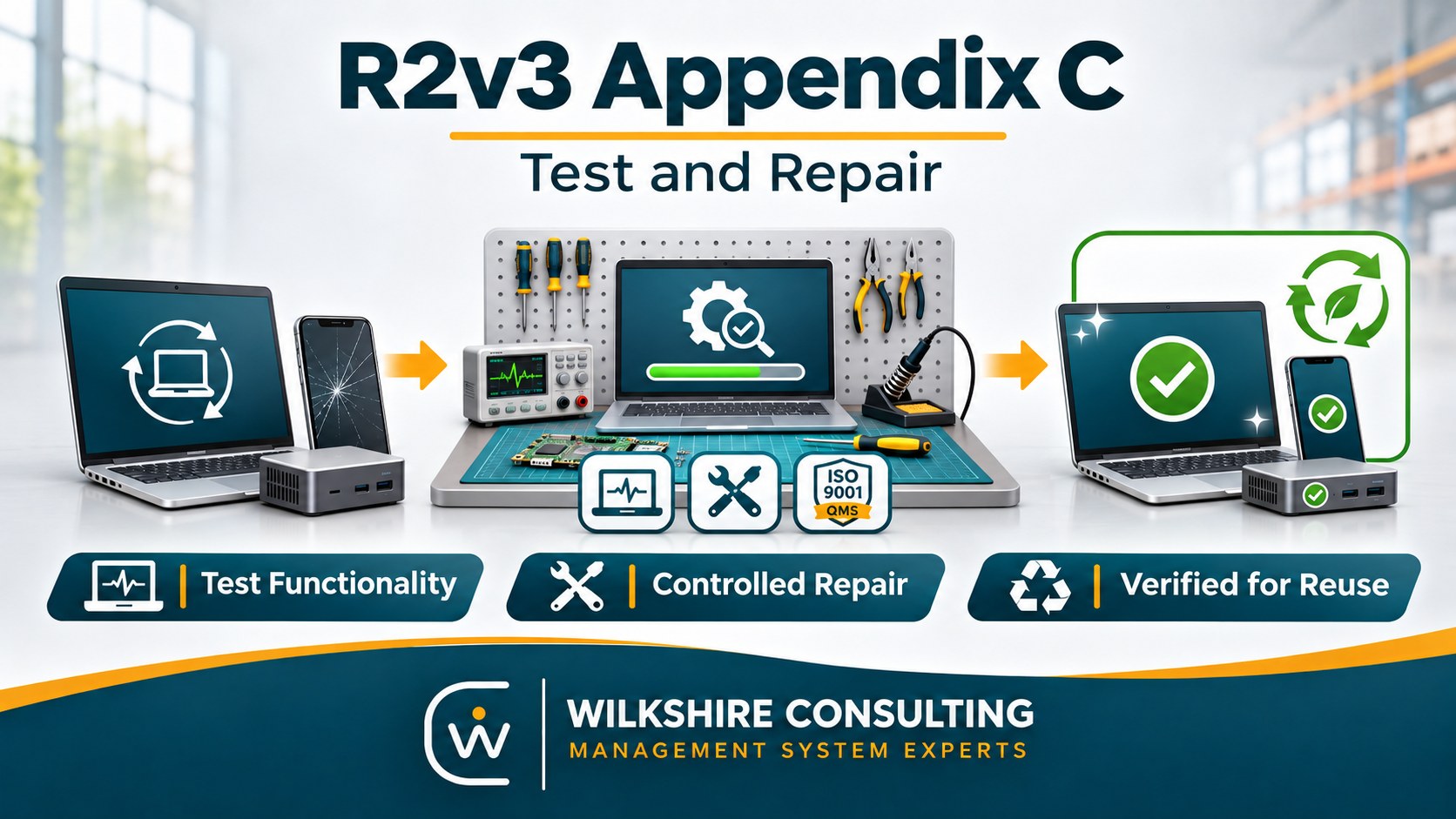
Like Appendix C (Test and Repair), Appendix F requires a certified Quality Management System, and its scope has to include the brokering activities. RIOS and ISO 9001 are the routes we see most often, and SERI’s approved list also includes TL 9000 and ISO 13485. Whichever you use, a general certificate isn’t enough if brokering isn’t named in its scope.
That’s an important planning point: if brokering is part of your R2 scope, you’re committing to a certified QMS alongside it, just as you would for test and repair.
How Appendix F Fits the Series
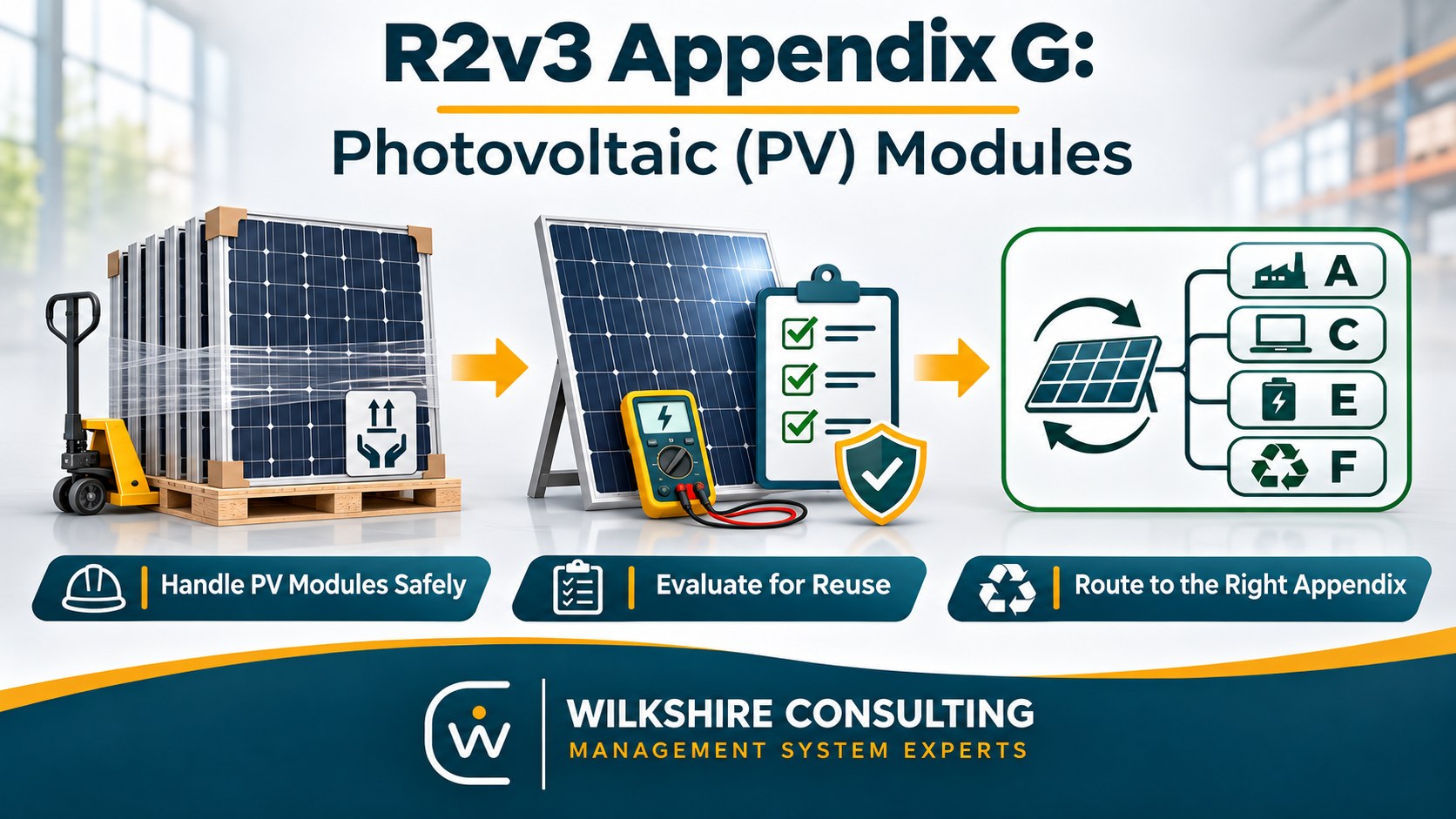
Appendix F leans heavily on Appendix A (Downstream Recycling Chain), since brokering is fundamentally about directing material through that chain and brokered activities have to be folded into your audited downstream activities. It shares the certified QMS requirement with Appendix C. And it can intersect with Appendix G (PV Modules), because brokering solar panels can bring both appendices into play at once. For ITAD and reseller operations that move some material without ever warehousing it, Appendix F is worth checking early.
The Bottom Line
Appendix F closes a gap that would otherwise let facilities move Controlled Streams around without accountability. If you source and direct the delivery of used electronics or materials — even when they never touch your dock — R2v3 requires you to scope, document, and audit that brokering, qualify the downstream vendors, and back it all with a certified quality management system. Controlling the material is what matters, not holding it.
Quick answers
What is brokering under R2v3? Sourcing and controlling the delivery of equipment, components, or materials directly from a supplier to a downstream vendor without physically receiving or processing them at your facility.
Do I need Appendix F if I never touch the material? Yes, if you source and direct the transfer of R2 Controlled Streams. Appendix F applies even though the goods never pass through your facility.
Does Appendix F require ISO 9001? It requires a certified Quality Management System whose scope includes the brokering activities. ISO 9001 and RIOS are the routes we see most often, and SERI’s approved list also includes TL 9000 and ISO 13485.
Does buying equipment I don’t handle trigger Appendix F? It can. If you source a Controlled Stream and control its delivery directly to a downstream vendor, that is brokering. Appendix F doesn’t apply when all your Controlled Streams are received at or pass through your facility. If a deal falls in between, confirm with your certification body.
Not sure whether your buying and selling activity counts as brokering under R2v3? Score your facility with our free R2v3 readiness quiz, or book a free readiness call and we’ll help you scope it correctly.