There’s a specific kind of dread that sets in a few weeks before an ISO or R2v3 audit — the nagging sense that something’s not quite ready, without being able to name exactly what. The good news is that audit readiness isn’t mysterious. Auditors check a predictable set of things, which means you can check them yourself first.
Run through the questions below honestly. They won’t replace a proper internal audit or pre-assessment, but they’ll quickly surface whether you’re genuinely ready or quietly carrying risk into your next audit. Be honest with yourself here — the point is to find the gaps now, while there’s still time to fix them, not to feel good.
Leadership and Direction
Can your team actually explain your policy? Not recite it word for word — explain what it means for their work. If you asked three people on the floor what your quality or safety policy commits the company to, would you get three blank stares? Auditors ask this question directly, and “it’s on the wall” isn’t the answer they’re looking for.
Are your objectives measurable, tracked, and current? Pull up your objectives right now. Are they specific and measurable? Is there evidence you’ve been tracking progress? Do they still reflect what matters to the business this year, or were they set once and forgotten? Objectives that exist but show no signs of life are a common finding.
The Core Loop
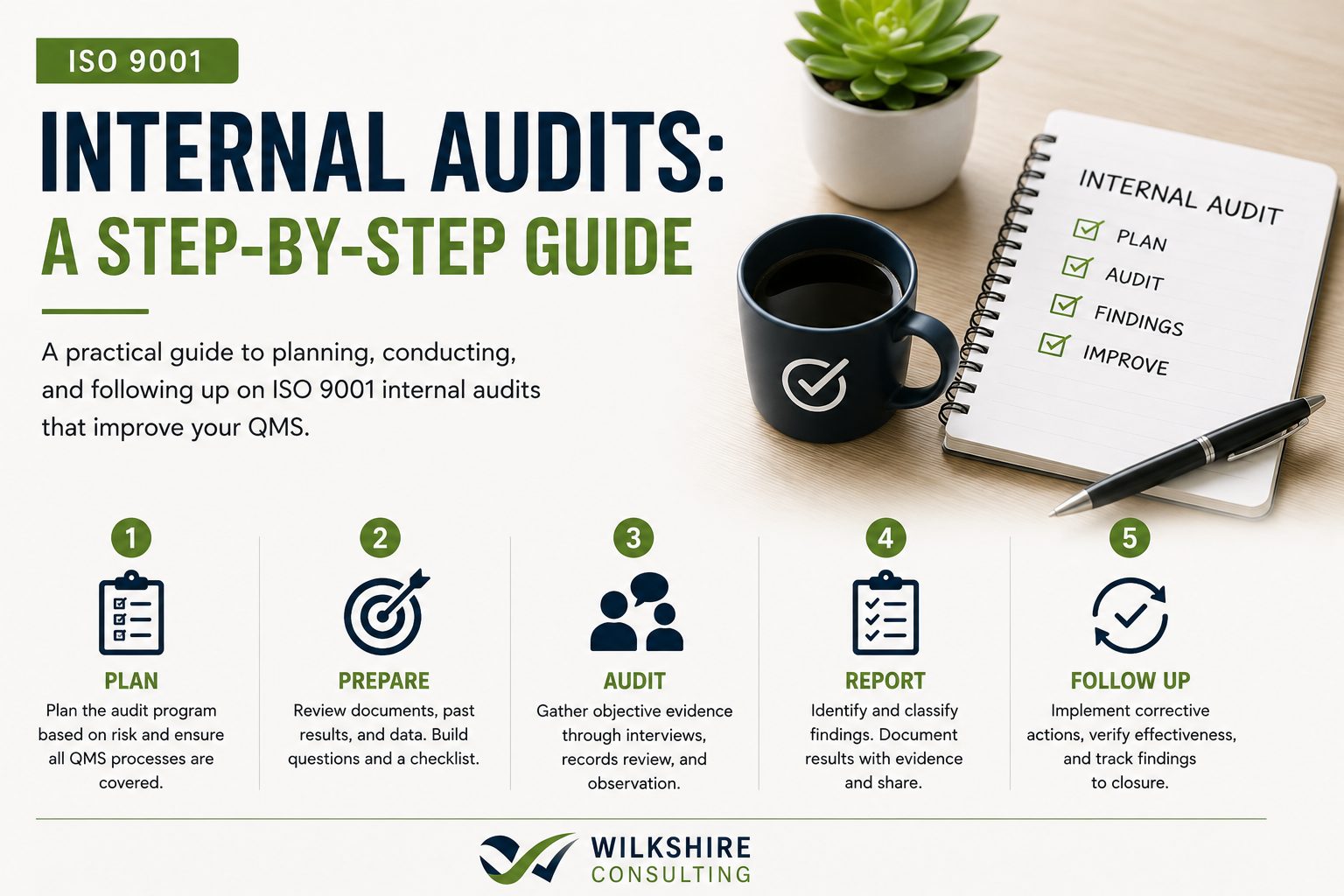
When did you last run an internal audit — and did it cover everything? This is the single most important readiness question. You need a current internal audit program, records of audits actually conducted, and coverage across your full scope over the cycle. And was it independent — run by someone other than the person who owns the process being audited? If your internal audit lapsed after the first year, that’s not a small gap. It’s a significant finding for an external auditor to raise, because it signals the system stopped running. Our step-by-step guide to ISO 9001 internal audits shows how to set the program up.
Have you held a proper management review? Not an informal hallway conversation — a documented review where leadership looked at the required inputs (audit results, objectives, customer feedback, nonconformities) and produced real decisions and actions. Can you produce the minutes? Management review is the clause that gets skipped most and cited most. If yours is thin or missing, fix it before the audit, not during. See what auditors actually want to see in a management review.
Do your corrective actions go to root cause? Look at your last few corrective actions. Did you actually find and fix the underlying cause, or did you patch the symptom and close it out? And critically — did you verify the fix worked? Corrective actions closed without an effectiveness check are a frequent finding and an easy one to avoid.
Evidence and Control
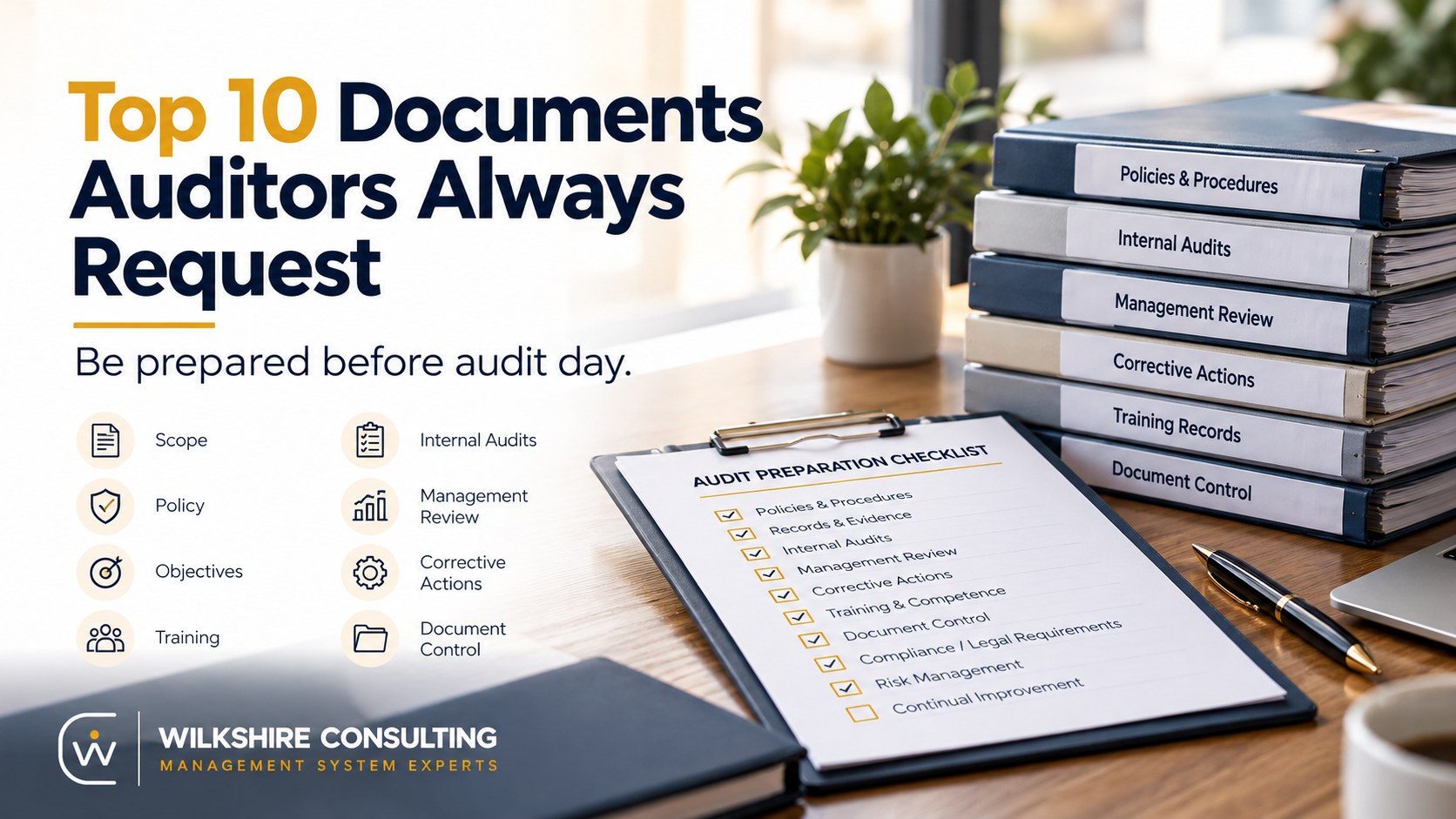
Can you find your records quickly? Here’s a simple test: ask someone to produce a specific training record, a calibration certificate, or a particular corrective action from eight months ago. How long does it take? If the answer is “a while, let me dig,” you have a document control problem — and an auditor will find it, because producing records on request is half of what an audit is. We list the core records auditors ask for in our top 10 documents auditors always request.
Are your documents current and controlled? Is your master document list up to date? Have obsolete versions been withdrawn? Does the system on paper actually match how work gets done on the floor? The gap between documented process and actual practice is where a lot of findings live.
Are your competence and training records complete? Can you show not just that people attended training, but that they’re actually competent for their roles? A training log that proves attendance but nothing about competence is a gap auditors increasingly look for.
Monitoring
Are you measuring the right things — and using the data? You should be collecting performance data relevant to your standard: inspection results, process metrics, calibration records, safety or environmental monitoring, whatever applies. And you should be able to show you actually act on it, not just file it. Data collected and ignored doesn’t demonstrate a working system.
How Did You Do?
If you answered most of these confidently, with evidence you could produce on the spot, you’re in good shape — your system is live and your audit should confirm work that already happened.
If a few of these made you wince — the internal audit that slipped, the management review you’re not sure you can document, the records you’d have to hunt for — that’s genuinely useful information. Those are exactly the gaps an auditor would find, and you’ve just found them first, with time to act.
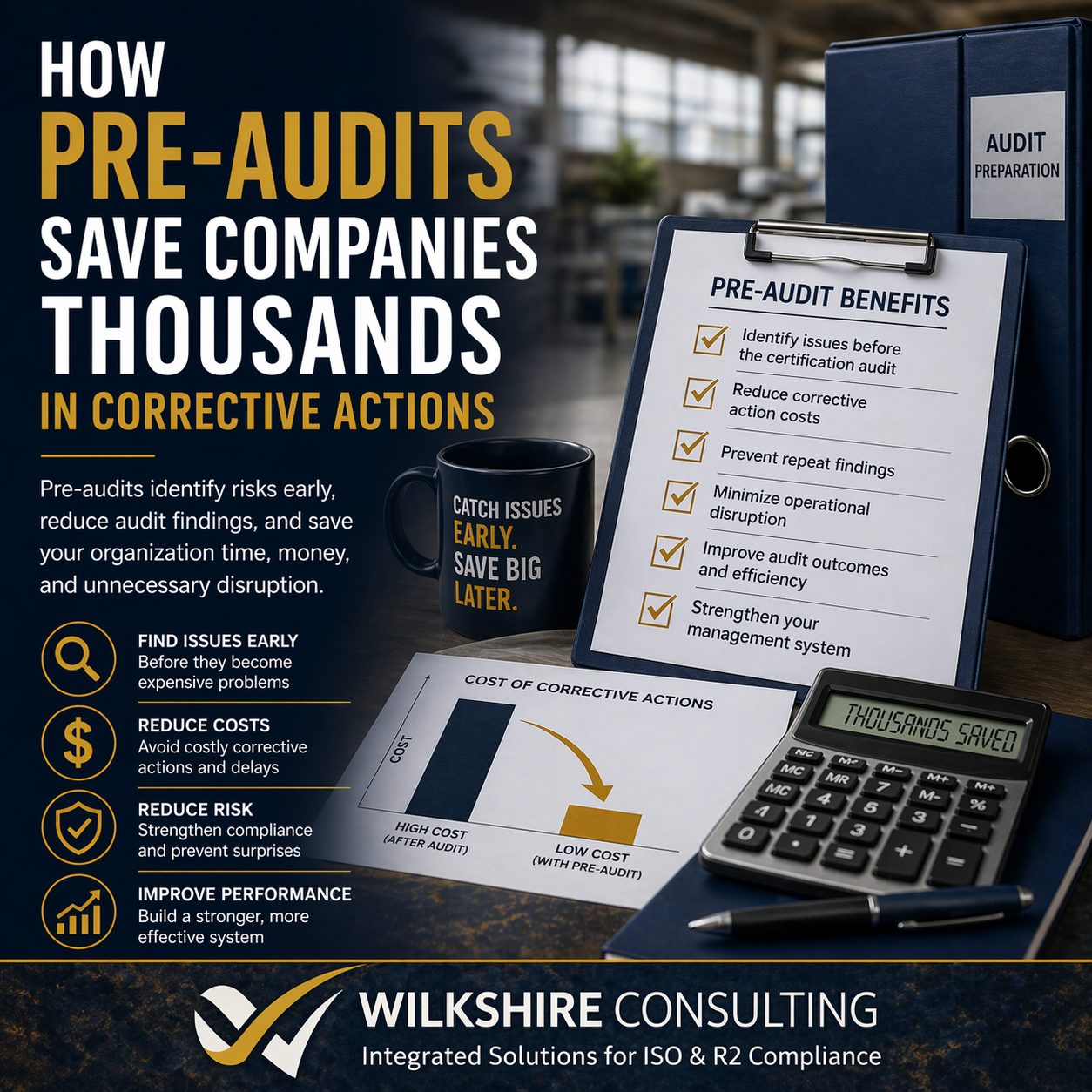
The most common audit problem isn’t that a company didn’t do the work. It’s that the work drifted, or the evidence got scattered, and nobody caught it until the auditor was in the room. Catching it a few weeks out instead is the difference between a smooth audit and a scramble. A formal pre-audit review goes a step further — here’s how pre-audits save companies thousands in corrective actions.
Quick answers
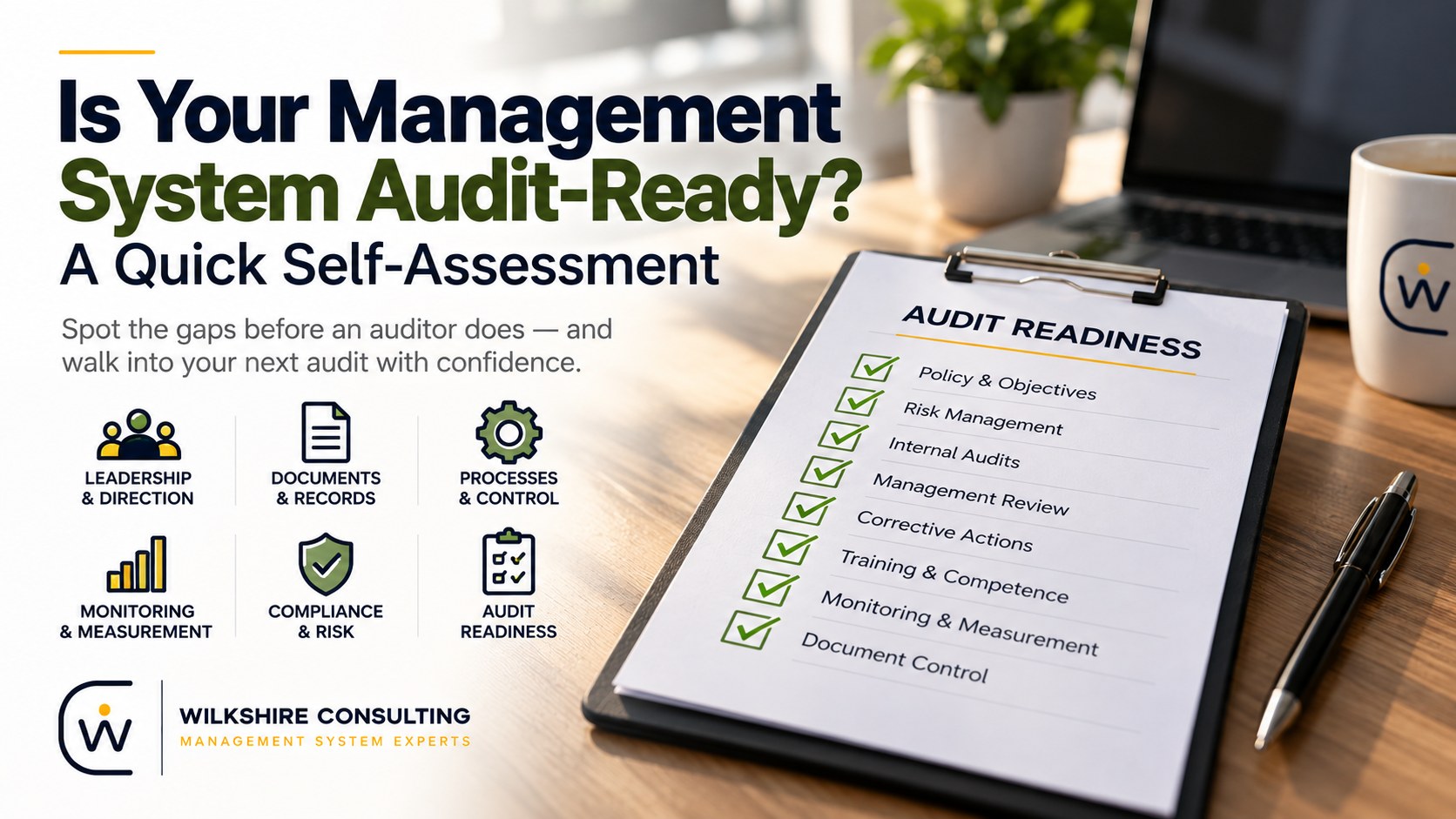
How do I know if I’m ready for an ISO audit? Check whether you can produce current evidence for the core areas auditors always examine: policy awareness, tracked objectives, a consistent internal audit trail, documented management reviews, root-cause corrective actions, controlled documents, competence records, and monitoring data. If you can produce all of it quickly, you’re ready.
What’s the most common reason companies fail or struggle at audits? Not missing work, but missing evidence — a lapsed internal audit program, thin management review records, or records that can’t be found quickly. These are preventable with a pre-audit review.
Can I assess audit readiness myself? Yes, informally — a self-assessment like this surfaces obvious gaps. For a thorough picture, an independent internal audit or a pre-assessment — a dress rehearsal run the way the certification body will run it — tests your system against the full requirements of your standard.
How far ahead should I check? Several weeks at minimum, so there’s time to fix anything you find. Gaps in records and documents can be closed in weeks, but anything that needs a track record — like monitoring data against your objectives — takes longer, because auditors typically look for two to three months of real data. Discovering a gap on audit day leaves you no runway.
Want a faster read on where you stand? Score your system with our free readiness quiz — or for facilities, the R2v3 readiness quiz — and if you’d rather have a second set of eyes, book a free readiness call and we’ll help you find the gaps before the auditor does.