ISO 50001 is the international standard for energy management systems — a voluntary framework that helps an organization systematically track, analyze, and improve how it uses energy, with the goal of cutting energy costs and consumption. Instead of treating your energy bill as a fixed overhead you just pay every month, ISO 50001 turns energy into something you actively manage, measure, and improve, the same way you’d manage quality or safety.
If energy is a real line item for your business — a manufacturing plant, a processing facility, any operation where the power bill is big enough to notice — this is a standard worth understanding. Here’s what it is and, more importantly, how it actually saves money.
What ISO 50001 Actually Does
At its core, ISO 50001 gives you a structured way to answer four questions most businesses can’t really answer about their own energy use:
- Where is our energy actually going?
- Which uses are the significant ones worth focusing on?
- How do we measure whether we’re improving?
- How do we make the savings stick instead of drifting back?
It does this through an Energy Management System (EnMS) — not a piece of software, but a set of practices built into how you run the business. You establish an energy policy, identify your significant energy uses, set a baseline, track performance against energy performance indicators, and build an action plan to improve. Then you keep doing it, because the standard is built around continual improvement rather than a one-time fix.
One thing that sets ISO 50001 apart from most management standards: it requires demonstrable improvement in actual energy performance, not just a well-documented system. You can’t pass by having tidy paperwork. You have to actually use less energy to do the same work.
How It Cuts Costs (The Part That Matters)
This is where ISO 50001 earns its keep, and the numbers are genuinely strong.
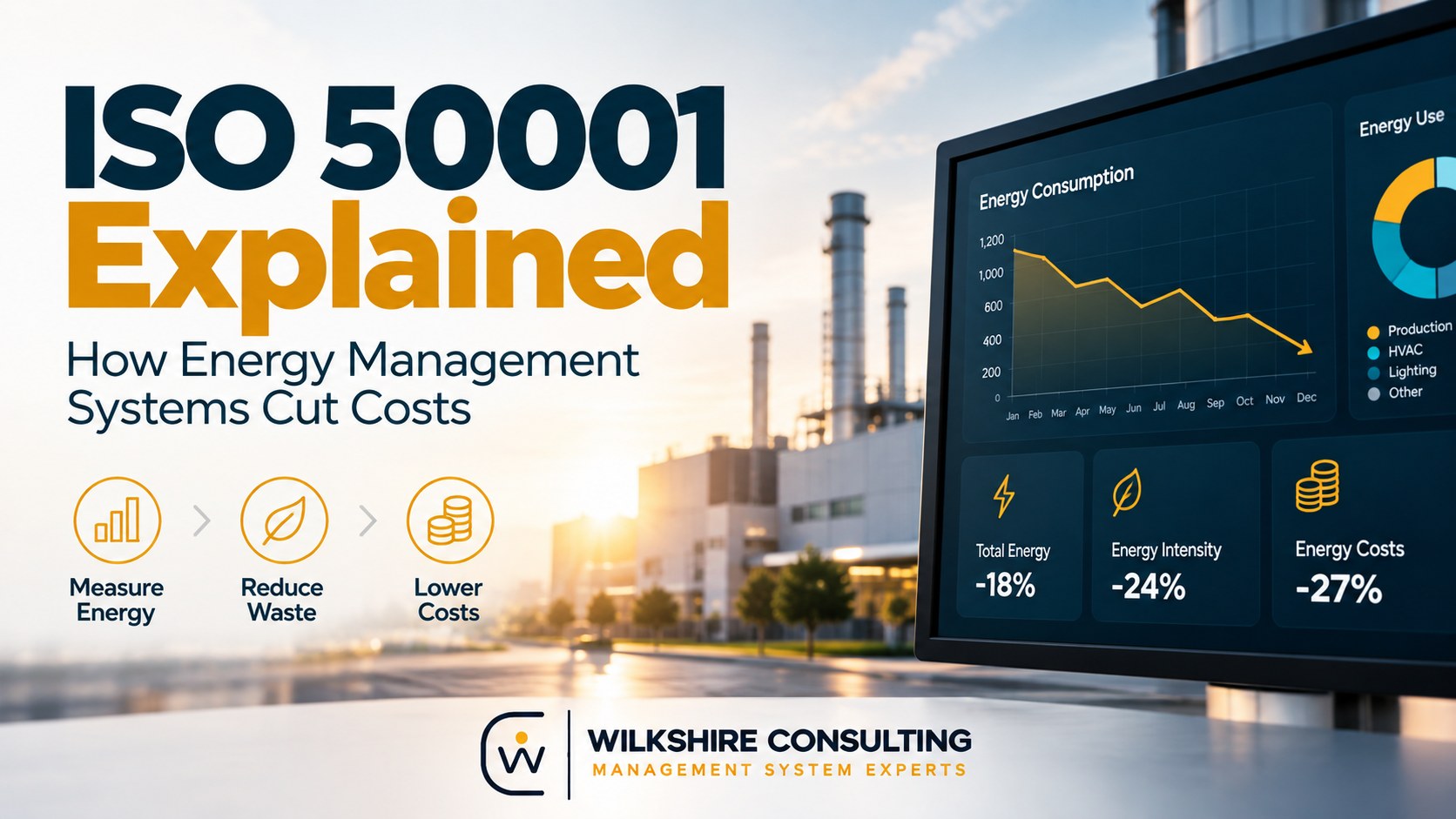
The U.S. Department of Energy reports that the average industrial plant implementing ISO 50001 achieved a 12% reduction in energy costs within 15 months of starting implementation. Research on manufacturing facilities shows they typically achieve around 4% annual energy savings year over year for more than a decade — not a one-time cut, but compounding improvement that keeps delivering long after implementation. Other analyses put first-year energy cost reductions in the 10-20% range.
The reason it works isn’t magic — it’s measurement. Most organizations have no real visibility into where their energy goes, so waste hides in plain sight: equipment running when it doesn’t need to, inefficient processes nobody’s questioned in years, demand charges nobody’s managing. ISO 50001 forces that visibility, and once you can see the waste, cutting it becomes straightforward. The framework also makes the savings durable by building energy awareness into daily operations and assigning clear ownership, so you don’t backslide the moment the initial project energy fades.
There’s a resilience benefit too. When you’re actively managing energy, you’re far less exposed to volatile energy prices than a business that just absorbs whatever the bill says each month. In a market where energy costs swing hard, that predictability has real value.
Who Should Actually Consider It
ISO 50001 is most relevant where energy is material — meaning it’s either a significant cost driver, a regulatory obligation, or a core part of your climate and sustainability strategy. A manufacturer running energy-intensive equipment has a very different case than a small office.
For energy-intensive operations, the math often works quickly: if you’re spending enough on energy, even a 10-12% reduction can cover the cost of implementation in a reasonable timeframe and then keep paying you back year after year.
How It Fits With Your Other Standards
If you already run ISO 9001 or ISO 14001, you’ve got a head start. ISO 50001 uses the same high-level structure and the same Plan-Do-Check-Act backbone, which means it integrates cleanly rather than bolting on as a separate parallel system. In fact, ISO 50001 pairs especially naturally with ISO 14001 — environmental management and energy management overlap heavily, and running them together lets you capture energy-saving opportunities your environmental program might otherwise miss. For organizations building toward a broader ESG or sustainability position, energy management is often the piece with the clearest, most measurable payback.
Is It Worth Certifying, or Just Implementing?
Fair question. You can implement an ISO 50001-based energy management system and capture most of the operational savings without pursuing formal third-party certification. The savings come from the system, not the certificate.
That said, certification adds value when you need to prove it — to clients, to regulators, or as part of an ESG commitment you’re reporting on. In some jurisdictions, a certified ISO 50001 system can even satisfy mandatory energy audit requirements, replacing a separate obligation. Whether certification is worth it comes down to whether you need the external credibility or just the internal savings. For many businesses, the honest answer is: start with the system, pursue certification when there’s a specific reason to.
Quick answers
What is ISO 50001 in simple terms? It’s the international standard for managing energy — a structured framework for tracking, analyzing, and continually improving how your organization uses energy, in order to cut costs and consumption.
How much can ISO 50001 actually save? The U.S. Department of Energy reports an average 12% reduction in energy costs within 15 months for industrial plants, and manufacturing facilities often sustain around 4% savings annually for over a decade. First-year reductions of 10-20% are commonly reported.
Is ISO 50001 mandatory? No, it’s voluntary — though in some regions, large energy consumers are required to implement a certified energy management system, and a certified ISO 50001 system can replace mandatory energy audits.
Does ISO 50001 work with ISO 9001 and ISO 14001? Yes. It shares the same structure and continual-improvement model, so it integrates cleanly — and it pairs particularly well with ISO 14001.
Do I have to certify, or can I just implement it? You can capture most of the energy savings by implementing the system alone. Certification adds value mainly when you need to prove compliance to clients, regulators, or ESG reporting requirements.
Wondering whether ISO 50001 would pay off for your facility’s energy profile? Learn more on our ISO 50001 consulting page, or book a free readiness call and we’ll help you run the numbers.