
If you’re starting toward ISO or R2v3 certification from scratch, the smartest first move isn’t to start writing procedures. It’s to find out exactly where you stand. That’s what a gap analysis does: it compares what your organization is doing today against what the standard actually requires, and hands you a clear picture of the distance between the two — the “gap” you’ll need to close to get certified.
Think of it as surveying the ground before you build. You wouldn’t start construction without knowing what’s already there and what has to change. A gap analysis is that survey for your management system.
What a Gap Analysis Actually Does
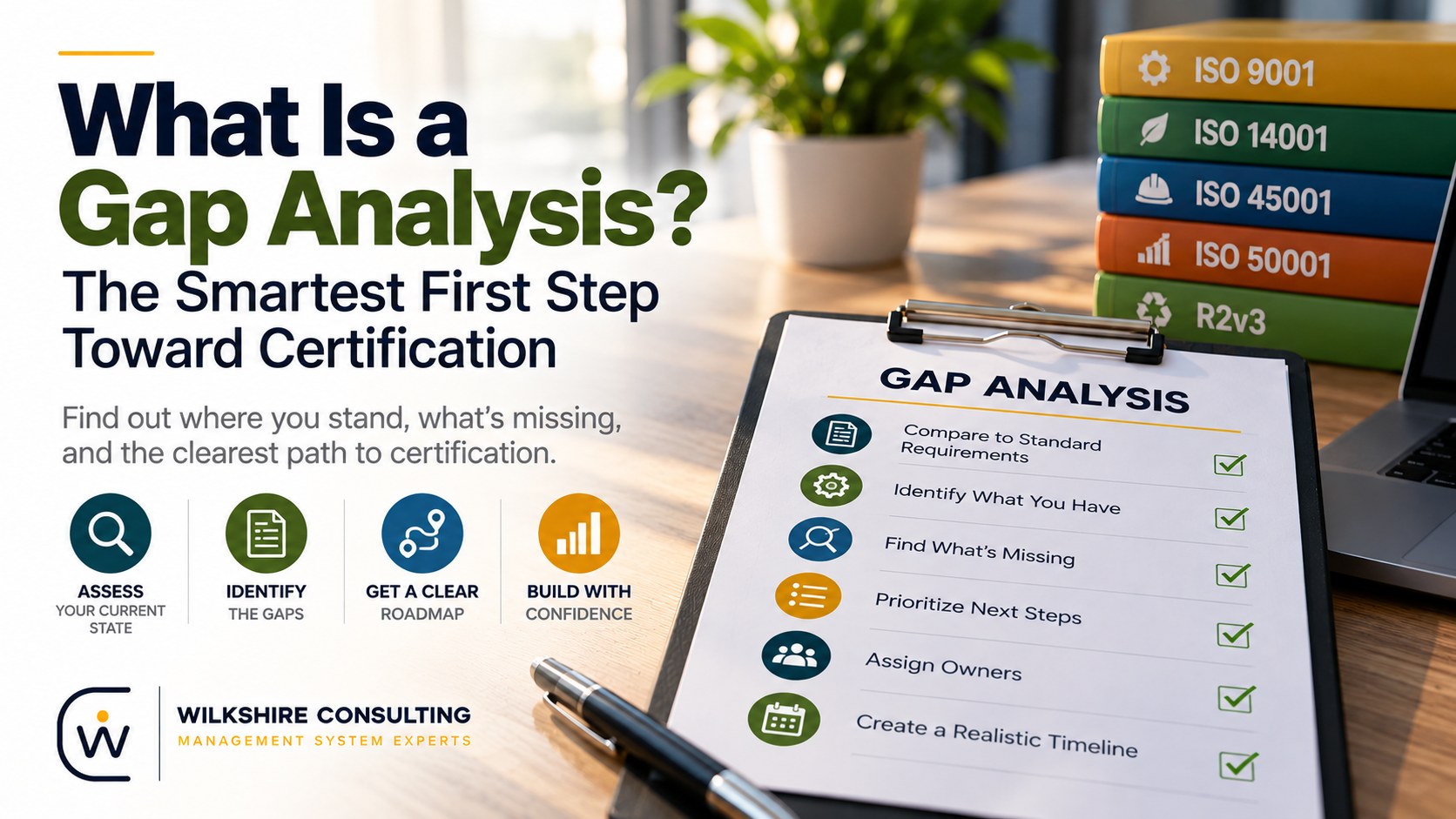
A gap analysis is an assessment of your current state against the requirements of the standard you’re pursuing — ISO 9001, ISO 14001, ISO 45001, ISO 50001, or R2v3. Someone who knows the standard walks through your existing processes, documentation, and practices, and identifies three things:
- What you already have that meets the requirement. Most organizations are doing more right than they realize — you just haven’t mapped it to the standard yet.
- What’s missing entirely and needs to be built.
- What exists but needs to change to actually satisfy the requirement.
The output isn’t a vague “you’ve got some work to do.” It’s a written roadmap: what’s missing, who owns each item, and how long it realistically takes. That turns an intimidating, open-ended project into a concrete, prioritized to-do list — which is exactly what makes certification feel manageable instead of overwhelming.
Why Skipping It Costs You More
It’s tempting to skip straight to building the system, especially if you’re eager to get certified. In our experience, that’s where projects go sideways. Without a gap analysis, you’re guessing at what the standard wants, which usually means one of two expensive outcomes: you over-build, pouring effort into documentation and processes the standard never asked for, or you under-build and discover the holes later — often on audit day, when fixing them is far more disruptive.
A gap analysis front-loads that discovery to the cheapest possible moment: the very beginning, before you’ve invested months of work in the wrong direction. The clarity it buys almost always pays for itself in rework avoided.
Gap Analysis vs. Internal Audit vs. Pre-Assessment
This trips a lot of people up, because all three involve someone checking your system against a standard. The difference is when you use them and what state your system is in:
- Gap analysis is for when you don’t yet have a system. It establishes your starting point and produces a build list. This is the one you use before certification.
- Internal audit is for when you have a running system. It’s a requirement of the standard itself, run independently of the people who own the process, with records retained. It’s not a one-time startup step — it’s part of keeping a live system healthy.
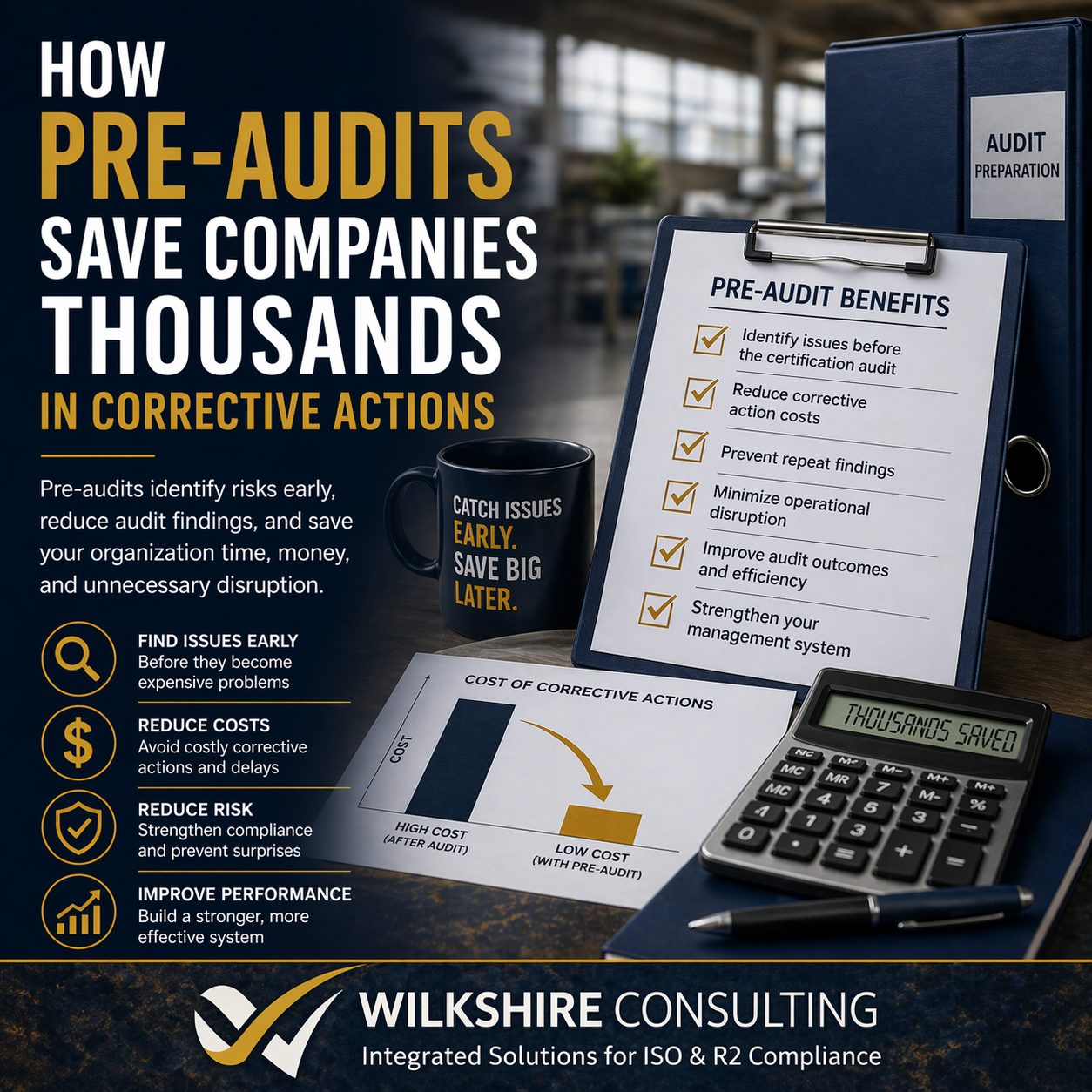
- Pre-assessment is a dress rehearsal shortly before your certification audit, run the way the registrar will run it, to catch anything before the real thing.
So if you already have a working management system and you’re wondering whether it’s audit-ready, you don’t want a gap analysis — you want an internal audit or a pre-assessment. The gap analysis is the tool for organizations building toward certification for the first time, or taking on a new standard they haven’t held before. It also earns its place when you have part of a system in place, because it sorts what’s usable from what needs rewriting, and when a standard is revised and you need to see what the new edition changes — the ISO 9001:2026 transition is a current example. If you want to know whether you’re ready for an audit right now, our audit-readiness self-assessment is the quicker check.
What a Gap Analysis Includes
A thorough gap analysis looks at the full scope of the standard, not just the obvious parts. For an ISO management system, that means reviewing your context and interested parties, leadership and policy, planning and risk, support and resources, operational controls, performance evaluation, and improvement — every clause, mapped against what you actually do. For R2v3, it means working through the Core Requirements and the specific appendices that apply to your facility’s scope.
The deliverable is the valuable part: a written roadmap that tells you exactly what needs changing, who’s responsible for each piece, and a realistic sense of timing — so you can plan resources and set expectations instead of flying blind.
How It Fits Into the Certification Timeline
The gap analysis is step one. For a single-site organization starting from scratch, the full path to ISO certification typically runs about three to six months, assuming documentation work stays on schedule. R2v3 typically runs four to six months, and large, multi-site or complex-scope operations — including R2v3 scopes with complicated downstream vendor chains — can stretch toward twelve.
One honest note on timing: closing certain gaps isn’t instant. Auditors want to see real evidence that your system is operating — commonly two to three months of actual data against your measurable targets — so some gaps are closed not by writing a document but by running the system long enough to generate records. A good gap analysis flags those early so you can start the clock on them right away rather than discovering the requirement late.
The Bottom Line
A gap analysis is the difference between walking into a certification project with a map and walking in blind. It tells you where you are, what the standard requires, and the shortest honest path between the two. For any organization serious about getting certified — especially a first-timer — it’s not an optional extra. It’s the step that makes everything after it faster, cheaper, and far less stressful.
Quick answers
What is a gap analysis in simple terms? It’s an assessment that compares what your organization does today against what a standard (ISO or R2v3) requires, and produces a roadmap of what you need to build or change to get certified.
Do I need a gap analysis if I already have a management system? Not usually. A gap analysis is for organizations that don’t yet have a working system, or only have part of one. If you already have one running and want to know whether it’s audit-ready, an internal audit or a pre-assessment is the right tool. The exception is a new or revised standard, where a gap analysis shows what changes.
What does a gap analysis produce? A written roadmap — what’s missing, who owns each item, and how long it realistically takes — so your certification project starts with a clear, prioritized plan.
How long before certification does a gap analysis happen? It’s the first step. For a single-site organization starting from scratch, ISO certification typically takes about three to six months, assuming documentation stays on schedule; R2v3 typically takes four to six months, and larger or more complex scopes take longer.
Thinking about certification and not sure where you stand? Finding that out is exactly what a gap analysis is for. Book a free readiness call and we’ll help you figure out whether one’s your right next step.